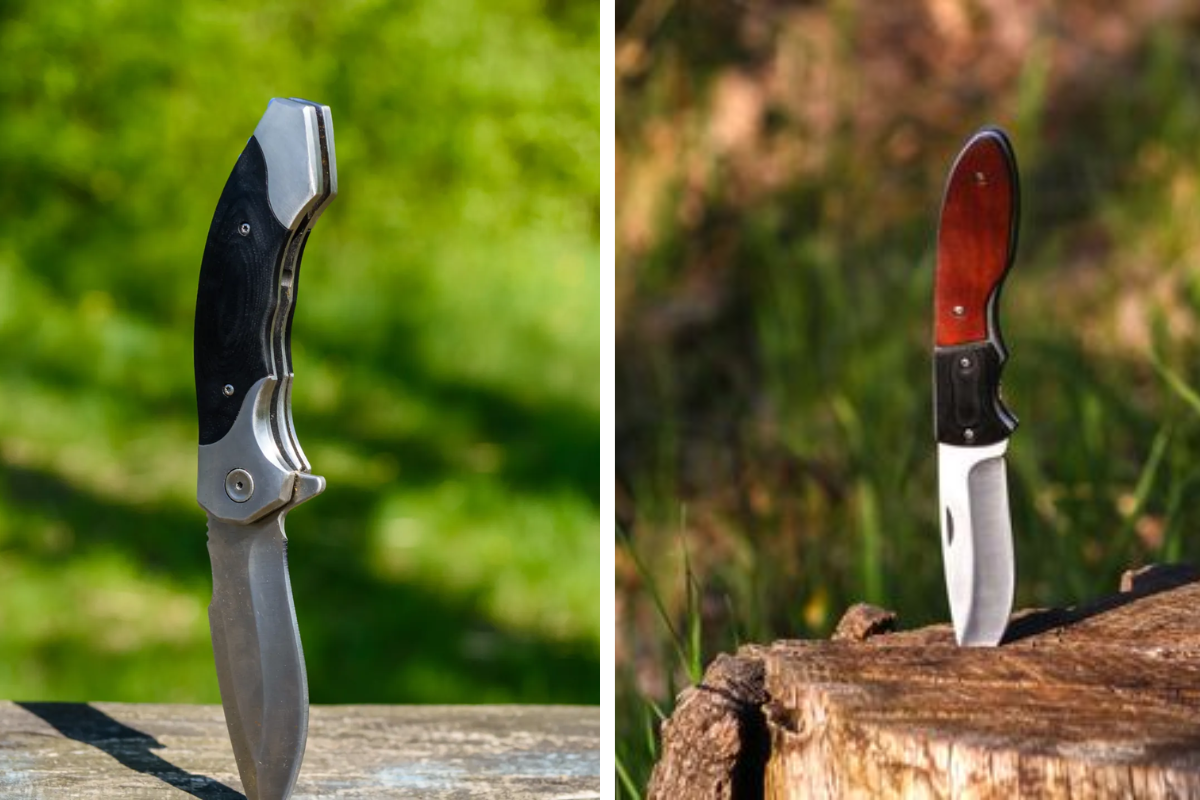
Yes. In Wisconsin, adults may legally own and carry most types of knives, including folding knives, pocket knives, fixed‑blades, switchblades, butterfly knives, gravity knives, daggers, dirks, and bowie‑style knives.
There is no general statewide ban on any specific knife design or mechanism, and blade length is not capped by statute for ordinary carriers.
Open carry and concealed carry rules
Wisconsin allows both open and concealed carry of knives for most adults. You may carry a knife openly in plain view or conceal it in a sheath, pocket, ankle rig, or other holder, without needing a permit or license.
Local governments (cities, counties, towns, and villages) cannot pass stricter knife‑carry rules than state law, thanks to statewide preemption.
Who is treated as a “prohibited person”?
Certain people face extra risk when carrying a concealed knife. Wisconsin law treats a person who is already barred from possessing firearms under § 941.29 (typically due to violent felony or some other disqualifying conviction) as a prohibited user of a concealed knife if that knife qualifies as a “dangerous weapon.”
In that situation, carrying a concealed dangerous‑weapon knife can be charged as a Class A misdemeanor, punishable by up to nine months in jail and a fine of up to $10,000.
When is a knife a “dangerous weapon”?
Wisconsin does not define a knife as illegal just because of its type or length. Instead, a knife is treated as a “dangerous weapon” under § 939.22(10) primarily based on how it is designed or how it is used.
If you carry or brandish a knife with criminal or malicious intent, or use it in assault, reckless endangerment, or aggravated battery, prosecutors can treat it as a dangerous weapon and charge you accordingly.
Where knives are restricted
Even though knife carry is broadly allowed, Wisconsin restricts knives in certain sensitive locations. Knives that qualify as dangerous weapons are generally prohibited on K‑12 school grounds under § 948.61, and violating that rule can lead to felony charges.
Courts, some government buildings, and certain secure facilities may also ban knives via posted signage or specific rules, so it is important to check notices and policies before entering.
Knives, minors, and self‑defense
Wisconsin law broadly allows knives for self‑defense, but the force used must be reasonable and proportional to the threat.
You cannot transfer a “dangerous weapon,” including a knife, to a minor unless an exception applies, and minors are generally barred from possessing dangerous‑weapon knives.
Relying on a knife for protection is legally permissible only if you can show you reasonably believed you were in danger and that the level of force was necessary.
Practical tips for staying legal
To stay on the right side of Wisconsin’s knife law, avoid carrying with a criminal or threatening intent, and steer clear of knives in K‑12 schools and other posted‑no‑knife areas.
If you have a prior felony or violent‑crime conviction, consult an attorney before relying on a concealed knife for self‑defense. Overall, Wisconsin’s regime is permissive, but your conduct and location matter more than the blade’s length or style.
SOURCES :
- https://www.couteaux-morta.com/en/wisconsin-knife-laws/
- https://knifeinformer.com/state-knife-laws/wisconsin/