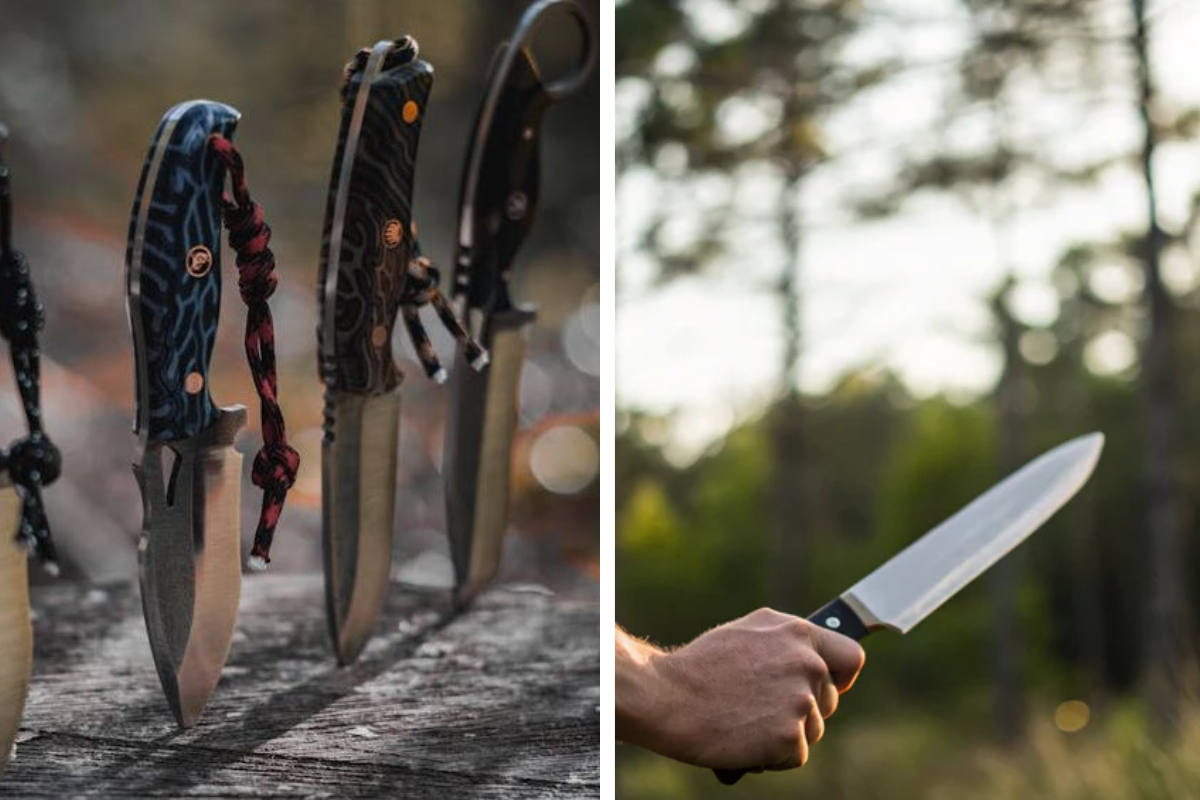
Nebraska’s knife laws are generally permissive at the state level, but there are clear limits on concealed carry and where you can carry. Most adults can open‑carry knives freely, but the rules change when you hide the blade from view, carry very long blades, or bring a knife into restricted places.
What knives are legal to own and carry?
Nebraska allows residents to own and carry almost all common knife types, including folding knives, fixed‑blade knives, daggers, dirks, and even automatic (switchblade) knives, as long as they are not otherwise restricted by federal or specialized property‑based rules. There is no statewide ban on specific knife styles (like gravity knives or automatics) at the general ownership level, and local governments cannot impose tougher knife rules thanks to state preemption.
Age‑wise, Nebraska defines a “juvenile” as anyone under 18, but there is no separate “knife‑possession” crime for minors just for having a legal knife; issues usually arise only if the knife is used in a crime or brought into a restricted area.
Open carry vs. concealed carry
Nebraska does not prohibit open carry of knives, and there is no general state‑level blade‑length cap for knives carried openly. You can openly carry a folding knife, pocket knife, or fixed‑blade knife of almost any practical length as long as the location allows it (for example, not on school grounds or in a courthouse).
The main restriction is on concealed carry. Nebraska law treats certain knives as “deadly weapons” when concealed, most notably any knife with a blade over 3.5 inches that is carried on or about the person in a concealed way. A concealed carry of a knife falling under this definition is typically a Class 1 misdemeanor, punishable by up to one year in jail and/or a fine of up to $1,000.
Knife‑law preemption and recent changes
In recent years, Nebraska has strengthened its knife‑law preemption, meaning that cities and counties cannot pass their own tighter knife‑possession or carry rules beyond what state law allows. This also ties into broader “constitutional‑carry” reforms, which have expanded protections for lawful armed carriers, including for knives in certain situations, while still keeping the concealed‑carry restriction on knives longer than 3.5 inches largely intact.
Where knives are still illegal or restricted
Even when your knife is otherwise legal, location matters. Federal law and Nebraska‑based rules bar knives in places such as:
- Schools and school grounds, including K‑12 campuses and many school‑related events.
- Courthouses, federal buildings, and public‑safety facilities, where any weapon (including knives) can be prohibited.
- Certain private properties that post “no weapons” signs or otherwise restrict knives under their own rules.
Practical tips for staying legal
- If you want to carry a knife every day, consider a folding knife with a blade 3.5 inches or shorter and keep it openly carried or in a visible pocket/holster.
- Avoid hiding any knife with a blade over 3.5 inches under clothing or in a deep bag, as that can trigger the concealed‑carry ban.
- Before bringing a knife to a school, government building, or crowded public event, check posted rules or ask authorities; even a legal knife can be prohibited in specific venues.
SOURCES :
- https://knifeinformer.com/state-knife-laws/nebraska/
- https://ravencresttactical.com/nebraska-knife-laws/