Colorado knife laws balance personal rights with public safety, allowing most knives for everyday carry while banning specific types and restricting concealed blades over 3.5 inches. State statutes like C.R.S. 18-12-101 define key terms, with no broad preemption, so local rules vary.
Types of Legal Knives
Colorado permits ownership of folding knives, fixed blades, pocket knives, switchblades, and gravity knives statewide since SB 17-008 in 2017. Ballistic knives—those ejecting blades via spring or explosive—and blackjacks remain illegal everywhere as “illegal weapons” under C.R.S. 18-12-102.
Butterfly (balisong) knives occupy a gray area, potentially legal as gravity knives, but lack clear precedent. Hunting and fishing knives escape standard “knife” definitions, allowing any blade length for sports use.
Open Carry Rules
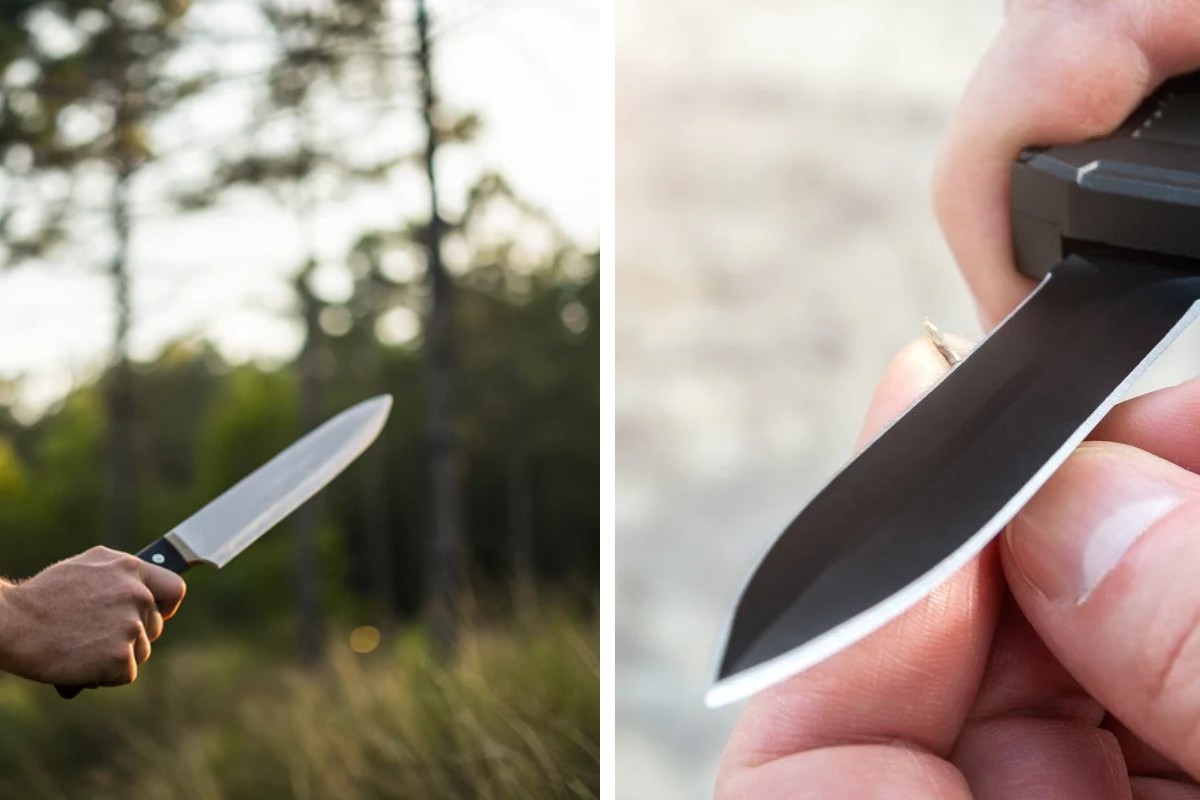
Open carry—visible knives like belt sheaths or exposed clips—is legal for any non-illegal blade length statewide. Examples include machetes or large fixed blades held openly or on a necklace.
Municipalities like Denver or Boulder may impose stricter limits, such as on switchblades, requiring local checks. No CCW permit needed for open carry.
Concealed Carry Limits
Blades under 3.5 inches can be concealed anywhere, including pockets or bags. Longer blades are illegal to conceal without exceptions like own property, private vehicles for protection, or law enforcement.
Hunting/fishing knives bypass the limit if for legitimate sports purposes. CCW handgun permits do not automatically apply to knives—verify with sheriffs.
Prohibited Locations
Schools (pre-K to college) ban knives entirely as deadly weapons under C.R.S. 18-12-105.5, a Class 6 felony. Exceptions: locked in college vehicles, self-defense in private autos, or approved programs.
Other sensitive spots follow general weapons rules; always confirm local ordinances.
Penalties for Violations
Concealed carry over 3.5 inches: Class 1 misdemeanor (up to 364 days jail, $1,000 fine). Ballistic knife possession: same Class 1 misdemeanor.
School violations: Class 6 felony (1-18 months prison, $1,000-$100,000 fine). Defenses include blade length under limit, hunting use, or illegal search.
Local Variations and Tips
No statewide preemption means cities like Denver ban switchblades, Aurora restricts concealment. Research via municipal codes before travel.
For self-defense, use reasonable force; knives must match threats. Film interactions, know rights, and avoid brandishing. Consult attorneys for charges—preemption aids vehicle transit.
Quick Reference Table
SOURCES :
- https://www.shouselaw.com/co/defense/laws/knife-laws/
- https://www.cospringslawfirm.com/blog/colorado-knife-laws/