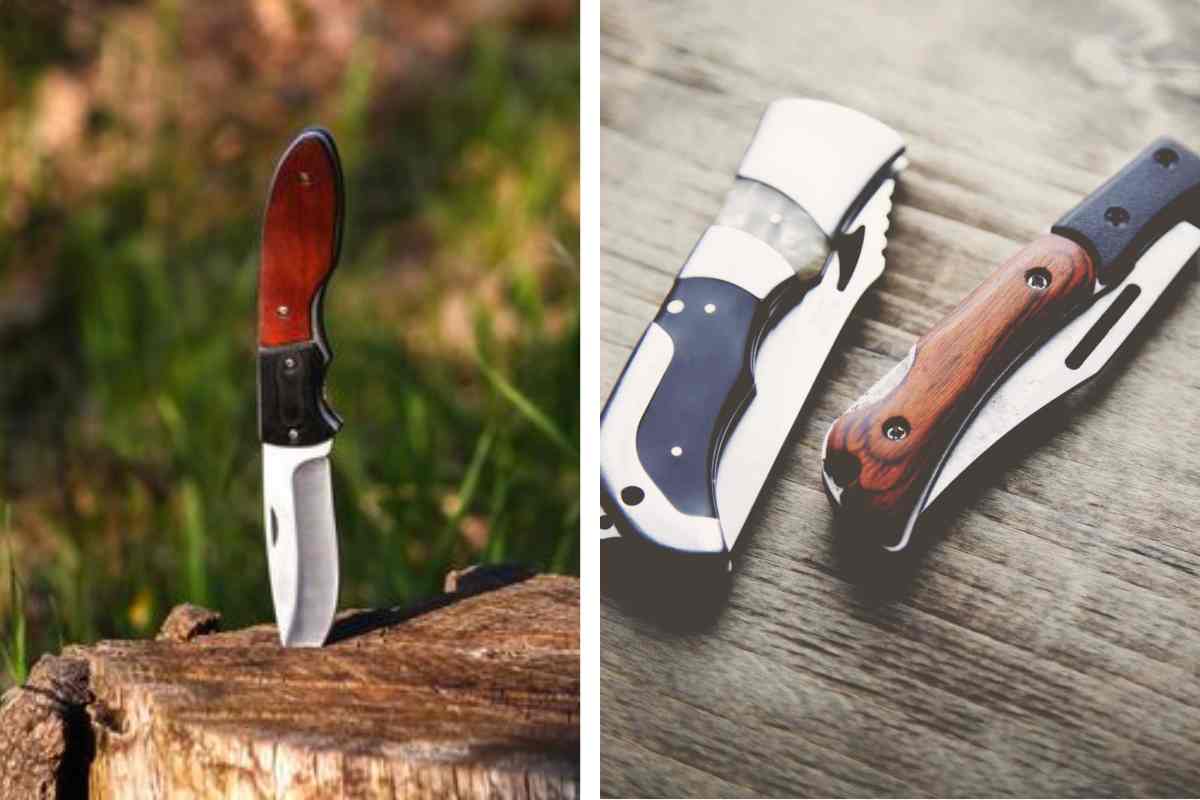
California’s knife laws are woven into numerous Penal Code sections and can be confusing if you only skim headlines. Knowing what you may legally own, carry, and where you may use a knife can help you avoid misdemeanor or even felony charges. This guide explains the basics of California’s knife rules in plain‑language terms.
What can you legally own in California?
Most knives are legal to own in California as long as they stay on private property or in areas not governed by special restrictions. Common tools like pocket folders, fixed‑blade survival knives, and kitchen knives are generally not banned purely because of ownership. The key limitations in California focus on whether and how you carry a knife in public, not on simple possession at home.
Switchblades and automatic knives
Switchblades (knives that open automatically by pressing a button or switch) are tightly regulated. Under Penal Code § 21510, it is a misdemeanor to carry, possess in a vehicle, or sell a switchblade with a blade two inches or longer in public. Knives with sub‑2‑inch blades that open automatically are usually allowed, but you can still face trouble if you carry them in restricted places like schools or government buildings.
Fixed‑blade knives: open carry vs. concealment
Fixed‑blade knives—such as hunting, survival, or utility blades—are generally legal to own and to open‑carry in California if they are not otherwise banned categories. However, Penal Code § 21310 makes it a crime to conceal a fixed‑blade knife (a “dirk or dagger”) on your person, such as in a pocket, backpack, or tucked under clothing. Courts define “dirk or dagger” broadly, so even a modest fixed‑blade knife can fall under this rule if you conceal it.
The safest way to carry a fixed‑blade knife under California law is open carry: the knife must be worn in a sheath attached to your waist, clearly visible rather than hidden. If you tuck it out of sight, you risk being charged with a misdemeanor or, in aggravated cases, a felony.
Folding knives and blade‑length rules
Folding knives are generally more flexible than fixed‑blade knives. Under PC § 17235, folding knives that are closed and not automatic are typically allowed for both open and concealed carry, even in public. However, once the blade is opened, the knife may be treated differently under local or school‑zone rules.
School‑ground rules tighten this further: Penal Code § 626.10 bans carrying knives with blades longer than 2.5 inches on K–12 and many college campuses, unless the knife is an ordinary, non‑locking folder or you fall under a specific exception (such as food‑prep or residence use). Even if a folder is legal elsewhere, violating campus rules can still lead to discipline or separate charges.
Location‑based restrictions
California also restricts knives in specific places, regardless of blade length. Schools, government buildings, courtrooms, and many transit facilities may ban knives entirely or limit them to small, non‑locking folders. Some cities, like Los Angeles and Oakland, have local ordinances that further restrict carrying knives with 3‑inch or longer blades in public.
Carrying a large fixed‑blade knife in a crowded urban area, even openly, can also raise “suspicion of being armed” or “disturbing the peace” concerns, even if the raw statute allows it. Law enforcement may interpret your conduct as threatening if the knife appears to be carried for intimidation rather than practical use.
Self‑defense and using a knife legally
California permits self‑defense with tools, including knives, but only under narrow conditions. You must reasonably believe you face imminent bodily harm and use proportional force to stop the threat. Drawing or using a knife in non‑immediate situations, or escalating force beyond what is necessary, can turn self‑defense into assault or even aggravated charges.
Because knives are considered “deadly weapons,” using one in a confrontation—even if you think you are justified—can lead to serious criminal scrutiny. It is wise to rely on de‑escalation first and reserve knife use strictly for situations where you genuinely fear immediate serious harm.
Practical takeaways for responsible owners
To stay within California’s knife rights, prioritize open‑carry for fixed‑blades, keep folders closed and non‑automatic when possible, and avoid switchblades with 2‑inch or longer blades. Always check school, campus, and local city rules before carrying a knife into those areas. If you are unsure whether a particular knife or carry method is legal, consulting a local criminal‑defense attorney or a reputable knife‑law resource is strongly recommended.
Sources
- (https://www.shouselaw.com/ca/defense/knife-laws/)
- (https://www.akti.org/state-knife-laws/california/)
- (https://www.tektoknives.com/blogs/news/california-legal-the-importance-of-blade-length)