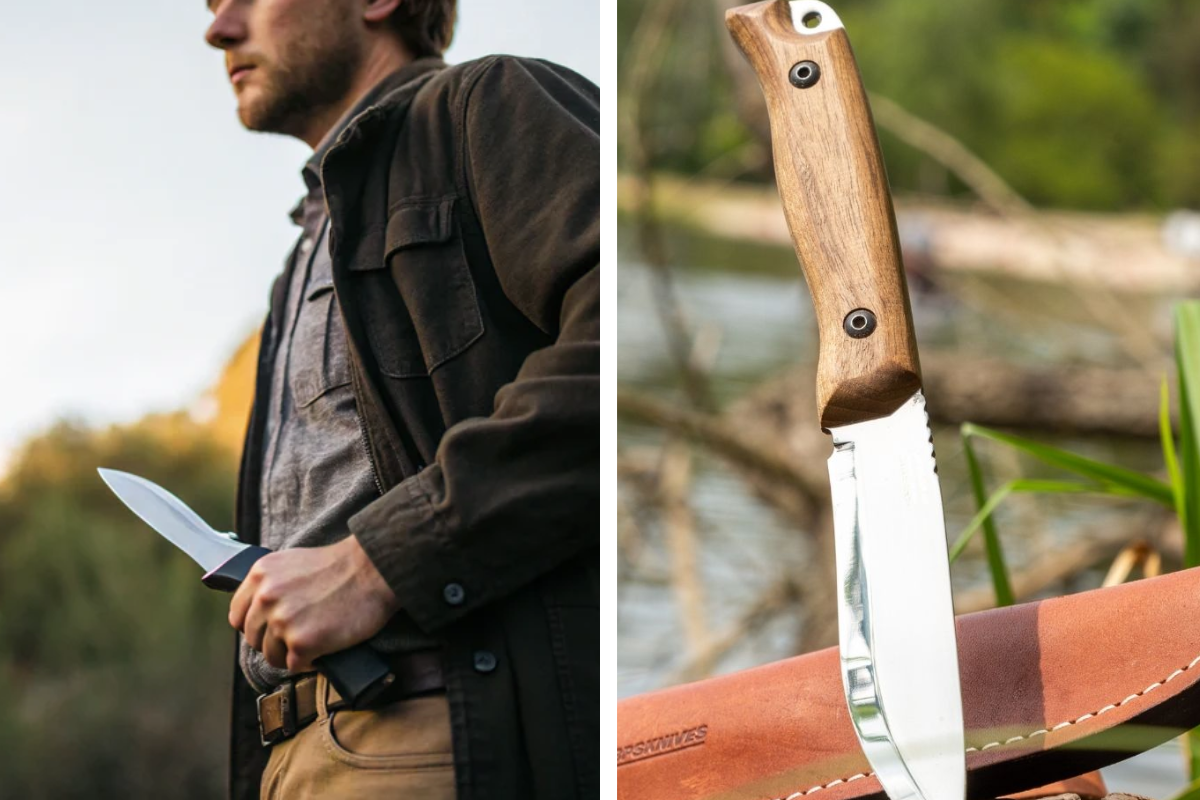
Pocket knives are not automatically illegal in New Jersey, but the law is purpose-driven rather than based on a simple blade-length rule. In practice, that means whether a pocket knife is lawful often depends on the type of knife, how it is carried, and what reason you have for carrying it.
New Jersey also treats certain knives more strictly than ordinary folding knives, so a common work knife may be viewed very differently from a switchblade or dagger.
New Jersey law is built around the idea of “explainable lawful purpose.” If you carry a pocket knife for ordinary utility—such as work, outdoor use, or everyday tasks—that is generally safer than carrying it in a way that suggests self-defense or criminal intent. Courts have recognized that a basic pocketknife, penknife, or jackknife can be lawful when it is commonly carried for legitimate personal use.
Knives That Draw More Scrutiny
The biggest legal risk comes from knives that New Jersey specifically restricts, including switchblades, gravity knives, ballistic knives, daggers, dirks, and stilettos. Possessing those knives without an explainable lawful purpose can lead to criminal charges, and the state does not treat them the same way it treats a standard folding pocket knife. Even when a knife is legal in the abstract, circumstances can make it look unlawful if police believe it was carried for harmful use.
A common pocket knife can still be treated as a “weapon” depending on context. That means an everyday folding knife may be lawful in one situation and problematic in another, especially if it is carried alongside threatening conduct, illegal activity, or other facts suggesting unlawful intent. New Jersey’s approach is less about the object alone and more about the surrounding circumstances.
Carry Rules In Practice
Open carry and concealed carry are not the central issue in New Jersey the way they are in some other states. The more important question is whether the knife is possessed for a lawful purpose and whether the circumstances are appropriate for that use. For example, a folding knife kept in a toolbox or on a work site is usually easier to justify than a knife carried in a way that looks like it is meant for confrontation.
There is also no simple statewide rule saying that knives under a certain length are automatically legal. Some online guides suggest a “safe” under-5-inch approach, but New Jersey law does not use blade length as the main test. That makes it important to focus on knife type, purpose, and context rather than relying only on size.
Local Ordinances Matter
New Jersey does not have broad statewide preemption for knife laws, so local rules can be stricter than state law. That means a knife that may be defensible under state law could still violate a city or town ordinance. Before carrying a pocket knife in a specific municipality, it is wise to check local rules because some places regulate weapons more aggressively than others.
Practical Takeaway
For most people, the safest approach is to carry a simple folding pocket knife for a clear utility purpose and avoid knives that New Jersey treats as especially dangerous.
Do not carry a knife in a way that suggests self-defense or intimidation, and be especially careful in schools, government buildings, and cities with stricter ordinances. If a knife’s design or your reason for carrying it could be questioned, New Jersey law is the kind that can turn a routine item into a legal problem quickly.
SOURCES :
- https://urbanedc.com/blogs/analog-field-guide/new-jersey-knife-laws
- https://www.carved.com/blogs/life-at-carved/pocket-knife-rules-laws-by-state