In Nebraska, carrying a pocket knife is generally legal, but the rules shift sharply depending on how the knife is carried and its blade length. At the state level, most basic pocket knives are allowed, while concealed‑carry restrictions and specific “deadly‑weapon” definitions shape what can get you in legal trouble.
What types of pocket knives are legal?
Nebraska law does not ban ordinary pocket knives, folding knives, or many other common knife types outright. Residents and visitors may legally own and open‑carry most knives, including folding pocket knives, hunting knives, and many fixed‑blade designs, as long as they are not restricted by other statutes (for example, for certain prohibited persons).
Switchblades and automatic‑opening knives are not specifically prohibited at the state level, so owning them is generally lawful—but concealed‑carry rules still apply.
Open carry vs. concealed carry rules
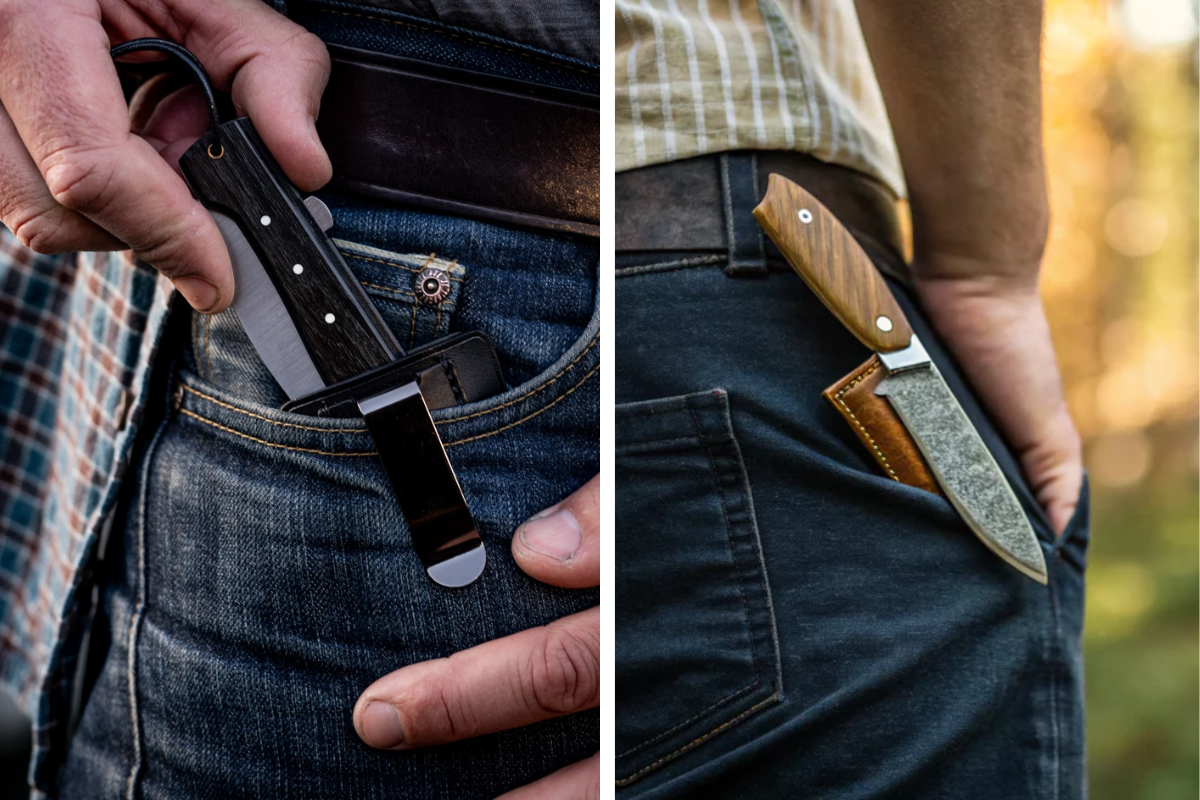
Nebraska allows open carry of knives without a statewide blade‑length cap, meaning you can openly carry a pocket knife of almost any size on your belt or in a sheath, except in certain restricted locations.
By contrast, concealed‑carry rules are much stricter. Under Nebraska Revised Statutes § 28‑1202, it is generally illegal to carry a knife concealed, unless it is an ordinary folding pocket knife with a blade of 3½ inches or less.
This means:
- A pocket knife with a folding blade ≤ 3½ inches may be carried concealed in most situations.
- A folding or fixed‑blade knife with a blade over 3½ inches cannot be carried concealed; doing so is typically a Class I misdemeanor on a first offense and can escalate to a felony for repeat violations.
Where pocket knives are not allowed
Even when a pocket knife is legal under state law, it can still be prohibited in certain places:
- School grounds and school buses are often off‑limits for knives under Nebraska education statutes, where school officials may exclude or discipline students who bring weapons.
- Courthouses, prisons, nuclear facilities, and other government buildings can post or enforce weapons bans, including knives.
- Private property where the owner or operator has posted a no‑weapons policy can also bar knives, even pocket knives, and violating such rules may lead to trespassing or warrantless‑arrest charges.
Prohibited persons and recent legal changes
Nebraska restricts knife possession by certain individuals, notably people convicted of certain felonies, fugitives, or those under domestic‑violence protection orders, similar to firearm‑prohibited‑person rules.
Starting in 2023, Nebraska passed reform‑style legislation modernizing carry laws for knives and other weapons, largely clarifying and liberalizing some aspects while still preserving the core 3½‑inch concealed‑carry limit for pocket knives.
Practical tips for carrying a pocket knife in Nebraska
- If you want to carry concealed, keep your folding pocket knife blade at or under 3½ inches and make sure it is a standard, non‑enhanced folding knife.
- When in doubt about a location (schools, government buildings, private businesses), assume knives are not welcome and either leave the knife at home or leave it in your vehicle securely.
- If you are a prohibited person, check with a local attorney before carrying any knife, as state and federal law may both restrict your rights.
Overall, Nebraska treats most pocket knives as legal tools, but the fine line between an ordinary pocket knife and an illegal concealed “knife” under the deadly‑weapon statute means blade length and how you carry it matter a great deal.
SOURCES :
- https://knifeinformer.com/state-knife-laws/nebraska/
- https://www.knifeden.com/knife-laws-in-nebraska/?__cf_chl_rt_tk=E475Reo6cUtVNr2c6VGBmr5XZAujR1ZWvhq49FbF3V8-1779330480-1.0.1.1-tVNsOj96xLaSuhlvzvHulfMwrxtmuVHWDYT9FFlljJE