In Kentucky, pocket knives are generally treated as everyday tools rather than weapons, and the state is relatively permissive about both owning and carrying them. However, legality depends heavily on how the knife is carried—open versus concealed—as well as the carrier’s age and where the knife is used, especially around schools.
What counts as a “pocket knife” in Kentucky?
Kentucky law defines a “deadly weapon” under KRS 500.080(4)(c) and explicitly excludes an “ordinary pocket knife” or “hunting knife” from that category.
Because the law does not spell out exact measurements, courts usually treat whether a knife is “ordinary” as a factual question: small folding knives with modest blades used for everyday tasks tend to be classified as pocket knives, while larger fixed‑blade or tactical knives are more likely to be seen as deadly weapons.
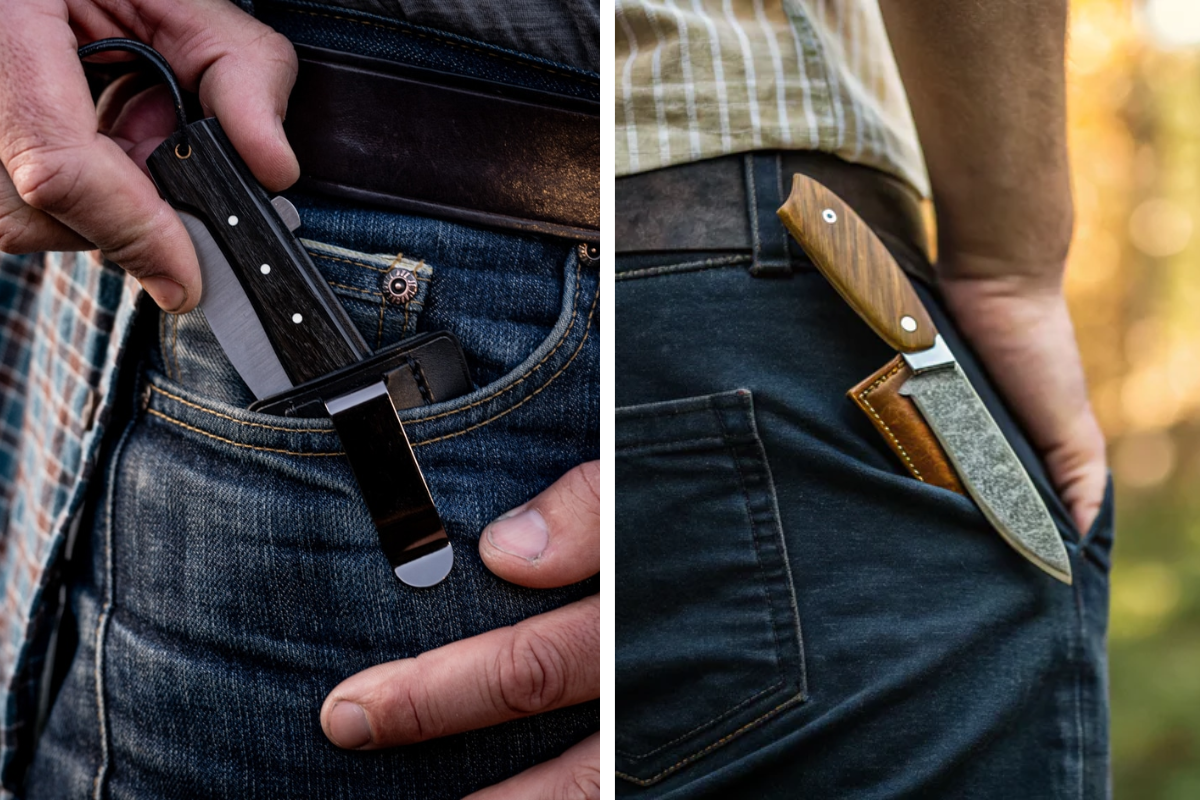
Open‑carry of almost any knife is allowed, including knives that might otherwise qualify as deadly weapons, as long as the knife is clearly visible. There is no statewide ban on knife types—such as switchblades, butterfly knives, or daggers—and no general blade‑length limit, so ordinary pocket knives are clearly legal to own and openly carry.
Concealed carry rules and age limits
The main legal trap for pocket‑knife carriers in Kentucky is concealed carry. Under Kentucky’s permits‑optional (“constitutional carry”) system (KRS 237.109), adults 21 and older who are not otherwise prohibited may carry concealed deadly weapons, including certain knives, without a concealed‑carry permit.
For people under 21, the rules are stricter: they may only conceal an “ordinary pocket knife” or “hunting knife” without a concealed‑carry license. Concealing any other knife that qualifies as a deadly weapon is a Class A misdemeanor under KRS 527.020 unless the person holds a valid concealed‑carry permit.
Age restrictions, schools, and special zones
Kentucky does not ban knife possession by minors, but the concealed‑carry limits still apply to those under 21. Minors can usually carry knives openly, provided they do not threaten or injure anyone, but they must still avoid carrying anything that looks like a concealed deadly weapon.
Far more serious restrictions apply on K–12 school property. It is a Class D felony to open‑carry or conceal‑carry a knife considered a deadly weapon (i.e., anything beyond an ordinary pocket or hunting knife) on public or private school grounds, regardless of age or permit status. This means even a benign‑looking pocket knife can create serious legal exposure if carried onto a school campus in a way that appears weapon‑like.
Practical tips for Kentucky knife carriers
For most adults in Kentucky, carrying a small folding pocket knife openly is low‑risk and fully within the state’s legal framework. If you decide to carry concealed, the safest approach is to stick to a clearly “ordinary pocket knife” if you are under 21, or to ensure you meet the state’s constitutional‑carry standards if you are 21 or older.
Always avoid bringing any knife on school grounds, and be aware that local ordinances or private‑property rules (malls, workplaces, government buildings) may impose stricter limits even when state law is lenient.
SOURCES :
- https://www.couteaux-morta.com/en/kentucky-knife-laws/
- https://www.akti.org/state-knife-laws/kentucky/