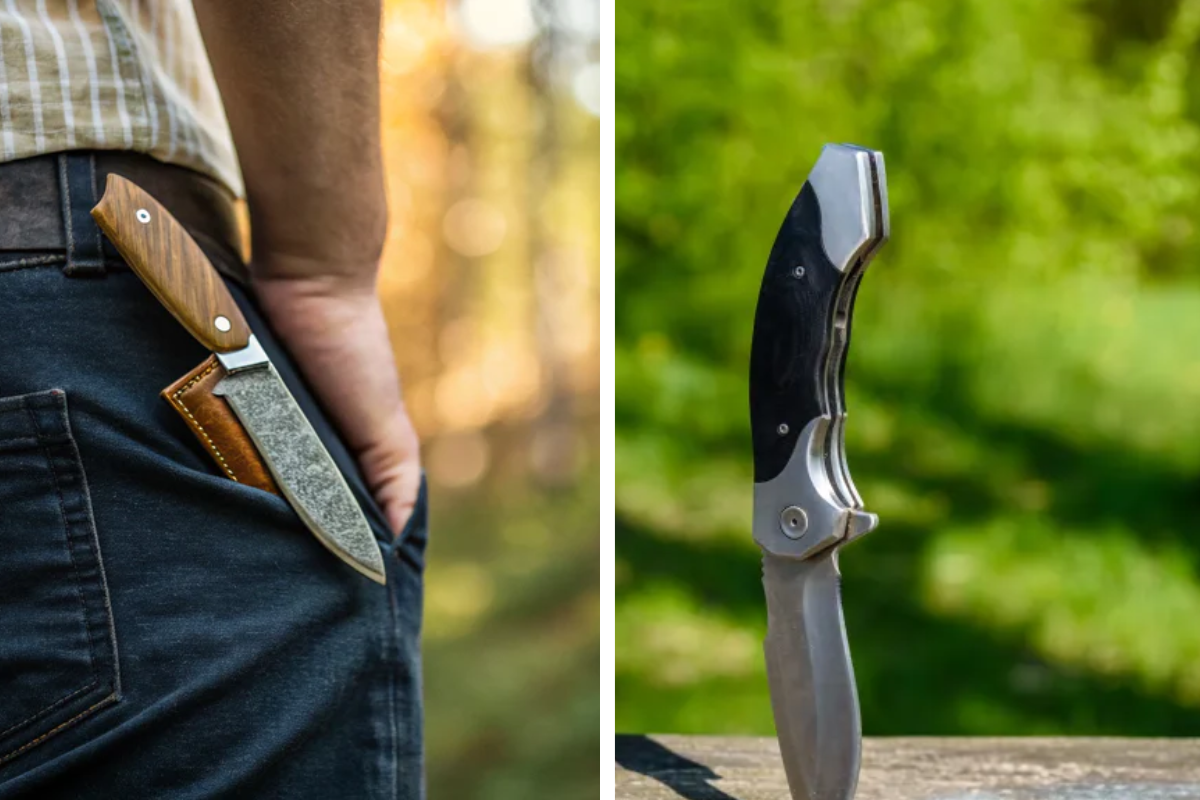
In Kansas, pocket knives are generally legal to own and carry, both openly and concealed, but a few restrictions apply to specific knife types and where you can bring them. The state’s framework is relatively permissive compared with many other states, especially for common folding or fixed‑blade pocket patterns.
Ownership and carry in public
Kansas does not impose a statewide blade‑length limit for ordinary knives, including pocket knives. You can carry a folding or fixed‑blade pocket knife either openly or in a pocket (concealed), as long as it is not a prohibited type such as a ballistic knife or throwing star. Under K.S.A. 21–6301 and related statutes, the main concern is not the knife itself but whether it is carried or used as a weapon with unlawful intent.
In practice, most everyday pocket‑knife‑style tools (multi‑tools, folders, small fixed blades) are treated as lawful so long as they are reasonably sized and not used in a threatening way. Carrying something that looks more like a tactical weapon or machete may draw more scrutiny, even if it is not technically illegal.
Prohibited knife types and uses
Kansas law specifically bans certain specialized weapons, including:
- Ballistic knives (knives that can be fired or projected).
- Throwing stars and similar devices intended primarily as weapons.
If you use any knife—ordinary pocket knife included—with intent to commit a crime or to threaten or harm someone, that can trigger criminal‑weapons or assault charges under Kansas’s weapons‑use statutes. Simply owning or carrying a legal pocket knife is not enough; prosecutors must show unlawful intent or prohibited use.
Restricted locations
Even though Kansas allows broad carry, there are places where knives of any kind are restricted, mirroring typical “weapons in prohibited places” rules. These commonly include:
- Schools and school property, including K–12 campuses and, in many school‑district policies, buses and events.
- Government buildings, courthouses, and polling places, especially during election activities.
- Certain secure facilities such as airports, nuclear plants, or other locations where state or federal law bars weapons.
Local municipalities may also adopt narrower ordinances (for example, some cities have defined “dangerous knives” differently), so it is wise to check any city‑specific rules if you plan to carry a larger or more conspicuous knife in an urban area.
Practical takeaway for pocket‑knife users
For everyday pocket‑knife use in Kansas, the key points are:
- You can legally own and carry folding or fixed‑blade pocket knives of any ordinary length, open or concealed.
- Avoid ballistic knives, throwing stars, and using any knife for threats or unlawful acts.
- Keep your knife out of schools, many government buildings, and other statutorily prohibited places.
SOURCES :
- https://www.akti.org/state-knife-laws/kansas/
- https://www.carved.com/blogs/life-at-carved/pocket-knife-rules-laws-by-state