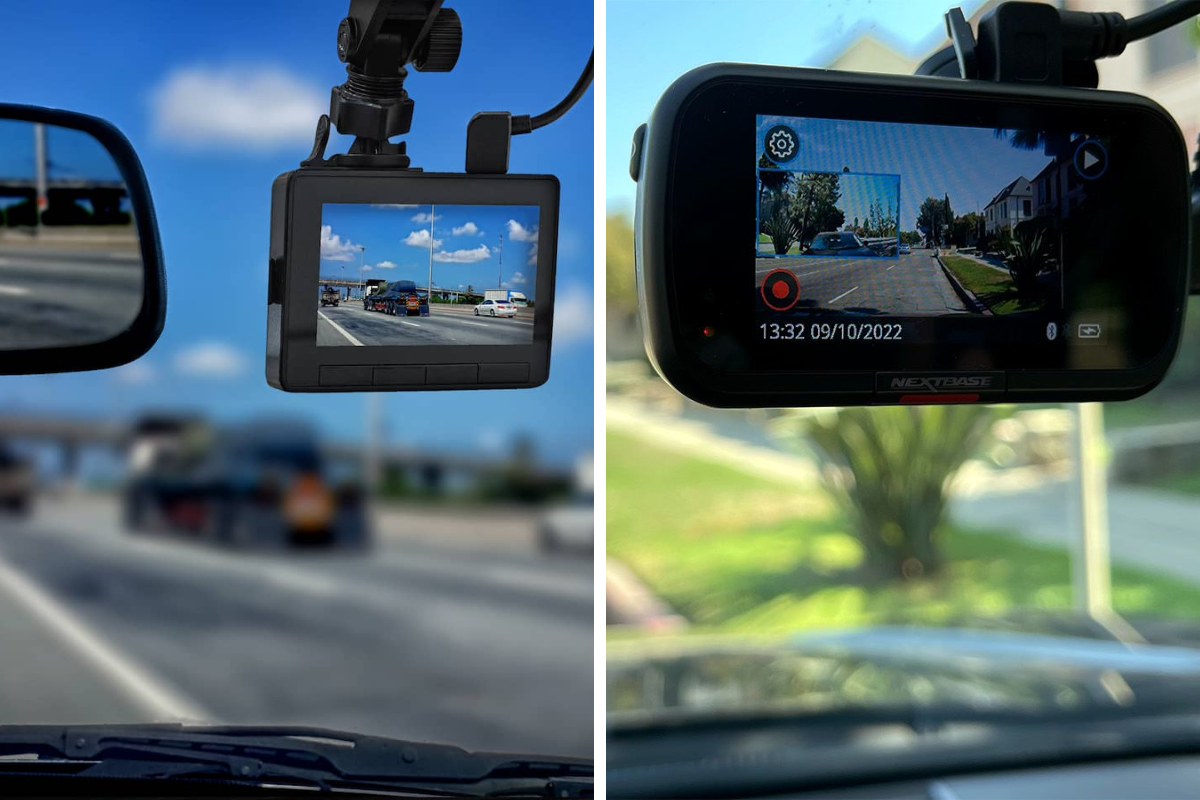
Dash cams are legal in Washington, but drivers must follow windshield‑obstruction rules and strict audio‑consent rules to stay compliant. Used correctly, dash‑cam footage is widely treated as admissible evidence in car‑accident and insurance cases.
Are Dash Cams Legal in Washington?
Yes. Washington does not ban dash cams, and many drivers use them in cars, rideshares, and commercial vehicles. The key limits come from vehicle‑equipment rules (about what you mount on the windshield) and the state’s wiretapping/privacy law (about what you record inside the car).
If a dash cam does not block the driver’s view and audio recording is handled properly, it is lawful to install and operate.
Mounting and Windshield Rules
Washington restricts objects on the front windshield that block the driver’s clear view.
- You can mount a dash cam, but it must not obstruct the driver’s primary line of sight through the windshield.
- A common rule‑of‑thumb used in practice is that devices should not cover more than a small five‑inch square on the driver’s side or a slightly larger area on the passenger’s side of the windshield.
Because of this, many guidance sources recommend placing the camera either on the dashboard or high behind the rearview mirror, away from the central line of sight.
Audio Recording and Two‑Party Consent
Washington is a two‑party (all‑party) consent state for audio recording.
- If your dash cam records conversations inside the car, you must obtain permission from every person being recorded before capturing their voices.
- Audio recorded without consent can be treated as illegally obtained, which may keep it out of court and expose the driver to privacy‑related liability.
Best practice is either to disable the microphone or to post a clear notice in the vehicle (or verbally inform passengers) that audio is being recorded and obtain their agreement.
Privacy and What You Can Record
Video footage of public roads, traffic, and other vehicles is generally fine under Washington law, because people in public spaces do not have a strong expectation of privacy.
However, you should avoid using the camera to:
- Peer into private yards, windows, or other off‑road areas where people reasonably expect privacy.
- Systematically record identifiable people in non‑public settings without consent.
If such footage is later used in court, it may be challenged or excluded on privacy grounds.
Practical Tips for Washington Drivers
- Mount the dash cam on the dashboard or near the top of the windshield, keeping it out of your main field of vision.
- Turn off in‑car audio recording unless you get explicit consent from all passengers in the car.
- Do not edit or splice critical clips; save the raw footage promptly so it can support your insurance claim or legal case if needed.
SOURCES :
- https://www.ddpai.com/blog/dash-cam-laws/
- https://www.freightwaves.com/checkpoint/dash-cam-laws-by-state/