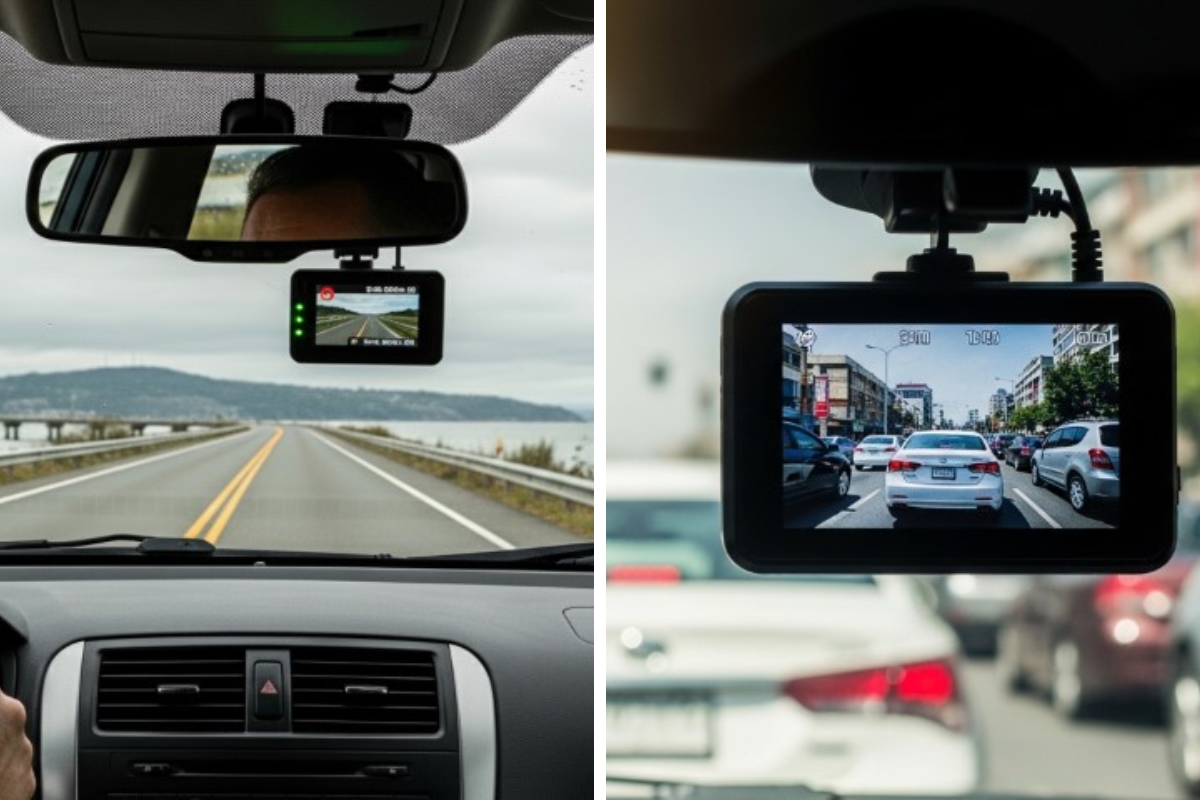
Dash cams are legal in Vermont with specific mounting rules to ensure they don’t obstruct the driver’s view. Understanding these regulations helps avoid tickets while capturing valuable evidence.
Mounting Rules
Vermont allows dash cams on the windshield in designated spots: lower right-hand corner (max 4 inches tall, 12 inches long) or upper left-hand corner (max 2 inches high, 2.5 inches long). Otherwise, mount on the dashboard or elsewhere without blocking vision, per 23 V.S.A. § 1065.
Audio Recording
Vermont follows one-party consent for audio: you can record if you’re a participant, but not secret third-party intercepts. Dash cam audio in public roads (no privacy expectation) is generally fine, but disable it for passengers without consent to avoid issues. Video alone poses no audio concerns.
Privacy Considerations
Recordings on public roads or parking lots are permissible due to no reasonable privacy expectation. Avoid pointing into private homes or areas like neighbors’ backyards—voyeurism laws (13 V.S.A. § 2605) prohibit capturing intimate areas or private residences.
Use as Evidence
Dash cam footage is admissible in court if legally obtained, aiding accident claims or defenses. Police may request it during investigations but cannot seize without cause.
Comparison of Allowed Positions
Follow these to stay compliant—no major 2026 changes reported.
SOURCES :
- https://www.ddpai.com/blog/dash-cam-laws/
- https://www.gpsinsight.com/blog/driver-facing-dash-cams-law/