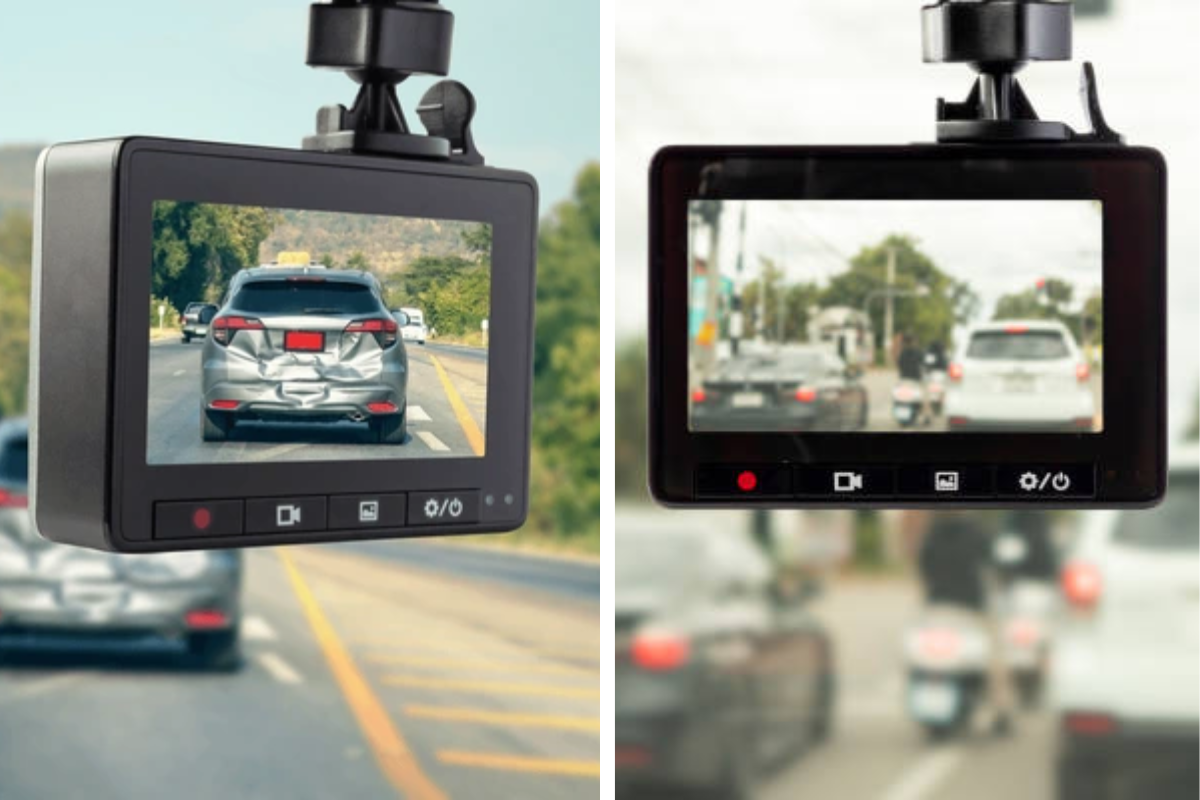
Delaware law does not prohibit the use of dashboard cameras, making them legal for both personal and commercial drivers. However, specific regulations govern where and how these devices can be mounted, as well as what types of recordings are permissible. Understanding these requirements helps Delaware drivers use dash cams effectively while remaining compliant with state law.
Windshield Mounting Restrictions
Delaware statute prohibits driving with any sign, poster, or other nontransparent material on the front windshield, side wings, or side and rear windows. This broad prohibition does not specifically exempt dashboard cameras, meaning windshield-mounted dash cams can technically violate this law. The statute focuses on preventing visual obstructions that could compromise driver safety or impair the ability to see the road clearly.
To comply with Delaware’s windshield obstruction law, most drivers mount dash cams on the dashboard itself or in other locations that do not involve attaching nontransparent materials to the glass. While some drivers mount cameras behind the rearview mirror where they are less conspicuous, the safest legal approach is dashboard mounting to avoid any potential violation. Unlike states such as California or Arizona that define specific windshield zones where small devices are permitted, Delaware law provides no such exception.
Audio Recording Consent Requirements
Delaware follows a two-party consent rule for audio recordings, which requires that all parties involved in a conversation consent before being recorded. This requirement applies to private conversations where participants have a reasonable expectation of privacy. While dash cam video recordings of public roadways typically do not trigger privacy concerns, audio recordings inside the vehicle cabin can implicate Delaware’s consent laws.
Drivers who want to record audio should notify all passengers that recording is taking place and obtain their consent. Many dash cam users post visible notices—such as stickers on the dashboard or window—stating that audio and video recording are in use. Alternatively, drivers can disable the audio recording function entirely and rely solely on video footage to avoid potential privacy violations.
Admissibility as Evidence
Dashboard camera footage is generally admissible as evidence in Delaware courts, provided it is authentic and unaltered. This footage can serve as powerful evidence in auto accident claims by providing an objective, real-time account of events leading up to a collision. Insurance companies often settle claims more quickly when presented with clear video proof of fault, reducing the likelihood of prolonged disputes.
To ensure dash cam footage remains valid evidence, drivers should preserve original files without editing or modification. Time and date stamps, location data, and device information strengthen the credibility of recordings when presented in legal proceedings. A Wilmington car accident lawyer can use properly maintained dash cam footage to establish negligence, refute false claims, and support compensation demands.
Enforcement and Practical Considerations
While Delaware’s windshield obstruction law technically applies to dash cams, enforcement appears inconsistent in practice. Many drivers report using windshield-mounted cameras for years without citations, and officers typically do not stop vehicles solely for this violation. However, relying on lax enforcement is risky—during vehicle inspections or traffic stops for other violations, officers could issue citations for nontransparent obstructions on the windshield.
Dashboard mounting eliminates legal ambiguity and ensures compliance regardless of enforcement trends. Properly securing cables so they do not dangle into the driver’s field of vision and positioning the camera to avoid obstructing controls or airbag deployment paths are additional safety measures that support lawful operation.
Understanding Delaware’s dash cam regulations allows drivers to use these valuable tools confidently and legally, protecting themselves on the road while respecting state law.
SOURCES :
- https://www.reddit.com/r/Delaware/comments/r5ft9z/dashcam_law/
- https://www.freightwaves.com/checkpoint/dash-cam-laws-by-state/