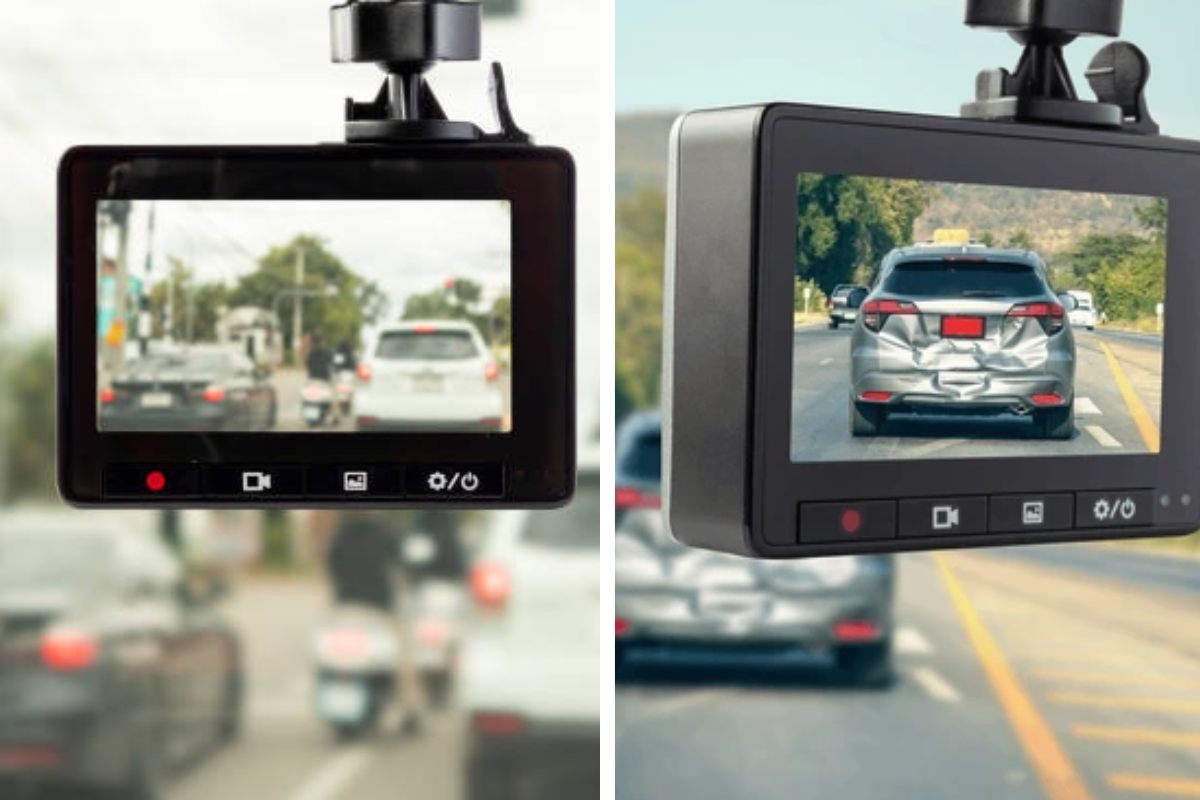
Using a dash cam in Colorado is a popular way to document your travels and provide essential evidence in the event of an accident or insurance dispute.
While there is no state law explicitly prohibiting the use of these devices, you must ensure your setup complies with existing traffic and safety regulations to avoid potential legal issues or citations.
Mounting and Visibility Requirements
Colorado law requires that a driver’s view of the road remains “normal and unobstructed”. Under Colorado Revised Statute §42-4-201, any object placed on or near the windshield that hinders your visibility could be considered a violation.
To maintain compliance, the safest approach is to mount your camera in a position that does not interfere with your field of vision, such as behind the rearview mirror or high up in the center of the windshield.
Additionally, drivers should avoid devices with reflective or metallic casings. Statutes regarding windshield obstructions also prohibit materials that reflect glare or cause distractions to other motorists, as these can create hazardous conditions on the road.
If a dash cam’s design or placement causes a nuisance to other drivers, law enforcement may issue a citation regardless of whether the device itself is legal.
Local Ordinances and Privacy
While state regulations are generally consistent, it is important to be aware of local municipal codes. For instance, the City of Denver has specific ordinances, such as Denver Ordinance 54-124, that reinforce the requirement for an unobstructed view through the windshield and all windows.
In areas with stricter local oversight, improperly placed cameras may be treated as a violation of municipal traffic codes.
Regarding audio recording, Colorado is a one-party consent state. This means that as long as one person involved in the recorded conversation consents to the recording—which, in the case of a personal dash cam, is typically the driver—you are generally not in violation of wiretapping or privacy laws. However, it is always a good practice to inform passengers that they are being recorded to avoid any privacy disputes.
Legal Admissibility and Seizure
Dash cam footage is generally admissible in Colorado courts and can serve as vital evidence for insurance claims or legal proceedings. If you are involved in a collision, this footage can help establish fault and protect you from fraudulent claims. Conversely, if you are involved in an incident, you should never attempt to destroy or alter the footage, as it may be subject to legal subpoenas or warrant requests.
It is important to note that law enforcement cannot seize your camera during a standard traffic stop without a valid warrant or subpoena. By ensuring your device is mounted securely, non-reflective, and does not obstruct your vision, you can leverage the benefits of dash cam technology while remaining fully compliant with Colorado law.
SOURCES :
- https://www.mydenveraccidentlawfirm.com/news-resources/what-you-need-to-know-before-using-a-dashcam-in-colorado/
- https://www.ddpai.com/blog/dash-cam-laws/