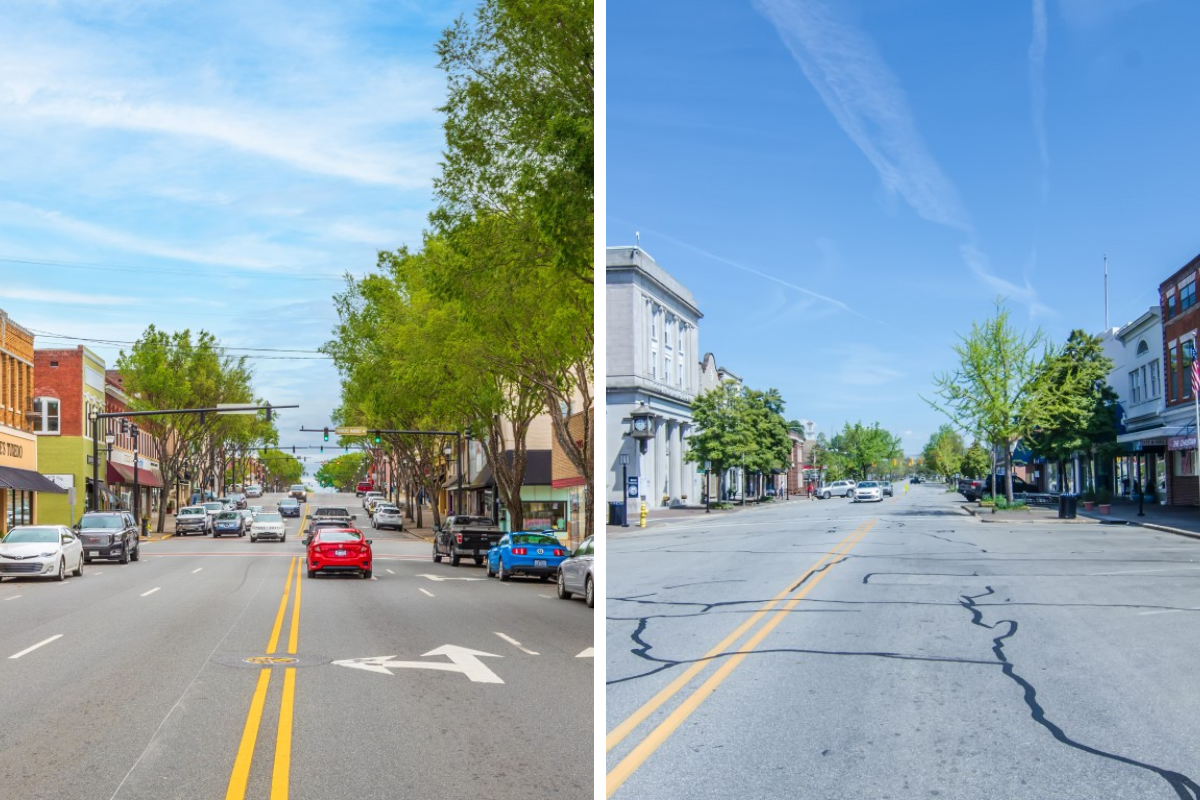
Forest City, North Carolina, has been identified as the town with the highest poverty rate in the state. This small community of about 7,357 residents grapples with a 38.9% poverty rate, far exceeding the statewide average of 13.3%.
Key Poverty Statistics
Forest City’s median household income stands at just $35,232, well below North Carolina’s $66,186 median. The town’s five-year average unemployment rate is 10.1%, double the state figure of 5.0%, limiting job opportunities for many residents. Only 17.2% of adults hold a bachelor’s degree or higher, compared to 33.9% statewide, hindering higher-wage employment.
Historical Context
Nestled in Rutherford County in the foothills of the Blue Ridge Mountains, Forest City boomed mid-20th century as a textile and furniture manufacturing hub. Major employers like the Forest City Furniture Co. and textile mills drove growth, but globalization and automation led to factory closures starting in the 1990s. By the 2022 American Community Survey data, these shifts left lasting economic scars, with poverty entrenched despite some recent data showing slight declines to 32-33.6%.
Root Causes
Deindustrialization remains the primary driver, as manufacturing jobs vanished without diverse replacements. Low educational attainment perpetuates the cycle, with fewer residents accessing skilled positions in tech or healthcare.
Rural location exacerbates issues, as proximity to urban centers like Charlotte is over an hour away, restricting commuting. Recent analyses note persistent high poverty in similar Southern mill towns, unaffected by national economic recoveries.
Community Impact
High poverty strains local resources, with nearly 40% of residents below the federal threshold of $31,200 for a family of four. Food insecurity affects many households, and mental health challenges are elevated, mirroring national trends where low-income adults report higher depression rates.
Schools face funding shortfalls, impacting youth outcomes, while healthcare access lags in this underserved area.
Efforts and Outlook
Local initiatives include workforce training via Isothermal Community College and small business grants from Rutherford County. State programs aim to reduce North Carolina’s overall poverty, which held steady at 12.5-12.8% in recent years.
Revitalization efforts focus on tourism leveraging nearby mountains and historic sites, alongside remote work incentives. While progress is slow, declining unemployment signals potential improvement if investments continue.
Forest City’s story highlights broader rural American struggles, but community resilience offers hope for turnaround.
SOURCES :
- https://247wallst.com/income/2024/05/09/towns-in-north-carolina-with-the-worst-poverty/
- https://worldpopulationreview.com/us-cities/north-carolina/forest-city