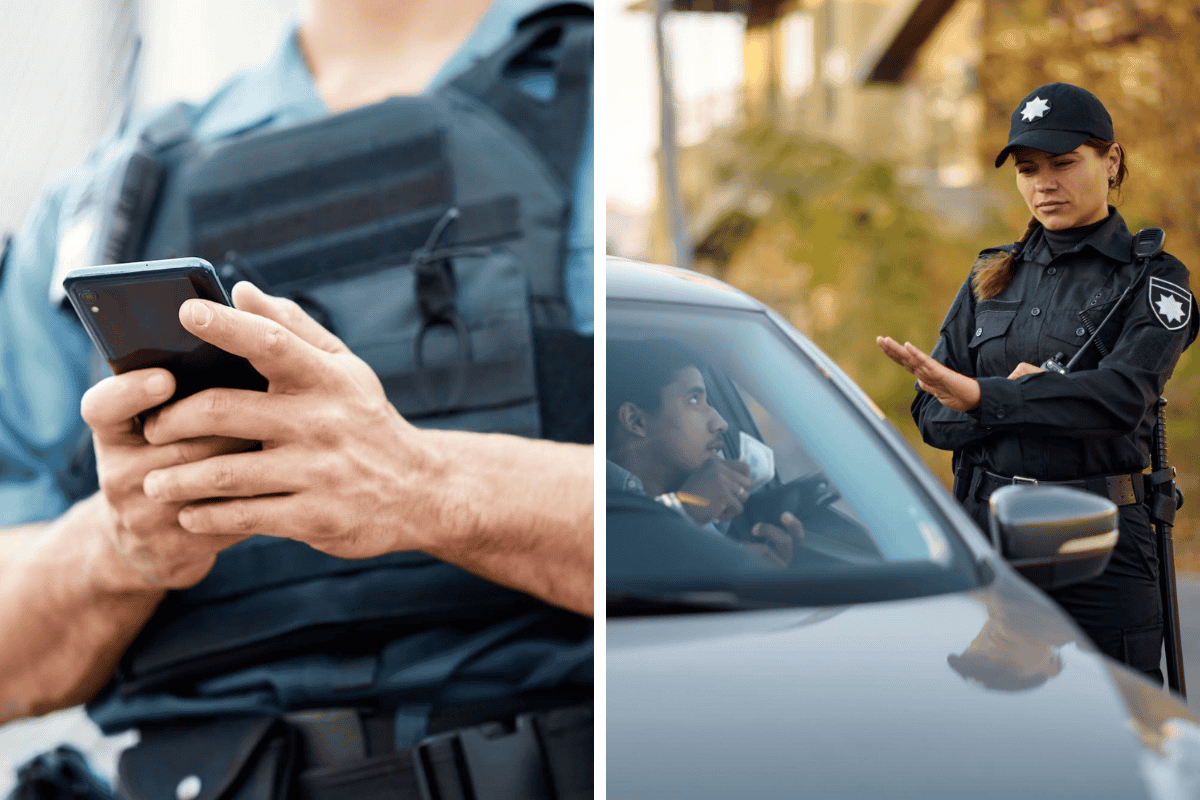
No, Florida police generally cannot search your phone during a routine traffic stop without a warrant, your consent, or a specific legal exception. The U.S. Supreme Court’s Riley v. California (2014) ruling sets a high bar for digital privacy, requiring officers to get judicial approval before digging into your device’s contents.
Fourth Amendment Protections
Florida follows federal precedent under the Fourth Amendment, treating cell phones as uniquely private due to their vast data (texts, photos, location history). During a traffic stop—a brief investigative detention—police need probable cause plus a warrant for a phone search, not just your presence in the vehicle.
State courts reinforce this: Pre-Riley, Florida banned warrantless phone searches (Smallwood v. State, 2013); post-ruling, it’s settled law. Traffic violations alone (speeding, taillight out) grant no automatic access—phones aren’t “incident to arrest” unless you’re taken into custody.
No 2026 changes altered this; new laws focus on unrelated issues like squatters.
Traffic Stop Specifics
Stops allow limited actions: License check, registration, warrants scan. Officers may ask for your phone if suspecting DUI (e.g., texting evidence) or crimes like reckless driving videos, but demands aren’t commands.
- Seizure vs. Search: Police can temporarily take your phone if lawfully arrested (e.g., DUI), but contents stay locked without a warrant.
- Plain View: If your screen shows incriminating info openly (e.g., drug sale texts during a stop), it’s fair game—no warrant needed.
- No Arrest Scenario: Routine stops prohibit searches; unlocked phones visible don’t justify swiping through apps.
Florida Statute § 933.02 covers warrants for “electronic devices,” requiring sworn probable cause affidavits.
Exceptions Allowing Warrantless Searches
Narrow carve-outs exist:
Consent is most common; politely decline: “I don’t consent to searches.” No obligation to unlock via Face ID—Fifth Amendment protects passcodes, though courts split on biometrics.
What Happens If They Search Illegally?
Evidence from unlawful searches gets suppressed via motions under Florida Rule 3.190(h). Cases dismissed if phone data is sole proof (e.g., drug chats in trafficking stops).
- DUI Stops: Breath tests mandatory if probable cause; phones secondary for distraction proof.
- High-Risk Scenarios: Weapons charges or fleeing allow impound/inventory, but digital forensics need warrants.
Body cams document refusals, strengthening challenges.
Step-by-Step Rights During Stops
- Pull over safely, hands visible, windows down.
- Provide docs (license, insurance)—no phone handover.
- Decline searches: “Officer, I respectfully don’t consent.”
- Stay silent beyond basics; ask “Am I free to go?”
- Record if safe (dash cam legal).
Post-stop, note badge numbers, details for complaints.
Practical Scenarios
- Speeding Stop: No phone access unless arrest.
- DUI Suspicion: Seizure OK, search no—warrant for BAC-related data.
- Warrant Check Hits: If arrested, phone seized; contents forensic later.
- Passenger Phone: Same rules—officers can’t demand yours for driver’s issues.
Stats: 80%+ warrantless phone searches challenged successfully post-Riley in Florida.
Unlocking and Coercion
Police can’t force passcodes (Fifth Amendment self-incrimination). Biometrics trickier—some courts treat Face ID as non-testimonial (like fingerprints). Invoke rights; courts favor defendants.
Broader Context and Tips
Florida’s 1,200+ daily stops amplify stakes—phones hold CSAM, fraud evidence. ACLU reports 20% illegal digital grabs; know Carpenter v. U.S. (2018) limits location data too.
Prevention:
- Auto-lock phones (5 seconds).
- Use strong passcodes, not biometrics alone.
- VPN apps obscure data.
- Lawyer up immediately—firms like MegaJustice specialize.
Resources: FDLE statutes (leg.state.fl.us), ACLU know-your-rights guides.
Comparisons to Other States
Florida aligns nationally:
| State Approach | Examples |
|---|---|
| Strict Warrant | FL, CA (post-Riley) |
| Broader Vehicle | TX (probable cause often suffices) |
| Probation Loopholes | Most |
Stay informed—rights preserve freedom amid tech-heavy policing.
SOURCES:
- https://www.michaelwhiteesq.com/can-police-search-my-phone-during-a-florida-arrest/
- https://www.centrallaw.com/blog/history-of-cell-phone-searches/