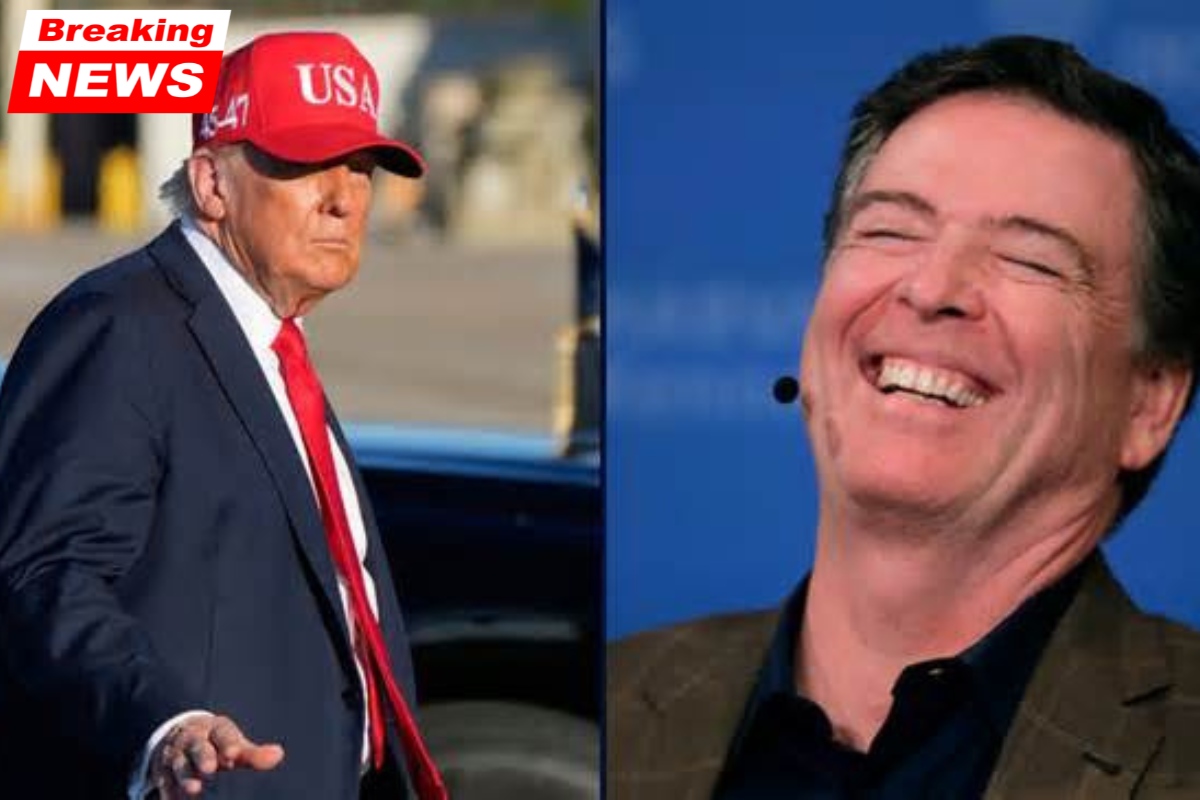
Former FBI Director James Comey has been indicted for the second time, this time for alleged threats made against former President Donald Trump. The indictment, issued on April 28, 2026, centers around a May 2025 Instagram post in which Comey arranged seashells to form the numbers “86 47” on a beach.
Prosecutors argue that this post was a serious and direct threat to harm the president, while Comey’s legal team plans to file a motion to dismiss, claiming vindictive and selective prosecution.
The Controversial Instagram Post and Legal Battle
The post in question showed seashells arranged in the sand to form the numbers “86” and “47.” Prosecutors claim that the use of these numbers is a veiled reference to a violent intent against the president.
The number “86” is commonly used in the hospitality industry to indicate that something is to be removed from a menu or rejected, but the legal team argues that it was a harmless, artistic expression. Comey’s attorneys argue that the prosecution is politically motivated and based on a misunderstanding of the post’s context.
The case has drawn attention because of its connection to Trump’s past statements and the frequent use of social media for political expression.
In response to the indictment, Comey’s legal team suggested that the charges stem from a political vendetta, given that the indictment followed a prior case against Comey that was dismissed in November 2025.
Trump’s Own Social Media Activity Under Scrutiny
Interestingly, President Trump’s own social media posts could play a role in this legal case, as they often display aggressive or threatening language that could be argued to be similar to Comey’s Instagram post.
In September 2025, Trump posted on his Truth Social account, directly addressing then-Attorney General Pam Bondi, saying, “We can’t delay any longer, it’s killing our reputation and credibility… JUSTICE MUST BE SERVED, NOW!!!”
Trump’s rhetoric and the legal implications of his own social media activity could become central to the argument. If the courts find that Comey’s post was merely political hyperbole, as often claimed by Trump in his posts, it could set a significant precedent for free speech interpretations in cases involving high-profile political figures.
Freedom of Speech and Political Hyperbole: A Legal Debate
One of the central issues in this case is the interpretation of freedom of speech, particularly the boundaries between political hyperbole and direct threats. Prosecutors will need to prove that Comey’s post was more than just a symbolic gesture and was indeed a credible threat to harm the president.
Legal experts suggest that a ruling in Comey’s case could have far-reaching implications for the broader interpretation of political speech and threats. If the courts accept the government’s argument that Comey’s seashell post was a direct threat, similar posts from Trump or other political figures could also come under scrutiny.
For instance, Trump himself has made numerous provocative and potentially threatening posts on social media, including one in which he posted an image of himself holding a gun, with explosives going off in the background, in reference to the Iran conflict.
Another post, in which Trump expressed anger toward Senate Majority Leader Rod Bray, included the statement, “We’re after you, like no one has ever come after you before!”
Prosecutors could argue that such language, including Trump’s “we’re after you” post, could be interpreted as equally threatening as Comey’s use of the number “86.”
Trump’s Executive Order on Free Speech
An additional layer to this case may involve Trump’s own stance on free speech. During his first term, Trump issued an executive order titled “Restoring Freedom of Speech and Ending Federal Censorship,” which was in response to his social media bans from platforms like Twitter and Meta.
The order explicitly reinforced the First Amendment’s protections and declared that American citizens have the right to speak freely in the public square without government interference.
This order could play a key role in the defense of both Trump’s and Comey’s actions, as it was meant to advocate for broad interpretations of free speech. Comey’s legal team may argue that this order reflects the former president’s position on political expression, which should not be criminalized unless it constitutes a clear, credible threat.
A Case with Broad Implications for Free Speech
The legal case against James Comey and the ongoing scrutiny of political speech in the social media age highlight a growing debate over the boundaries of free speech and the potential for retaliation through legal channels.
With President Trump’s social media posts potentially setting a precedent, the outcome of Comey’s case could impact how political speech is treated in future legal cases. As the legal process unfolds, it will be important to monitor how the courts balance the line between political expression and threatening behavior.