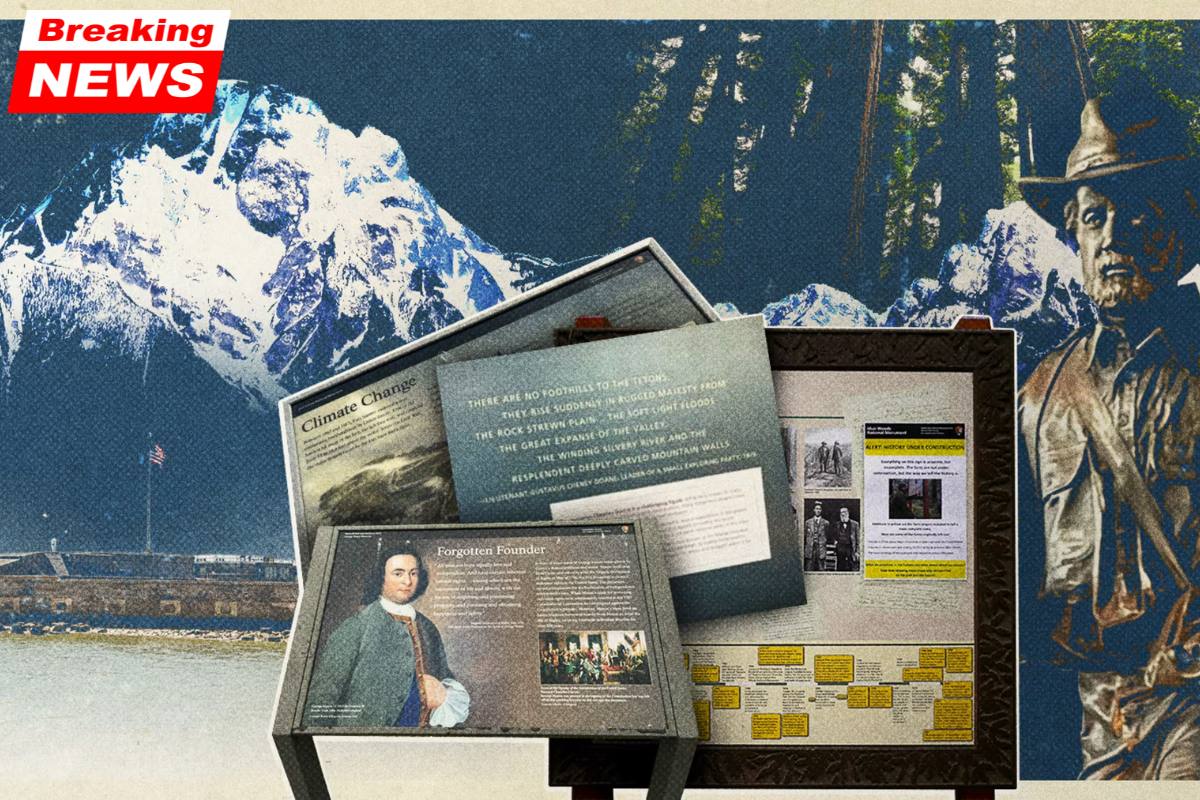
In spring 2025, visitors to Grand Teton National Park will notice a significant change: a marker beneath the statue of Gustavus Cheyney Doane, a 19th-century explorer, will be missing. This marker had previously asked visitors to reflect on the good and bad aspects of Doane’s legacy.
While Doane is credited with contributing to the establishment of the first national park, he also led a massacre of at least 173 members of the Piegan Blackfeet — a part of his history he bragged about throughout his life.
This sign’s removal is a direct result of a March 2025 executive order issued by President Donald Trump, which has sparked backlash from various groups and citizens, claiming it erases vital history.
The Removal of Historical Markers and the Legal Backlash
The removal of the marker at Grand Teton is just one of at least 45 changes made in national parks across the U.S. as part of the Trump administration’s directive to eliminate content deemed to “inappropriately disparage Americans past or living.”
The Department of the Interior, which manages national parks, has faced legal action, including a lawsuit filed in February by a coalition of conservationists and advocates. They claim that the executive order is part of a larger campaign to erase uncomfortable aspects of American history and suppress scientific knowledge.
Critics, including Tom Rodgers from the Blackfeet Nation, argue that removing markers like the one beneath Doane’s statue disrespects the victims of the massacre and erases the painful truths of U.S. history. Rodgers called the changes “Orwellian,” stating that they present a distorted version of history by failing to acknowledge significant atrocities like the Piegan Blackfeet massacre.
Trump’s Executive Order: An Effort to Reframe American History
The Trump administration argues that the executive order’s purpose is not to remove history, but to present it in a more positive and balanced light. The administration’s focus is on ensuring that public displays in national parks and museums reflect America’s full story, emphasizing both the nation’s achievements and its challenges.
Critics, however, argue that the effort amounts to whitewashing the past, glossing over complex and uncomfortable elements of the nation’s history, especially those concerning indigenous peoples, slavery, and racism.
The Interior Department’s explanation for the removal of displays like the one at Grand Teton is that they were removed to comply with the executive order’s directive that calls for accurate, evidence-based information. For example, the sign about climate change at South Carolina’s Fort Sumter National Monument, which warned of rising seas potentially flooding the fort, was removed entirely.
The Interior Department claimed that the sign was not “grounded in real science”, sparking controversy from those who believe that climate change and its potential effects on historical landmarks should be discussed openly.
Other Changes in National Parks Across the Country
The Grand Teton marker is far from the only exhibit to be altered. In Muir Woods National Monument in California, signs detailing the contributions of Native Americans and women have been removed. One specific sign, which pointed out that John Muir, a renowned environmentalist, referred to indigenous people using racist language in his diaries, was taken down.
The removed sign had also noted that Muir ignored the genocide that indigenous communities faced during his time. The administration’s decision to remove such signs has been criticized for further marginalizing indigenous peoples’ contributions to America’s natural heritage.
Meanwhile, in Washington, D.C., displays on George Mason have been edited to remove references to his ownership of slaves, despite his role as a prominent advocate for individual rights. This action contributes to a broader trend of removing uncomfortable truths from public discourse, prompting backlash from historians and lawmakers alike.
Pushback Against the Removal of Content
Since the implementation of the executive order, several advocacy groups and lawmakers have expressed strong opposition. One significant pushback came in February 2025, when a federal court blocked the National Park Service from proceeding with plans to replace slavery-related exhibits at the President’s House Site in Philadelphia.
The new panels proposed by the Interior Department were accused of sanitizing the history of slavery, specifically downplaying the role of George Washington in enslaving people at his estate.
Democratic lawmakers have also voiced their concerns, with some sending letters to the Interior Department in April asking for clarification about the review process for these changes. Rep. Jared Huffman and Sen. Martin Heinrich both criticized the changes, warning that the nation was facing a critical moment in which history was being distorted.
Erasure of History or Restoration of Truth?
Despite the growing backlash, the Trump administration maintains that the changes are a necessary course of action to “restore the truth” about America’s history. The White House spokesperson, Taylor Rogers, defended the actions, stating that the “radical left’s divisive and inaccurate characterization of our nation’s history” has infiltrated national parks and museums, and that Trump’s actions were restoring national pride and historical sanity.
For those opposed to the changes, including Rodgers from the Blackfeet Nation, the issue goes beyond a political disagreement: it’s about acknowledging historical truths in a way that helps shape a more inclusive and honest understanding of the nation’s past.
The Future of Historical Displays in National Parks
As the U.S. approaches the 250th anniversary of its founding in 2026, the controversy surrounding these changes is expected to intensify. Alan Spears, Senior Director at the National Parks Conservation Association, criticized the administration’s efforts as a misguided attempt to solve a problem that does not exist.
The ongoing debate reflects the nation’s broader struggle over how to reconcile its ideals with its history of oppression and injustice.
For many, the real question is whether these changes will hinder the opportunity to have an open and honest conversation about the United States’ history — warts and all — as the country marks a significant milestone in its existence.