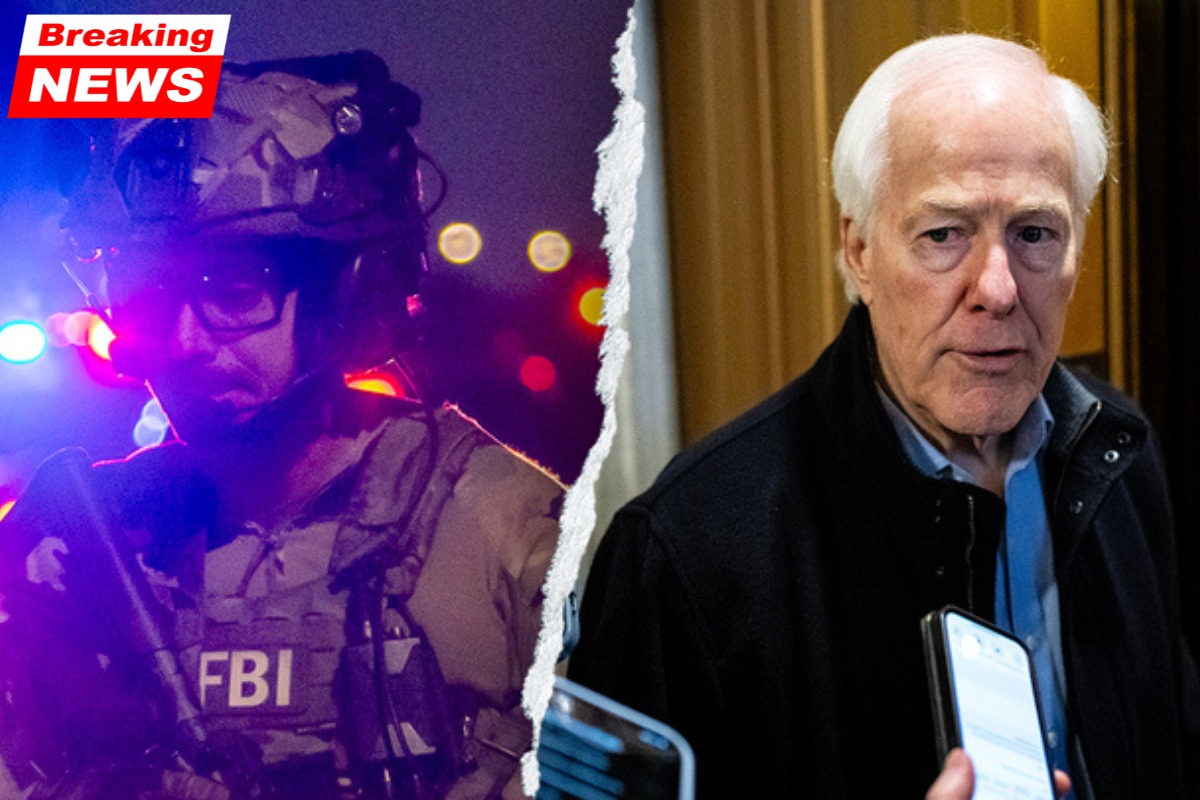
A fresh political clash has emerged in the United States as senior Republican leaders criticise Democratic policies on immigration and public safety, especially during a time of rising national concern over security threats.
John Cornyn criticises Democrats on public safety
Longtime Texas Senator John Cornyn has accused Democrats of putting American lives at risk by supporting sanctuary policies and failing to ensure proper funding for the Department of Homeland Security.
In an interview, Cornyn said this approach reflects what he described as a broader “defund police mentality” among some on the left.
Concerns rise after recent security threats
Cornyn’s remarks come at a time of heightened concern following an attempted attack targeting Donald Trump during the White House Correspondents’ Association dinner.
The incident has brought renewed attention to public safety and the need for strong security measures.
At the same time, there is growing debate around crimes involving undocumented immigrants and how such cases are handled across the country.
DHS funding lapse adds pressure
The situation is further complicated by what officials describe as the longest funding lapse in the history of the Department of Homeland Security.
Cornyn argued that this lack of funding weakens the government’s ability to respond effectively to threats. He stressed that public safety should be the top priority and cannot be compromised.
New bill targets sanctuary cities
In response, John Cornyn recently introduced the Sanctuary City Elimination Act. The proposed law aims to ensure that local law enforcement cooperates with U.S. Immigration and Customs Enforcement by honouring detainer requests. It would also block sanctuary cities from receiving certain federal funds if they fail to comply.
Details of the proposed legislation
The bill includes several key provisions. It would prevent sanctuary jurisdictions from accessing federal grants related to arts, education, environment, and community development.
It also proposes legal protection for local officers who cooperate with ICE by treating them as federal agents.
Additionally, it allows state governments affected by crimes involving undocumented immigrants to take legal action against sanctuary jurisdictions and the federal government.
Political tensions and past cases highlighted
Cornyn also pointed to past incidents, including the death of Jocelyn Nungaray, a 12-year-old from Houston killed in 2024, as an example of the risks he associates with immigration policies during the administration of Joe Biden. He argued that such cases remain strongly remembered by voters in Texas.
Ongoing Senate race adds pressure
At the same time, Cornyn is facing a competitive primary runoff against Ken Paxton, who is challenging him for the Senate seat he has held since 2002.
While Paxton has received support from groups like Turning Point USA, Cornyn has backing from the National Border Patrol Council. Notably, Donald Trump has not yet endorsed either candidate in this race, which will be decided by voters later in May.
Support and future outlook
The Sanctuary City Elimination Act has already gained support from several Republican senators, including John Barrasso, Ted Budd, Tim Scott, Cynthia Lummis, and Eric Schmitt.
Cornyn believes that even if Democrats block the bill, similar measures could still move forward through budget reconciliation processes tied to DHS and ICE funding.
He also pointed out that the Houston City Council recently stepped back from a sanctuary-style policy after facing legal pressure, suggesting that similar actions could happen nationwide.
Strong message ahead of elections
Looking ahead to upcoming elections, John Cornyn expressed confidence that public safety will remain a key issue for voters. He argued that there is a clear difference between how Republicans and Democrats approach the issue and suggested that this contrast will play a major role in future political campaigns.
The debate over immigration enforcement, sanctuary policies, and public safety continues to be a major dividing line in U.S. politics. John Cornyn’s statements and proposed legislation highlight the Republican push for stricter enforcement and stronger federal involvement.
Meanwhile, Democrats face criticism over funding decisions and policy approaches. As security concerns grow and elections approach, this issue is likely to remain at the centre of national political discussions.