President Donald Trump has suffered a significant legal defeat in a federal court, as the U.S. Court of International Trade ruled against his authority to impose unilateral tariffs. The ruling, made late Thursday evening, strikes down a second set of import surcharges imposed by Trump under Section 122 of the Trade Act of 1974.
The Court’s Ruling and Background on the Dispute
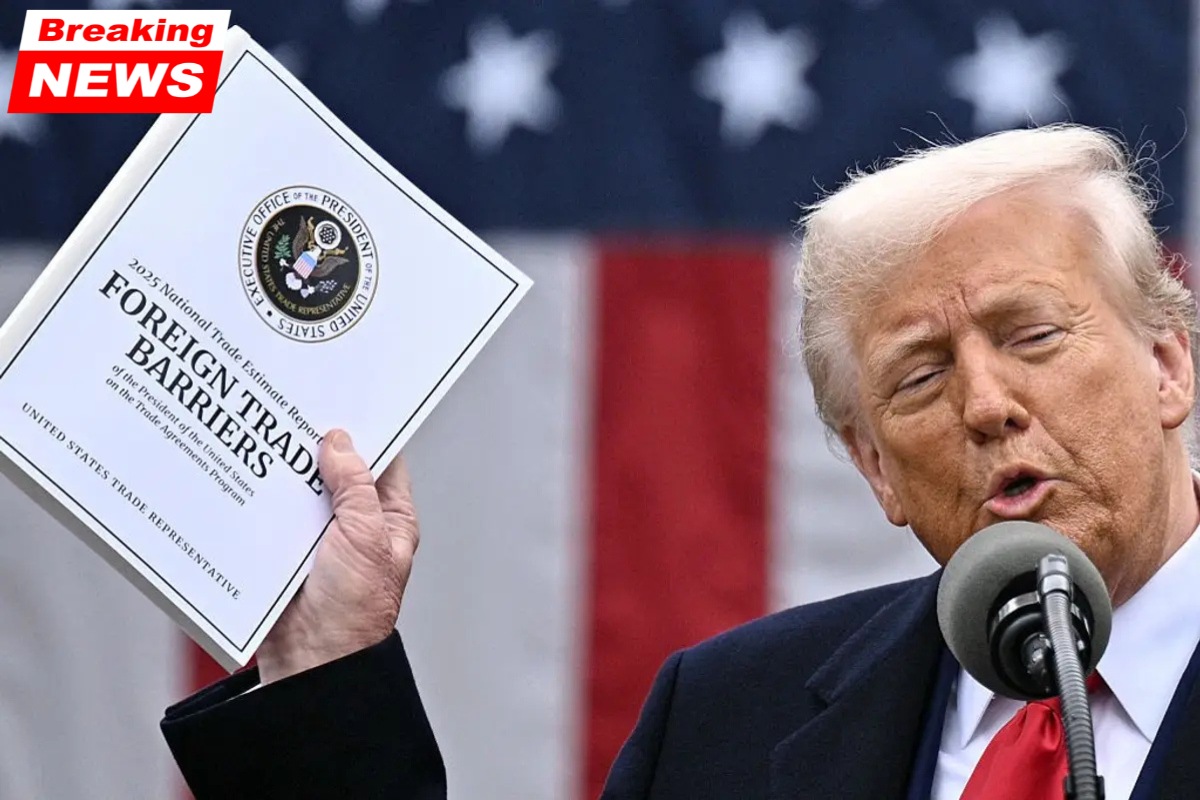
The legal battle stems from Trump’s attempt to bypass earlier limitations on his tariff powers. After the U.S. Supreme Court ruled that Trump did not have the authority to impose “sweeping” tariffs under the International Emergency Economic Powers Act (IEEPA), the president sought to implement a “backup” tariff plan.
This plan, announced through a presidential proclamation, justified the new levies by citing the ongoing U.S. trade deficit.
However, a collection of states, led by New York Attorney General Letitia James, challenged Trump’s actions, arguing that the power to impose tariffs lies exclusively with Congress, not the president.
The court sided with the plaintiffs, stating that Trump’s proclamation and the tariffs it imposed were unauthorized by law.
In a decisive ruling, the court declared, “Proclamation No. 11012 is invalid, and the tariffs imposed on Plaintiffs are unauthorized by law.”
The Legal Argument: Trade Deficit vs. Balance-of-Payments Deficit
The core issue in the case centered around the interpretation of Section 122 of the Trade Act of 1974, which allows the president to impose tariffs under certain conditions. However, the statute limits the duration of such tariffs to five months unless extended by Congress.
The plaintiffs argued that the law only permits tariffs in response to “large and persistent balance-of-payments deficits,” not trade deficits, which was the rationale used by Trump in his proclamation.
The court agreed with the plaintiffs’ interpretation, pointing out that the law specifically distinguishes between “balance-of-payments deficits” and “balance of trade” deficits.
The ruling clarified that Trump’s claim of a trade deficit did not align with the statutory language, which explicitly refers to balance-of-payments deficits—a term that has a distinct and narrower meaning in economic terms.
“The Proclamation asserts that ‘the United States runs a trade deficit, does not currently make a net income from the capital and labor that it deploys abroad, and experiences more transfer payments, on net, flowing out of the country than into the country,'” the court opinion stated. “Nowhere does Proclamation No. 11012 identify balance-of-payments deficits within the meaning of Section 122 as it was enacted in 1974.”
The court also emphasized that the U.S. is not currently experiencing a balance-of-payments deficit, thus further undermining Trump’s justification for the tariffs.
The Court’s Conclusion: Permanent Injunction on Tariffs
In the final ruling, the court permanently enjoined the tariffs, meaning they were officially nullified. The decision provides relief to the plaintiffs, including Washington state, which had paid import duties on behalf of the University of Washington. The court noted that enjoining unlawful conduct serves the public interest.
Despite the clear ruling, the court refrained from issuing a universal injunction, meaning the immediate impact of the ruling might be limited. It remains unclear whether the ruling will apply to other businesses or individuals who have paid these tariffs, though it sets a significant legal precedent.
Reactions to the Ruling
In the aftermath of the ruling, New York Attorney General Letitia James celebrated the court’s decision, asserting that once again, the courts had reinforced the limits on presidential power over trade law. “Once again, the courts have made clear that the president cannot unilaterally rewrite our trade laws to suit his political agenda,” James said in a statement. “Limitless tariffs were unlawful the first time, and changing the label did not make them any less illegal the second time.”
A Setback for Trump’s Trade Agenda
This ruling marks a significant legal setback for Donald Trump’s trade policies, particularly his attempts to wield unilateral tariff powers. The court’s decision serves as a reminder that, while presidents can influence trade policy, their powers are not unlimited.
Moving forward, it remains to be seen how this ruling will affect other trade-related disputes and whether it will influence broader discussions on the limits of executive power.