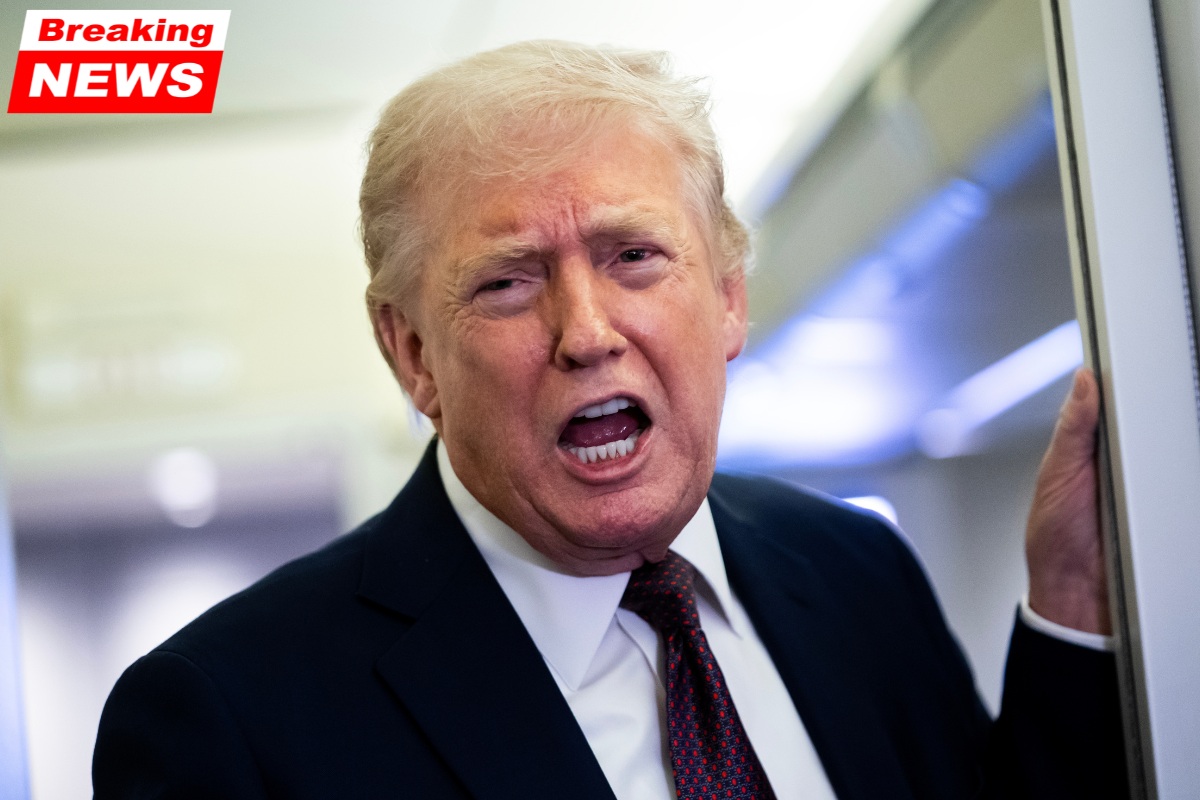
During a Thursday event announcing a deal with Regeneron to reduce the cost of its pharmaceutical products, President Donald Trump found himself defending previous claims that drug prices had been cut by “over 100%,” a statement widely deemed mathematically impossible. Trump’s comments sparked further controversy as he continued to defend his unconventional approach to “calculating” price reductions.
Trump’s Defense of “500%” and “600%” Price Cuts
Trump acknowledged having boasted that his administration’s efforts to lower drug prices had resulted in reductions of “500%, 600%.” However, he tempered the statement by adding, “We also sometimes say 50%, 60%” and referred to it as a “different kind of calculation” that could be extended to “70%, 80%, and 90%.”
While Trump suggested that people would understand his claims better this way, the logic behind his math was called into question. Mathematically, price reductions exceeding 100% are impossible without a product being given away for free, or, more absurdly, the consumer being paid to take the product.
The Issue with Trump’s “Different Calculation”
The issue with Trump’s approach to price reductions became clear when examining the math. In standard terms, a price increase of 100% means that the cost of a product has doubled, but prices cannot be reduced beyond 100% unless the cost reaches zero.
For example, if a drug costs $100 and its price is increased to $600, that’s a 600% increase. However, reducing the price by 500% would imply that the cost would be negative — a scenario where consumers would need to be paid to use the product.
In his defense, Trump stated, “There are two ways of calculating… either way, it doesn’t make any difference.” However, there’s a fundamental difference between the “correct” way of calculating percentage changes and Trump’s method, which many critics have deemed incorrect.
Robert F. Kennedy Jr. Responds to Trump’s Claims
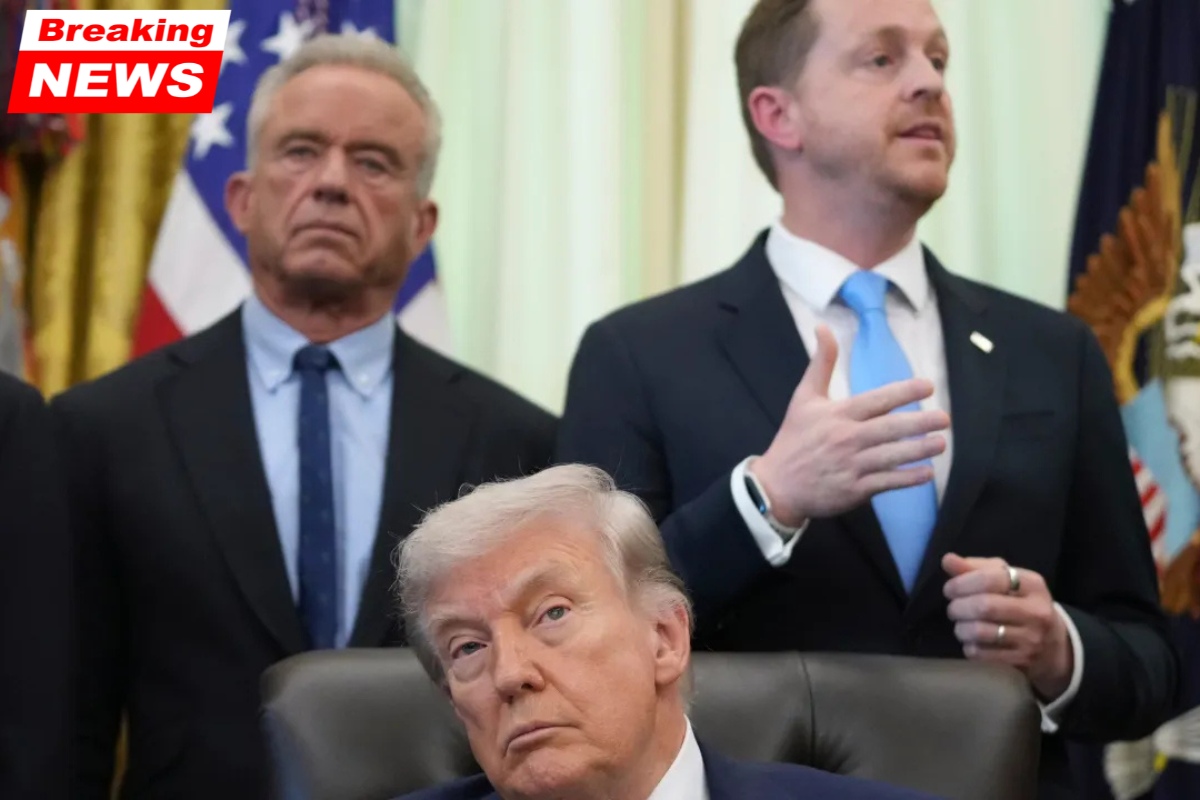
Trump’s math came under scrutiny when Robert F. Kennedy Jr., the U.S. health chief, echoed concerns raised earlier by Sen. Elizabeth Warren (D-Mass.). Kennedy highlighted that Trump’s claims of reducing drug prices by more than 100% could suggest that drug manufacturers should be paying consumers to take their products, a concept that’s impossible under proper mathematical rules.
Kennedy explained during the event that drug manufacturers had increased prices by more than 100%, and Trump’s reductions, as he framed them, effectively wiped out more than 100% of the initial cost. However, Kennedy noted that such a “mathematical device” is not a recognized approach to price reductions.
Trump’s War in Iran Timeline and Crowd Size Claims
In addition to his disputed claims about drug pricing, Trump also made controversial remarks about the ongoing war in Iran. When asked about his prediction for the war’s duration, Trump insisted that his four- to six-week estimate still held because he claimed Iran’s military was “decimated.”
However, the war, which began on February 28, has far exceeded the timeline Trump suggested, and both the U.S. and Iran have yet to reach a conclusion. Despite this, Trump continued to argue that his original forecast had been met, despite the fact that both sides continue to be engaged in conflict.
Trump also revisited the issue of the crowd size at his 2017 inauguration. He insisted that he had the same, if not a larger, crowd than the one gathered for Martin Luther King Jr.’s famous “I Have a Dream” speech in 1963. He claimed that pictures of both events supported his assertion, adding, “I actually had more people, but that’s OK.”
The “Fake Math” Controversy Continues
Trump’s latest comments on drug prices, the Iran conflict, and his inauguration crowd size underscore a pattern of misinformation and miscalculation that has surrounded many of his public statements. While he continues to defend his claims with alternative explanations, the math behind them remains a topic of debate and scrutiny.
As criticism of his comments grows, particularly regarding the drug price reductions and the war in Iran, the President’s unconventional approach to numbers continues to raise questions about the accuracy of his statements.
Trump’s “Fake Math” in the Spotlight
President Trump’s defense of his exaggerated claims on drug price reductions, the Iran war timeline, and his crowd size at the inauguration have sparked significant backlash. While he continues to stand by his controversial statements, the inconsistencies in his claims, particularly concerning mathematical accuracy, have placed his assertions in the spotlight.
As the 2024 elections approach, these verbal missteps and the “fake math” controversy could continue to affect public perception of Trump’s credibility.