Washington: A federal judge in Miami has given a setback to Donald Trump in his defamation case against The Wall Street Journal. The case is related to a news report about a birthday book connected to Jeffrey Epstein.
What the Court Said
A judge from the U.S. District Court for the Southern District of Florida, named Darrin Gayles, said that Trump’s legal team failed to meet the required legal standard for a defamation case.
In simple terms, the judge said Trump could not prove that the newspaper acted with “actual malice.” This is a key requirement in defamation cases involving public figures.
Actual malice means:
- The information was published knowing it was false, or
- It was published without caring whether it was true or not
The judge clearly stated that Trump’s team came “nowhere close” to proving this.
Why the Case Was Dismissed
In his 17-page decision, Judge Gayles wrote that the claims made by Trump were not strong enough. Because of this, the court dismissed both parts of the lawsuit.
The judge also mentioned that Trump’s claim — that the newspaper ignored contradictory evidence — was not convincing. According to him, the article itself showed otherwise.
Opportunity to Refile the Case
Even though the case was dismissed, Trump still has another chance. The judge has allowed him to file the case again before April 27.
To do this, Trump’s legal team must:
- Improve their complaint
- Clearly show evidence of “actual malice”
A spokesperson for Trump said they will follow the judge’s guidance and refile the case. The spokesperson also added that Trump plans to continue taking action against what he calls “fake news.”
Background of the Controversy
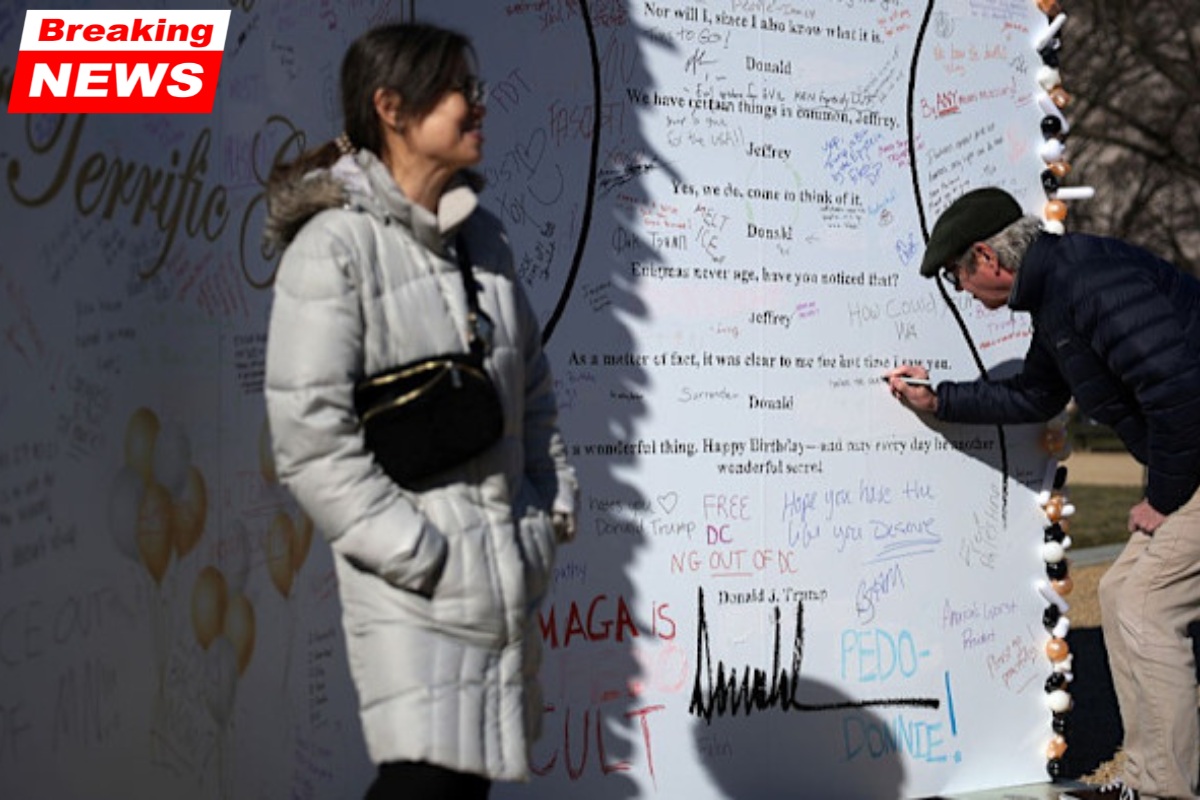
The issue started when The Wall Street Journal published a report in July 2025. The report talked about a birthday book made for Jeffrey Epstein in 2003.
According to the article:
- The book included messages from Epstein’s friends
- One message allegedly had Trump’s signature
- The message was described as “bawdy” and linked to a drawing
Trump strongly denied the report and called it fake. He then filed a massive $20 billion lawsuit against:
- The Wall Street Journal
- Its parent company News Corp
- Company executives and reporters
What Happened Later
Later, U.S. lawmakers collected a redacted version of the birthday book from Epstein’s estate. The letter mentioned in the report was included in that version.
However, the White House said clearly that:
- Trump did not draw the image
- He did not sign it
Even with this, the judge said he cannot yet confirm whether the documents collected are the same ones mentioned in the news report.
This case shows how difficult it is for public figures to win defamation lawsuits in the United States. Courts require strong proof that false information was shared knowingly or irresponsibly. In this situation, the judge found that Trump’s claims were not supported by enough evidence.
However, the story is not over yet. Trump still has a chance to file the case again with better arguments. The final outcome will depend on whether his legal team can meet the strict legal standards required by the court.