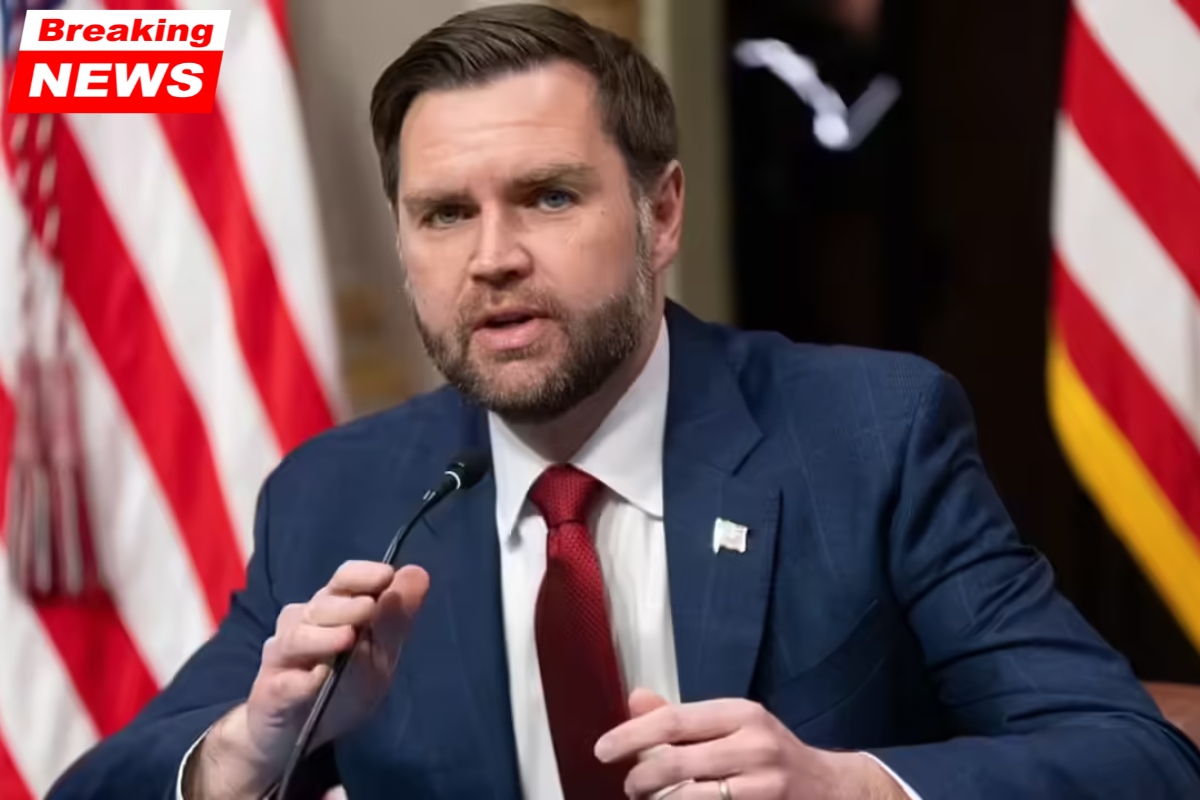
When a top U.S. official walks out of an important diplomatic meeting and says there is “bad news,” it naturally grabs attention. But in this case, the bigger issue may not be just that the Iran talks failed. The real question is about who is being made to carry the blame. Vice President JD Vance was the one who stood in front of the cameras and announced that the talks had collapsed in Islamabad.
That moment created a powerful image, and for many observers, it looked less like a normal diplomatic setback and more like a planned political move. The way it happened has raised serious questions about whether Vance is being pushed to take responsibility for a strategy that came from much higher up.
What happened in Islamabad?
JD Vance reportedly came out of a long overnight meeting with Iranian leaders at around 6:30 in the morning. He then told the public that there would be no agreement because Iran had refused to accept the terms offered by the United States.
On the surface, this sounds like a normal diplomatic update. Talks happen, countries disagree, and sometimes no deal is reached. But the details of the moment matter. It was not just a short statement from Washington. It happened in a foreign capital, after what was described as a “marathon negotiating session,” with an exhausted vice president giving the final word at dawn.
That kind of scene sends a message. It tells the public that Vance was not just present at the talks, but deeply involved in the process. More importantly, it makes him the face of the failure.
Why this moment looks political
The terms of the negotiation were not created by JD Vance alone. They came from a Trump-led administration that has taken a hard line on Iran for years. Donald Trump has often treated Iran policy as a major part of his political brand. He has presented himself as strong, tough, and unwilling to compromise easily.
That is why this situation stands out. When the negotiations did not succeed, Trump was not the one standing at the microphone. Vance was.
This has led many political observers to believe that the moment may have been carefully staged. The vice president was sent to handle a highly sensitive mission. Then, when things broke down, he was the one left to explain the failure to the world.
That does not automatically prove a larger plan. But in politics, public appearances matter a lot. Who speaks, where they speak, and how they speak can shape the entire story.
Is Trump protecting himself from the fallout?
Some recent reporting and political analysis have suggested that Trump has been trying to create distance between himself and any possible disaster involving Iran. The basic idea is simple: let others take the public lead, and if things go wrong, the president has room to step back.
This kind of strategy is not new in politics. Leaders often delegate risky jobs to trusted officials. If the mission succeeds, the administration can claim a win. If it fails, the damage can be spread around or placed on someone else.
In this case, Vance appears to be in that difficult position. He delivered the message that diplomacy had failed, even though the broader policy direction came from Trump’s team. That creates a situation where Trump can still reshape the narrative later, while Vance is left attached to the bad moment.
Why JD Vance’s role matters so much
Vice presidents do often take part in international diplomacy. That part is not unusual. What feels unusual here is that Vance is becoming the public symbol of a failure connected to one of Trump’s most important foreign policy issues.
Trump has long presented himself as someone who knows how to negotiate better than everyone else. Iran has been one of the clearest examples of that image. So if a major effort with Iran falls apart, many people would expect Trump himself to own that outcome.
Instead, it is Vance who is now linked to the collapse.
That could matter a lot in the future. Public memory often holds on to strong images more than policy details. People may not remember every condition of the talks, but they may remember Vance standing at the podium in Islamabad, announcing that there was no deal.
The personal and political risk for Vance
There is another reason this moment is important. JD Vance has, at different times, shown discomfort with deeper U.S. involvement in overseas conflicts, especially in the Middle East. That position has been part of his wider political identity. It helped him connect with voters who are tired of endless foreign entanglements.
Now he finds himself in a very different role.
By becoming the public face of failed Iran negotiations, Vance may also become connected to whatever happens next. If tensions with Iran grow worse, or if the failure is later seen as a missed chance for peace, his name could be tied to that outcome. This is true even if he did not design the original strategy himself.
That is the difficult part for him. He may be defending a policy he did not fully shape, while also taking the political risk that comes with it.
What this could mean going forward
If the situation with Iran becomes more dangerous, this Islamabad moment may be seen as an early turning point. Analysts and voters may look back at it as the moment when diplomacy failed and the administration’s internal political calculations became visible.
At the same time, Trump may still keep room to change course. If the White House later restarts talks, softens its approach, or claims a new opening, Trump can present that shift as leadership. Vance, however, may still remain connected to the earlier failure.
That is why this story is bigger than one press statement or one failed meeting. It is about power, image, and political protection. It is about how leaders manage blame before the full consequences of a crisis are even clear.
In the end, the failed Iran talks are only part of the story. The deeper issue is how the moment was presented to the public and who was placed at the centre of it. JD Vance may have been the messenger, but in politics, the messenger often ends up carrying much more than words.
He can end up carrying the burden of failure, the anger of the public, and the weight of decisions made above him. If this situation gets worse, the image from Islamabad may return again and again as proof of who was chosen to stand in front when the deal fell apart.