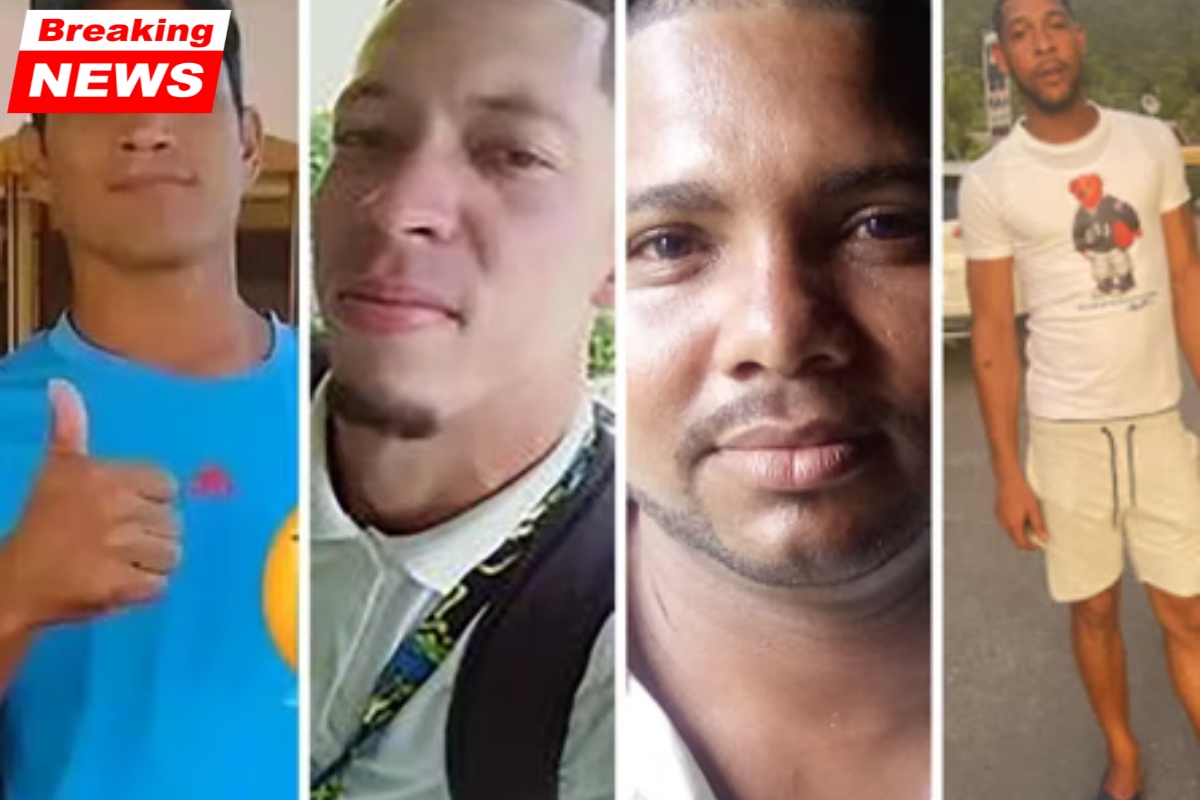
A major international investigation has identified 13 previously unnamed victims killed during U.S. military strikes targeting boats suspected of transporting narcotics in the Caribbean Sea and eastern Pacific Ocean.
The five-month investigation, led by the Latin American Center for Investigative Journalism (CLIP), examined a controversial anti-drug military campaign that has reportedly killed nearly 200 people since it began during the Trump administration’s military buildup toward Venezuela last year.
The report raises serious questions about the legality, effectiveness and humanitarian consequences of the strikes, with investigators claiming that many of those killed came from impoverished communities and may not have been directly involved in drug trafficking.
| Key Detail | Information |
|---|---|
| Investigation Leader | CLIP |
| Number of Newly Identified Victims | 13 |
| Total Reported Deaths | 194 |
| Regions Involved | Caribbean and Eastern Pacific |
| Main U.S. Justification | Anti-drug and anti-terror operations |
| Major Concern | Extrajudicial killings |
| Communities Impacted | Poor fishing and coastal communities |
What the Investigation Found
The investigation identified victims from several Latin American and Caribbean countries, including Venezuela, Colombia, Ecuador, Trinidad and Tobago, and Saint Lucia.
According to investigators, many victims lived in extremely poor communities where economic hardship often forced people into dangerous or informal work.
The report argued that while some individuals may have participated in transporting illicit cargo, many appeared to be low-level workers rather than major drug traffickers.
María Teresa Ronderos said the investigation aimed to humanize the victims by putting names and faces to people who had largely remained anonymous.
Ronderos stated that the strikes were not targeting powerful cartel leaders like Pablo Escobar or Joaquín Guzmán, but instead impacting vulnerable people struggling to survive in marginalized regions.
Who Were the Victims?
The report identified 16 victims in total, including three whose names had previously become public through lawsuits filed against the U.S. government.
Among the identified victims were:
| Country | Victims Identified |
|---|---|
| Venezuela | Juan Carlos Fuentes, Luis Ramón Amundarain, Eduard Hidalgo, Dushak Milovcic and others |
| Colombia | Alejandro Andrés Carranza Medina, Ronald Arregocés, Adrián Lubo |
| Ecuador | Pedro Ramón Holguín Holguín, Carlos Manuel Rodríguez Solórzano |
| Trinidad and Tobago | Chad Joseph, Rishi Samaroo |
| Saint Lucia | Ricky Joseph |
Many families interviewed during the investigation claimed their relatives had no connection to organized crime.
Some victims reportedly worked as fishermen, drivers or laborers who accepted risky boat jobs because of poverty and lack of economic opportunity.
Questions Over Evidence and Accountability
One of the most controversial findings in the report is that the U.S. government has reportedly not publicly provided evidence proving that any of the 194 people killed were directly involved in drug trafficking.
The Trump administration defended the military operations by describing those targeted as “narco-terrorists” linked to criminal trafficking networks.
A spokesperson for United States Southern Command stated that all operations were “deliberate, lawful and precise.”
According to the spokesperson, the strikes specifically targeted narcotics traffickers and their supporters based on intelligence assessments.
However, critics argue that the killings occurred without trials, arrests or due process protections.
Families Describe Fear and Devastation
Investigators said fear spread through many coastal communities after the strikes began.
According to Ronderos, some fishing communities temporarily stopped going out to sea because residents feared being mistakenly targeted.
For many families, the loss of relatives created severe financial hardship in already struggling regions.
The report emphasized that many victims were primary providers for households living in poverty.
Even in cases where victims may have been involved in smuggling, investigators argued that desperation and economic collapse often pushed people toward illegal work.
International Criticism of the U.S. Strikes
Human rights organizations, international observers and legal experts have increasingly criticized the operations.
Some groups have described the strikes as possible extrajudicial executions because individuals were killed without judicial proceedings or opportunities to defend themselves.
Brian Finucane, now a senior adviser at the International Crisis Group, argued that the operations were more political theater than an effective anti-drug strategy.
Finucane claimed the campaign was designed partly to project strength and toughness on drug trafficking rather than seriously disrupt narcotics networks.
He also warned that repeated military strikes risk becoming normalized in public discourse despite ongoing legal and humanitarian concerns.
Impact on Drug Trafficking Remains Unclear
The investigation found little evidence that the strikes have significantly reduced the flow of narcotics into the United States.
Security analysts and journalists involved in the report concluded that organized criminal networks continue operating despite the deaths.
Instead, they argue the operations have mainly deepened fear, instability and economic suffering in already vulnerable communities.
Ronderos said many local residents now live under constant uncertainty while governments and officials remain reluctant to criticize the United States publicly due to diplomatic concerns.
Challenges During the Investigation
Investigators described the reporting process as extremely difficult because many families and local officials feared retaliation for speaking publicly.
The investigation involved journalists and organizations from several countries, including Colombia, Venezuela and Trinidad and Tobago, with support from NGOs such as Airwars.
Researchers said the lack of official transparency surrounding the strikes made verifying identities and details particularly challenging.
The investigation into U.S. anti-drug boat strikes has renewed international debate over military force, human rights and accountability in counter-narcotics operations.
While U.S. officials insist the strikes target dangerous traffickers and terrorist-linked groups, journalists and human rights advocates argue that many victims were impoverished workers caught in a broader geopolitical campaign.
As more identities emerge and families continue seeking answers, questions surrounding legality, evidence and civilian harm are likely to remain at the center of global scrutiny.