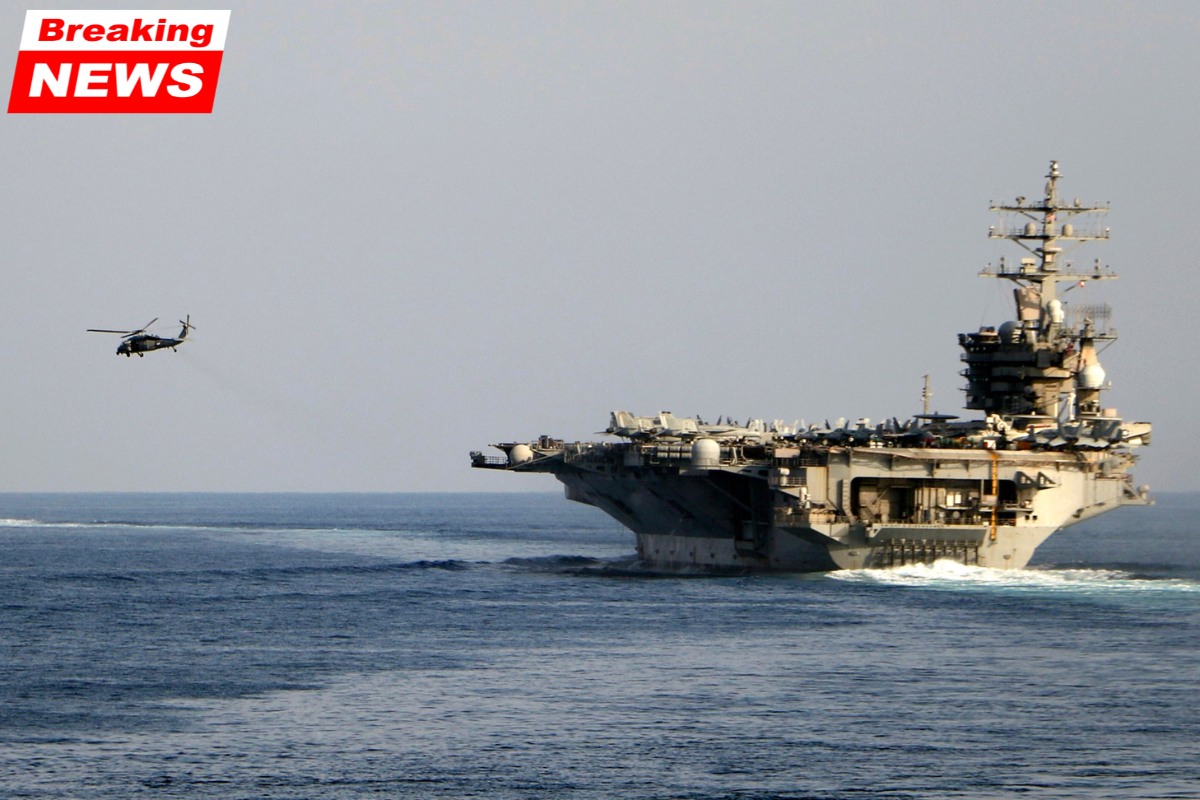
The United States military has announced a sweeping blockade of Iranian ports, marking a sharp escalation in tensions between the two nations. The decision came shortly after high-stakes ceasefire talks failed to produce an agreement, setting the stage for a potentially wider conflict.
According to U.S. Central Command, the blockade will begin Monday at 10 a.m. EDT and will be enforced against vessels from all nations. However, unlike earlier statements, the U.S. stopped short of fully blocking the Strait of Hormuz, allowing limited transit between non-Iranian ports. This shift suggests a more targeted approach rather than a complete shutdown of one of the world’s most critical waterways.
What the Blockade Means for Global Trade and Oil Markets
The Strait of Hormuz plays a crucial role in global energy supply, with around 20% of the world’s oil passing through it before the conflict began. Even a partial disruption has immediate consequences.
Following the announcement, oil markets reacted sharply. U.S. crude prices rose by 8% to $104.24 per barrel, while Brent crude increased by 7% to $102.29. Before the war, prices hovered around $70 per barrel, highlighting the economic impact of geopolitical instability.
The blockade is also aimed at curbing Iran’s oil exports, particularly those conducted through so-called “dark” shipping routes that avoid sanctions. By targeting ports instead of the entire strait, the U.S. appears to be applying pressure while avoiding a complete shutdown of global trade routes.
Breakdown of U.S.-Iran Ceasefire Talks
The blockade follows a 21-hour round of negotiations in Pakistan, which marked the highest-level talks between the two countries since the 1979 Islamic Revolution.
Despite some reported progress, the talks collapsed over key disagreements. The United States demanded strict conditions, including:
- A complete halt to Iran’s nuclear weapons ambitions
- An end to uranium enrichment
- Dismantling of major nuclear facilities
- Access to highly enriched uranium stockpiles
- Ending support for regional militant groups
Iranian officials described these demands as excessive and accused the U.S. of shifting its expectations during negotiations. Iranian Foreign Minister Abbas Araghchi claimed the talks were close to success but ultimately derailed by what he called “maximalist” U.S. positions.
Iran’s Response: “If You Fight, We Will Fight”
Iranian leadership responded strongly to the blockade announcement. Senior officials warned of retaliation, signaling that the situation could escalate further.
Mohammad Bagher Qalibaf, Iran’s parliament speaker, delivered a direct message to the U.S., stating, “If you fight, we will fight.” Meanwhile, military adviser Mohsen Rezaei suggested Iran has strategic options to counter the blockade.
Iran’s Revolutionary Guard also emphasized that the Strait of Hormuz remains under its control. While civilian vessels may still pass, military ships could face direct confrontation. This raises the risk of clashes in one of the world’s busiest maritime corridors.
Impact on Shipping and Maritime Activity
Shipping activity in the region has already declined significantly. Before the conflict, between 100 and 135 vessels passed through the Strait of Hormuz daily. Since the ceasefire, that number dropped to around 40 ships.
The blockade announcement has further disrupted maritime movement, with reports indicating that ship traffic has slowed again. This uncertainty affects not only oil shipments but also global supply chains that depend on stable shipping routes.
Nuclear Program Remains the Core Issue
At the center of the conflict is Iran’s nuclear program, which has long been a point of contention. While Iran maintains that its program is for civilian purposes, the U.S. and its allies remain concerned about the potential for weaponization.
The 2015 nuclear agreement had previously placed limits on Iran’s nuclear activities, but tensions resurfaced after the U.S. withdrew from the deal. Experts note that Iran’s current uranium stockpile is not weapons-grade but is close enough to raise concerns about rapid escalation.
Summary of Key Developments
| Aspect | Details |
|---|---|
| Blockade Start Time | Monday, 10 a.m. EDT |
| Scope | All Iranian ports |
| Strait of Hormuz Status | Partially open for non-Iranian transit |
| Oil Price Impact | U.S. crude: $104.24 (+8%), Brent: $102.29 (+7%) |
| Ship Traffic | Reduced from 100–135 to ~40 vessels daily |
| Talks Outcome | Failed after 21 hours |
| Main Dispute | Iran’s nuclear program and U.S. demands |
| Iran’s Response | Threats of retaliation and military readiness |
Uncertainty After the Ceasefire Deadline
The current ceasefire is set to expire on April 22, and neither side has clarified what will happen next. While Pakistan has offered to facilitate further talks, there is no guarantee that negotiations will resume or succeed.
The lack of clarity increases the risk of further escalation, especially with both sides maintaining firm positions. The situation remains fluid, with global markets and political leaders closely watching developments.
The U.S. blockade of Iranian ports represents a significant escalation in an already tense geopolitical situation. While it stops short of fully closing the Strait of Hormuz, the move still carries major implications for global trade, energy markets, and regional stability.
With ceasefire talks failing and both nations issuing strong warnings, the risk of further conflict remains high. The coming days, especially leading up to the ceasefire deadline, will be critical in determining whether diplomacy can resume or if tensions will intensify further.