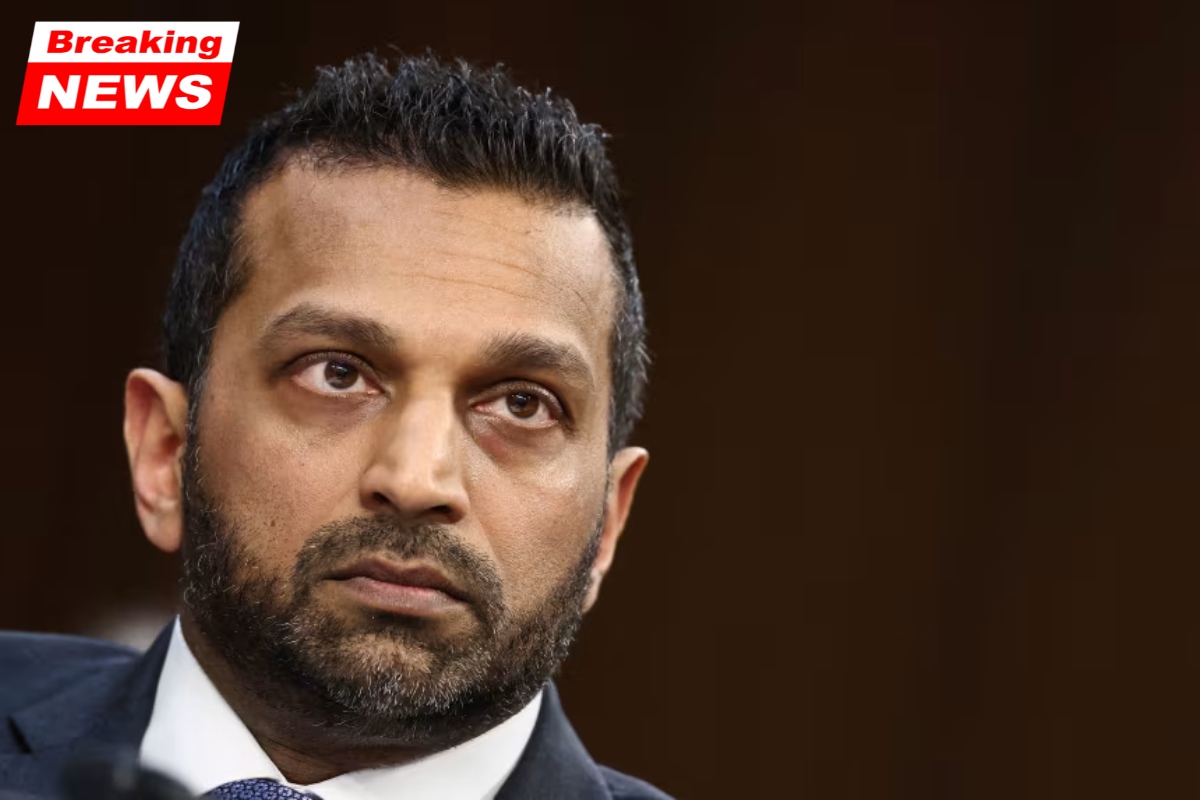
Recent reports have revealed a cyberattack involving Kash Patel, where hackers linked to Iran managed to access his personal email account. This news quickly caught attention because Patel is the head of the Federal Bureau of Investigation, but the actual situation is less alarming than it may sound at first.
What Happened in the Email Hack
Hackers believed to be connected to Iran broke into Kash Patel’s personal email and shared photos and documents online. These hackers claimed they had accessed powerful and secure FBI systems, but early findings suggest otherwise.
The emails appear to be from the period between 2011 and 2022, which is before Patel became FBI Director. A source confirmed to CNN that the photos released by the hackers are real.
However, most of the content includes personal and routine information such as family photos, travel plans, business communications, and even details related to searching for an apartment.
Was the FBI System Hacked?
Despite the strong claims made by the hackers, cybersecurity experts have clearly stated that this was not an attack on official FBI systems. Instead, it was a breach of a personal email account. This means no classified or government data was accessed.
The FBI itself has confirmed that its systems remain secure and that no sensitive information was compromised. Experts have described the leaked data as ordinary personal content rather than anything related to national security.
Who Is Behind the Attack
The attack is believed to be carried out by a group known as the Handala Hack Team, which is suspected to have links with Iranian intelligence agencies. The United States Department of Justice has earlier accused such groups of working with Iran’s Ministry of Intelligence.
The FBI has taken the matter seriously and has announced a reward of $10 million for any information that helps identify or catch the people responsible for this cyberattack.
Why Is This Happening Now
This incident is likely connected to rising tensions between the United States, Israel, and Iran. Security officials have already warned that Iranian-linked hackers might try to carry out cyberattacks in response to recent military actions.
Interestingly, this is not the first time Kash Patel has been targeted. In late 2024, he was informed that foreign hackers had already accessed some of his personal communications.
Other individuals connected to US President Donald Trump were also targeted in similar hacking attempts, showing a broader pattern of cyber activity.
Related Cyberattacks and Impact
The same hacking group has also been linked to another recent cyberattack that disrupted the operations of a major US medical device company. The hackers claimed this was done as retaliation for a missile strike in Iran, which Iranian state media reported caused significant casualties.
In response, US authorities have taken action by shutting down websites used by the hackers and increasing efforts to track their activities. However, the group continues to remain active and is still spreading messages and propaganda online.
What This Means for Cybersecurity
This incident shows that even high-ranking officials can become targets if their personal accounts are not fully secure. It also highlights that not all cyberattacks involve highly sensitive government data.
In many cases, hackers target personal accounts to create attention or spread messages. While this breach may not pose a major national security risk, it still reminds everyone of the importance of protecting personal digital information carefully.
The hacking of Kash Patel’s personal email highlights how cyber threats are growing in today’s world, especially during times of political tension. Although the hackers claimed a major breach, the truth is that only personal data was accessed, not any FBI or government systems.
This makes the situation less dangerous than it initially appeared, but still important. It serves as a clear reminder that cybersecurity is not just a government issue but something every individual must take seriously.
As cyberattacks continue to evolve, both public figures and common people need to stay alert and use stronger security practices to protect their personal data.