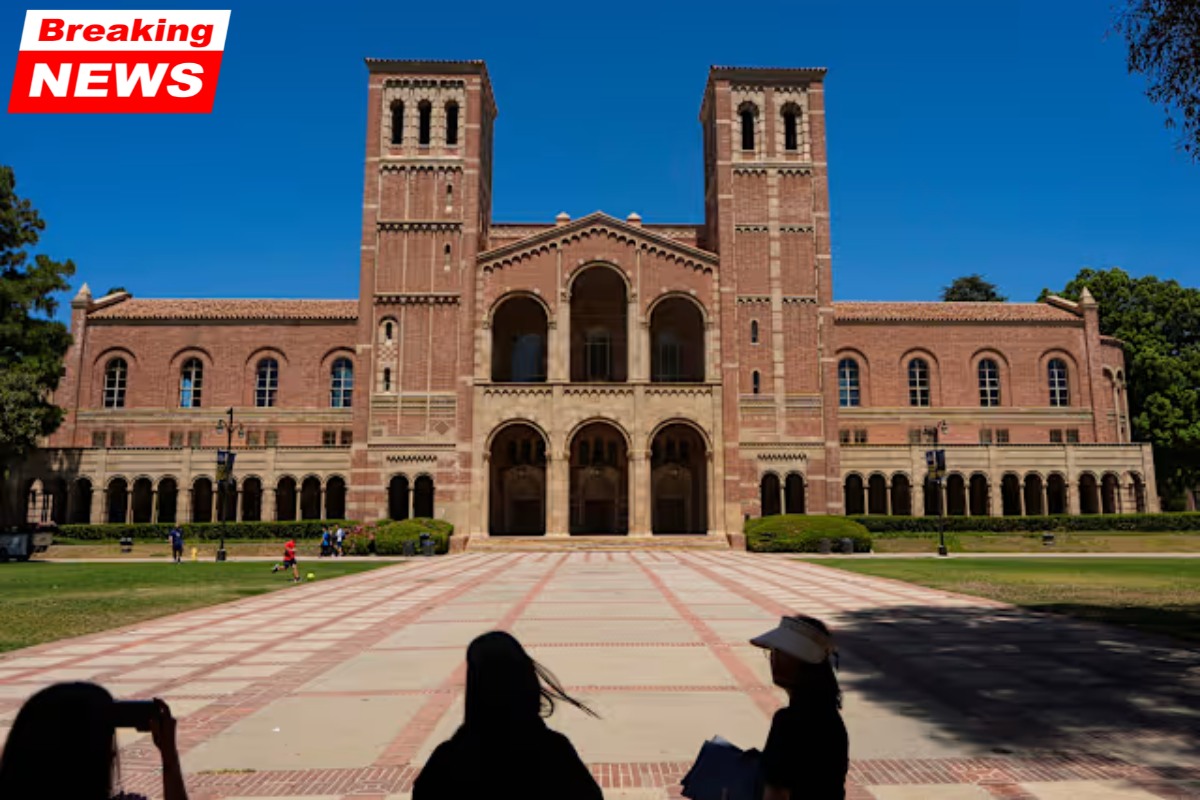
The U.S. Justice Department has accused the medical school at University of California, Los Angeles of illegally using race in its admissions process, marking another major step in President Donald Trump’s wider crackdown on affirmative action and diversity policies in higher education.
The finding increases pressure on UCLA as the Trump administration continues investigating colleges and universities over admissions practices after the 2023 Supreme Court ruling that banned affirmative action in college admissions.
Justice Department Says UCLA Violated Federal Law
On Wednesday, the Justice Department announced that UCLA’s medical school illegally considered race while selecting students for admission.
According to investigators, the medical school discriminated against white and Asian American applicants by giving preference to Black and Hispanic students.
The department’s Civil Rights Division said the admissions process violated federal anti-discrimination laws and the Supreme Court ruling that made race-based admissions unconstitutional.
The university’s medical school did not immediately respond to media requests for comment.
What the Investigation Found
The Justice Department’s investigation lasted about a year and focused on admissions data from 2023 and 2024.
Officials claimed the data showed Black and Hispanic students admitted to the medical school had lower average academic scores compared to white and Asian American applicants.
According to the department:
| Student Group | Average GPA (2024 Admissions) |
|---|---|
| Black students | 3.72 |
| Hispanic students | Lower than some other groups |
| Asian American students | 3.84 |
| White students | 3.83 |
The Justice Department argued these differences suggest that race was used as a factor during admissions decisions.
Officials said the medical school relied on non-academic factors to achieve diversity goals.
Harmeet Dhillon Criticises UCLA Admissions
Harmeet Dhillon, who leads the Justice Department’s Civil Rights Division, strongly criticised the admissions process.
In the department’s findings letter, Dhillon said:
“Highly qualified White, Asian, and other students were denied admission on the basis of their race.”
The administration says universities cannot legally treat applicants differently because of race following the Supreme Court’s 2023 decision.
Background of the Supreme Court Ruling
In 2023, the U.S. Supreme Court ruled that affirmative action policies in college admissions are unconstitutional.
The ruling prevented universities from directly using race as a deciding factor in admissions.
However, the court also said colleges could still consider discussions about race in personal essays if applicants explained how race affected their lives or experiences.
Since returning to office, Trump has argued that many universities are still indirectly considering race by using:
- Personal statements
- Diversity essays
- Background information
- Other “proxy” factors
The administration believes some schools are using these methods to continue diversity-based admissions practices.
Trump Administration Expands College Investigations
The UCLA case is part of a broader campaign by the Trump administration against colleges and universities over admissions policies.
In March, the Justice Department opened investigations into medical school admissions at:
- Stanford University
- Ohio State University
- University of California, San Diego
The administration has also targeted undergraduate admissions at selective universities across the country.
Officials have demanded schools collect and provide admissions data proving they are following the Supreme Court ruling.
Possible Consequences for UCLA
The Justice Department’s findings could now lead to negotiations between the federal government and UCLA.
Possible outcomes include:
| Potential Action | Details |
|---|---|
| Voluntary agreement | UCLA changes admissions policies |
| Federal oversight | Increased monitoring of admissions |
| Legal action | Lawsuits from the Justice Department |
| Loss of federal funding | Federal grants or support may be reduced |
If UCLA does not agree to changes requested by the administration, the Justice Department could move forward with legal action.
Democratic Attorneys General Challenge Trump Policy
The administration’s aggressive approach has already triggered legal pushback from Democratic leaders.
In March, a coalition of 17 Democratic state attorneys general filed a lawsuit challenging a Trump administration policy requiring colleges to submit data proving they are not considering race in admissions.
Critics argue the administration is overreaching and creating fear among universities trying to build diverse student populations legally.
Supporters of Trump’s policies, however, say the government is enforcing equal treatment under the law.
Debate Over Diversity and Merit Continues
The issue has reignited a national debate about affirmative action, merit-based admissions, and diversity in higher education.
Supporters of affirmative action argue diversity improves medical education and helps schools better serve different communities.
Critics argue admissions should focus only on academic performance, qualifications, and merit without considering race.
Medical schools have become a major focus because doctors from different backgrounds are often seen as important for treating diverse populations across the United States.
The Justice Department’s findings against UCLA’s medical school mark another major escalation in the Trump administration’s battle against affirmative action and race-conscious admissions policies.
The case could have serious consequences not only for UCLA but also for universities across the country that are still adjusting to the Supreme Court’s 2023 ruling.
As the debate continues, colleges are facing growing pressure to prove that admissions decisions are based purely on merit and not influenced by race.
At the same time, supporters of diversity programs argue that schools must still find ways to create inclusive campuses and train professionals who reflect America’s changing population.