The Epstein story refuses to stay buried. Just when it starts to fade from headlines, something new slips out—another document, another testimony, another loose thread that keeps people asking the same uncomfortable question: what really happened inside that cell on August 10, 2019?
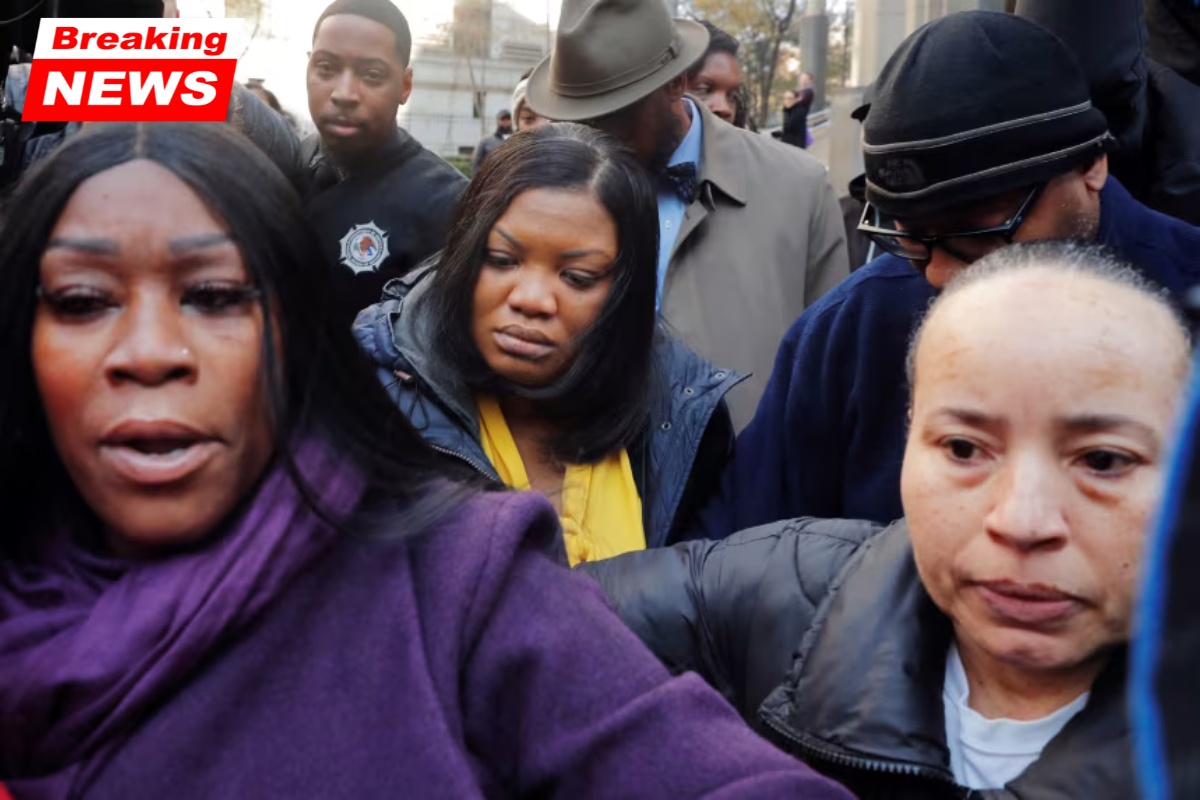
Now, attention is swinging back to Tova Noel, one of the correctional officers on duty the night Jeffrey Epstein died. Her expected testimony before the House Oversight Committee—now delayed—has quietly reignited a case that never quite settled in the public mind. And with the Justice Department recently releasing a fresh batch of records, the timeline of Epstein’s final hours looks less like a closed case and more like a puzzle missing key pieces.
A Night Full of Gaps
Start with the basics, and things already feel off.
Epstein, a high-profile federal inmate facing sex-trafficking charges, was supposed to be under strict supervision inside the Special Housing Unit at Manhattan’s Metropolitan Correctional Center (MCC). Protocol required guards to check on him every 30 minutes.
That didn’t happen.
Instead, Noel and her colleague Michael Thomas later admitted—through court filings and investigative reports—that they failed to perform those checks and falsified records to say they had. Both were eventually charged, then later avoided prosecution through a deferred agreement that required cooperation and community service.
Then there’s the camera issue. According to a 2023 Department of Justice Inspector General report (available via https://oig.justice.gov), many of the facility’s surveillance cameras weren’t functioning properly—some had reportedly been broken for months.
So on a night when one of the most high-profile inmates in the country died, there was:
- No consistent guard monitoring
- No reliable video footage
- And incomplete documentation
That’s not conspiracy—that’s already on record.
The Google Search That Won’t Go Away
One detail buried in the newly released files has raised eyebrows even among seasoned investigators.
Less than an hour before Epstein was found unresponsive—around 6:30 a.m.—Tova Noel reportedly searched online: “latest on Epstein in jail.”
It sounds minor, almost trivial. People Google things all the time. But context matters.
At that moment, she was responsible for monitoring Epstein.
When questioned later by the DOJ’s Office of Inspector General (https://www.justice.gov/oig), Noel said she didn’t recall making the search and suggested it wouldn’t be accurate. Investigators, however, flagged it in a forensic analysis of prison computer activity.
It doesn’t prove wrongdoing. But it does add another strange layer to an already messy timeline.
Cash Deposits Raise Fresh Questions
Then there’s the money trail—something that wasn’t widely discussed back in 2019.
According to bank records included in the DOJ files, JPMorgan Chase filed a Suspicious Activity Report (SAR) regarding a series of cash deposits made by Noel.
Here’s a snapshot:
| Detail | Information |
|---|---|
| Number of deposits | 12 |
| Time period | April 2018 – July 2019 |
| Largest deposit | $5,000 |
| Flagged by | JPMorgan Chase |
| Reported to | FBI |
Now, to be clear, suspicious activity reports don’t imply guilt. Banks file them routinely when patterns look unusual.
But what stands out is timing—the deposits continued up to just weeks before Epstein’s death.
Even more curious: Noel was never questioned about these deposits during her official 2021 interview with investigators.
That omission has left analysts scratching their heads.
The Missing Minutes—and Missing Cameras
Epstein’s death was officially ruled a suicide by hanging, confirmed by the New York City medical examiner (https://www.nyc.gov/site/ocme/index.page). But the mechanics of how it happened remain contested—not because of exotic theories, but because of basic procedural failures.
Investigators found:
- Epstein had extra linens in his cell, despite rules limiting inmates to one set
- He used strips of cloth to fashion a noose
- Guards had not conducted required checks for hours
And perhaps most crucially: the lack of usable surveillance footage meant investigators couldn’t reconstruct movements in or around the cellblock with confidence.
That’s not just a technical glitch—it’s a major evidentiary blind spot.
Shredded Documents Allegation
One of the more unsettling claims in the document release involves alleged document destruction shortly after Epstein’s death.
An MCC employee reported to the FBI that an inmate claimed members of a Bureau of Prisons “After Action Team” were shredding paperwork related to the incident.
According to the email:
- The inmate said he was asked to help shred documents
- Bags of shredded paper were reportedly seen near a rear gate
- The volume of shredded material appeared unusual
The FBI took note. Internal messages even suggested checking dumpsters for discarded evidence.
There’s no public record indicating that such a search ever happened.
And importantly, no direct evidence confirms that critical documents were destroyed. Still, the allegation alone has fueled ongoing suspicion.
Epstein’s State of Mind: Conflicting Signals
Another piece of the puzzle: Epstein himself.
Just weeks before his death, he had been placed on suicide watch after an incident initially treated as a suicide attempt. But even that episode was murky.
Epstein first claimed his cellmate attacked him. Later, he walked it back.
In psychological evaluations documented by prison staff, Epstein reportedly said:
“I have no interest in killing myself.”
He repeated similar sentiments the following day, insisting he wanted to fight his case.
That doesn’t rule out suicide—people can and do change mental states quickly. But it complicates the narrative.
A Prison System Under Scrutiny
The bigger story here might not be Epstein himself—it’s the system around him.
The Metropolitan Correctional Center had long been plagued by issues:
- Chronic understaffing
- Broken infrastructure
- Lax enforcement of protocols
In 2021, the Bureau of Prisons (https://www.bop.gov) announced the facility would be temporarily closed to address these failures.
It hasn’t reopened since.
For many observers, Epstein’s death became a symbol of deeper institutional breakdown—not a single failure, but a cascade of them.
Why This Case Still Won’t Settle
If you’re wondering why this story keeps resurfacing, it’s not just because of Epstein’s connections to powerful figures.
It’s because the official explanation, while plausible, sits on top of a foundation riddled with holes:
- Guards asleep or inattentive
- Records falsified
- Cameras malfunctioning
- Unanswered financial questions
- Allegations of document destruction
Individually, each issue might be explainable.
Together? They leave room for doubt.
That doesn’t automatically validate conspiracy theories—but it does explain why they persist.
What Comes Next
Tova Noel’s delayed testimony could bring some clarity—or more ambiguity.
Congressional hearings tend to do both.
If lawmakers press hard on timelines, procedures, and the newly surfaced details, the public might finally get a more coherent account of that night. Or, as has happened before, the answers may only deepen the mystery.
Either way, the Epstein case has long moved beyond a single individual. It’s now a test of institutional credibility—how systems fail, how accountability works, and how much uncertainty the public is willing to accept.
And judging by the renewed attention, that question is far from settled.