
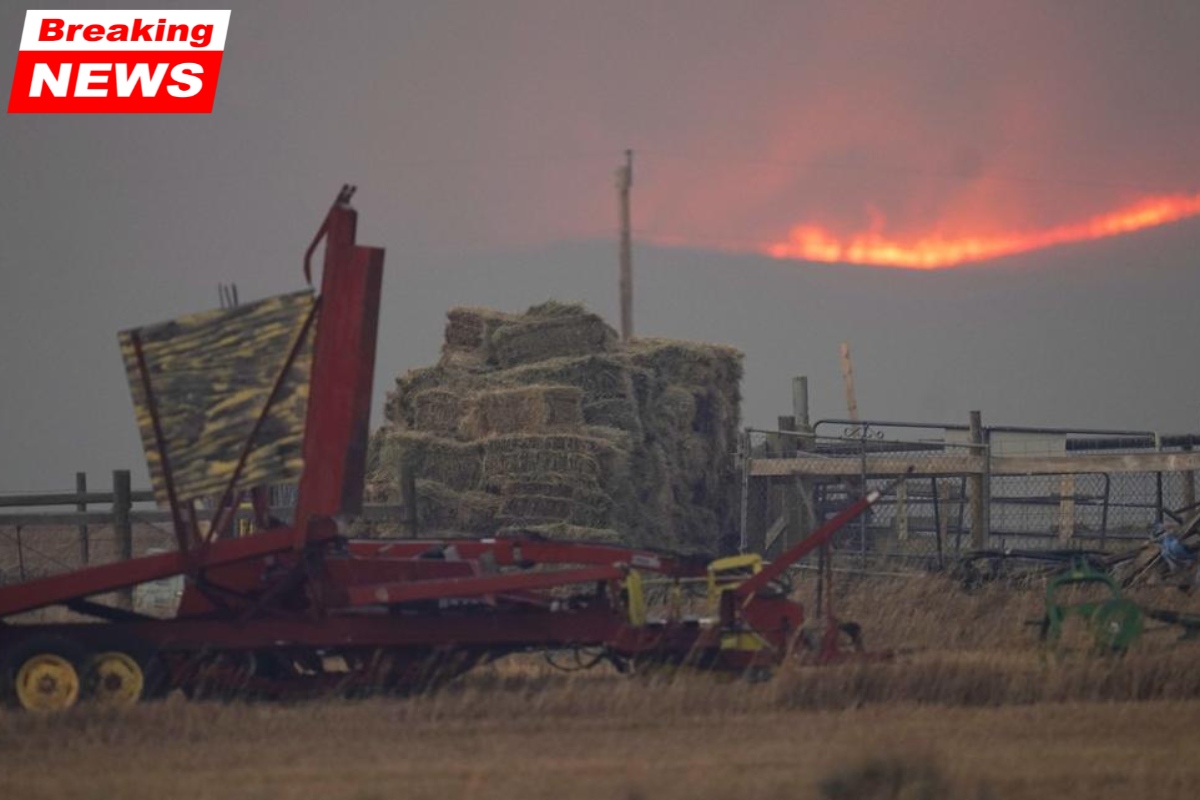
Active wildfires across Colorado, Minnesota, and Oklahoma have triggered emergency responses from state authorities, including mandatory evacuations and the deployment of the National Guard.
While the region’s wildfire season typically runs from late spring through early fall, increasingly arid conditions have extended the period of high fire risk. The current outbreaks coincide with some of the year’s highest temperatures, trailing only a mid-April heatwave.
The National Weather Service has issued a Dangerous Fire Condition alert for the Southern High Plains, while the Central Plains and Upper Midwest remain under severe weather advisories.
Minnesota Deploys National Guard During Flanders Fire
In Minnesota, Governor Tim Walz announced Sunday morning that he had mobilized the National Guard to assist residents with evacuations in the northern part of the state as the Flanders Fire spreads in Crow Wing County.
The governor expressed gratitude to first responders on X, formerly known as Twitter. Data from Wildfire Explorer indicate that the Flanders Fire intensified rapidly throughout the day.
Initial reports showed 600 acres burned, a figure that doubled by early afternoon and expanded to approximately 2,100 acres by early evening. As of Sunday night, the fire remained at zero percent containment.
Colorado Evacuates Baca County as Sharpe Fire Spreads
Colorado emergency officials responded to the Sharpe Fire as it advanced across the southeastern part of the state, prompting mandatory evacuation orders for all of Baca County, including the town of Campo, affecting roughly 3,500 residents.
The fire, which originated in Oklahoma on Friday evening, moved northward into Colorado. In response, the Colorado Department of Transportation closed Highway 287 from the Oklahoma state line to Springfield, although local residents can still use the route to reach designated evacuation shelters.
As of late Sunday afternoon, Wildfire Explorer estimates that the Sharpe Fire has burned approximately 520 acres and remains uncontained.
Oklahoma Wildfires Consume Tens of Thousands of Acres
While the Sharpe Fire affected a portion of Colorado, estimates in Oklahoma suggest the blaze has burned significantly larger areas. Wildfire Explorer reports between 1,750 acres impacted, though other reports indicate the fire may have spread to as much as 10,000 acres.
The fire is currently estimated to be 5 percent contained. Authorities note that the Sharpe Fire originated from drought conditions combined with lightning strikes and was exacerbated by high winds reaching up to 35 miles per hour.
Oklahoma is also contending with the Hungate Fire, which has burned an estimated 34,000 acres. By Sunday evening, the fire was approximately 85 percent contained, and the mandatory evacuation order for Randall County has been lifted.
Table: Key Details of Active Wildfires
| Fire Name | Location | Acres Burned | Containment | Evacuations | Notes |
|---|---|---|---|---|---|
| Flanders Fire | Crow Wing County, Minnesota | 2,100 | 0% | Mandatory, assisted by National Guard | Rapid expansion throughout Sunday |
| Sharpe Fire | Baca County, Colorado (originated in Oklahoma) | 520 in CO; 1,750–10,000 in OK | 5% in OK, 0% in CO | Mandatory for all Baca County (~3,500 residents) | Highway closures; high winds up to 35 mph |
| Hungate Fire | Randall County, Oklahoma | 34,000 | 85% | Evacuation order lifted | Started due to drought and lightning |
The wildfire outbreaks in Colorado, Minnesota, and Oklahoma have resulted in widespread evacuations, National Guard mobilization, and significant property and land impact.
With fires like the Flanders, Sharpe, and Hungate still active and containment levels varying, state authorities continue emergency operations to protect residents and mitigate damage.
The combination of high temperatures, dry conditions, and strong winds has intensified the risk and rapid spread of these fires, highlighting the ongoing vulnerability of the region during wildfire season.






