
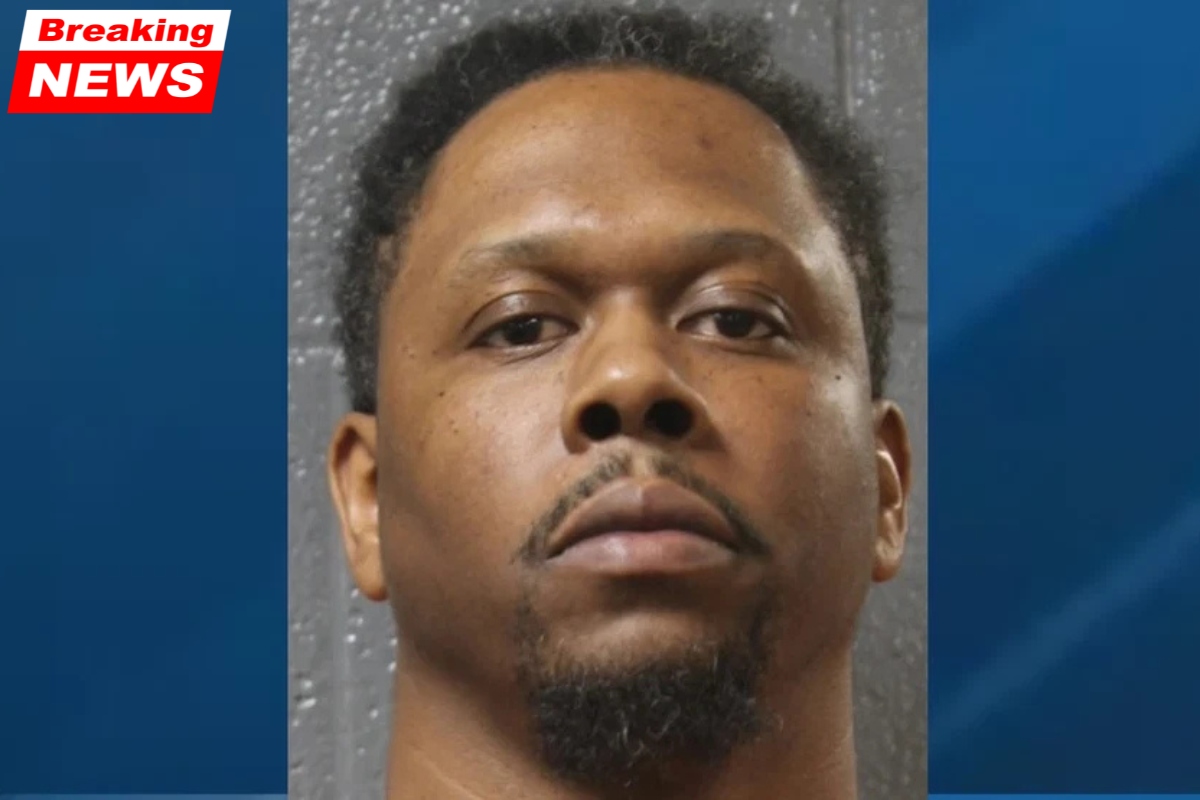
OKLAHOMA CITY — Authorities say a man connected to a long‑unsolved murder has now been bound over for trial after new evidence linked him to the crime.
On March 21, 2010, police in Oklahoma City received a 911 call reporting a shooting at a convenience store located in the 2000 block of N. MacArthur Boulevard. When officers arrived at the scene, they found 27‑year‑old Prashanth Goinaka, the store clerk, had been shot to death.
Investigators described the killing as especially heinous and senseless, noting that Goinaka was shot after complying with the assailant’s demands. No further confrontation or resistance was reported from the victim — a detail that shocked and saddened community members at the time.
Break in the Cold Case
For years, the case remained unsolved — until forensic evidence recently provided a breakthrough. Investigators were able to match fingerprints found at the scene to a suspect, prompting renewed charges.
Authorities say those fingerprints linked 35‑year‑old Darrell Brown to the crime. Based on that evidence, Brown was arrested and charged with:
- First‑degree murder, and
- Robbery with a dangerous weapon
Brown is currently being held without release on a $10 million bond, reflecting the severity of the charges and the danger he is considered to pose.
Court Proceedings
Earlier this week, Brown appeared in court for a preliminary hearing related to the case. During that hearing, a judge reviewed the evidence to determine whether there was sufficient probable cause to send the case forward — and decided there was. As a result, Brown is now bound over for trial.
His formal arraignment — where he will be officially entered into court records and formally respond to the charges — is scheduled for May 27th, 2026.
Community Impact
The Goinaka family and community members have long awaited resolution in this case, and the recent development marks the first major step toward accountability in nearly 16 years.
Convenience store shootings and robbery homicides continue to concern law enforcement and residents statewide, but breakthroughs like this highlight the role of forensic evidence in solving cold cases.
Prosecutors have stated that the evidence — including fingerprints and other investigatory findings — will form the centerpiece of the prosecution’s case at trial. Defense attorneys are expected to begin preparing motions and legal strategy in the lead‑up to the arraignment and, eventually, trial.






