
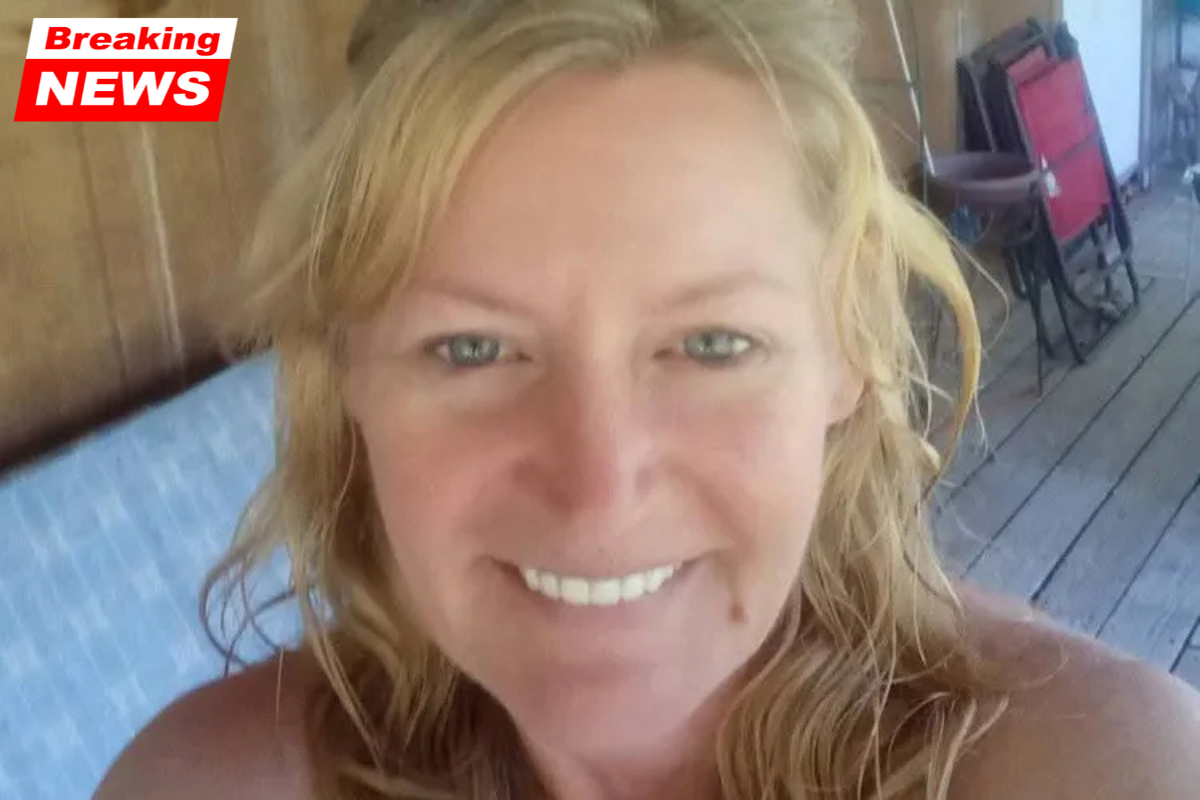
What happened at Lake Eufaula last week is the kind of story that stops people mid-scroll—not because it’s complicated, but because it’s painfully simple. A grandmother saw her grandchildren in danger, acted without hesitation, and didn’t make it back.
A Split-Second Decision That Saved Lives
According to the Oklahoma Highway Patrol, the incident unfolded around 3:10 p.m. on March 22 at the 9 South Swim Area in Pittsburg County.
Two children—later identified by family as Garrett’s 8- and 10-year-old grandchildren—were struggling in the water.
Roebecca Garrett, 53, went in after them.
She was able to save both الأطفال from drowning. But in the process, she went under herself.
Bystanders pulled her from the water. Emergency crews rushed her to McAlester Regional Hospital, but she was later pronounced dead.
The Conditions Made It Worse
This wasn’t a typical warm-weather lake day.
Authorities say the water temperature was around 53 degrees—cold enough to trigger cold shock, rapid breathing, and loss of muscle control within minutes.
Here’s why that matters:
| Factor | Impact |
|---|---|
| Cold water (53°F) | Increased risk of shock and drowning |
| Sudden immersion | Can cause gasping, disorientation |
| Physical exertion | Speeds up exhaustion |
Even strong swimmers can be overwhelmed quickly in those conditions.
A 30-Minute Race to the Hospital
Garrett was transported about 30 minutes to McAlester Regional Hospital after being pulled from the water.
Whether a shorter transport time would have changed the outcome is unknown—but the delay highlights an ongoing issue in rural and lake-heavy areas: distance to emergency care.
Just weeks before this incident, local officials were already talking about the need for faster medical access.
Eufaula’s city manager had noted the challenges of serving a population that swells dramatically during peak seasons—from about 2,800 residents to nearly 10,000 visitors.
A Community That Changes Overnight
Lake towns like Eufaula operate in two modes:
- Quiet, small-town pace most of the year
- Sudden influx of visitors during warmer months
That shift puts pressure on:
- Emergency services
- Medical response times
- Public safety resources
And when accidents happen, those gaps become more visible.
A Family’s Loss—and a Legacy
Garrett’s family describes her in a way that feels familiar to anyone who’s known someone like her: the kind of person who shows up, steps in, and doesn’t think twice.
On a GoFundMe page created to help cover funeral costs, a relative wrote:
“Her selflessness and courage are a testament to the kind of person she was, always putting her family first, no matter the cost.”
As of March 31, the fundraiser has brought in nearly $3,000 toward a $4,000 goal.
But the numbers don’t really capture what’s been lost.
The Quiet Reality of These Moments
There’s something about stories like this that feels almost too stark.
No buildup. No time to think.
Just:
- Kids in danger
- A grandmother stepping in
- A rescue that worked—and a loss that followed
It’s the kind of split-second decision most people hope they’ll never have to make.
And the kind that defines someone when they do.
The Bigger Picture: Water Safety Still Matters
Drownings remain a serious risk, especially in open water settings like lakes.
According to the CDC (https://www.cdc.gov/drowning), drowning is a leading cause of unintentional injury death, particularly for children.
Risk factors increase with:
- Cold water exposure
- Lack of life jackets
- Sudden drop-offs or currents
- Limited nearby emergency access
Even experienced swimmers are vulnerable under the wrong conditions.
What This Story Leaves Behind
Two children are alive because someone chose to act.
A family is grieving because that same choice came at a cost.
And a community is left with a story that will likely be told for years—not because of tragedy alone, but because of what it says about who Roebecca Garrett was.






