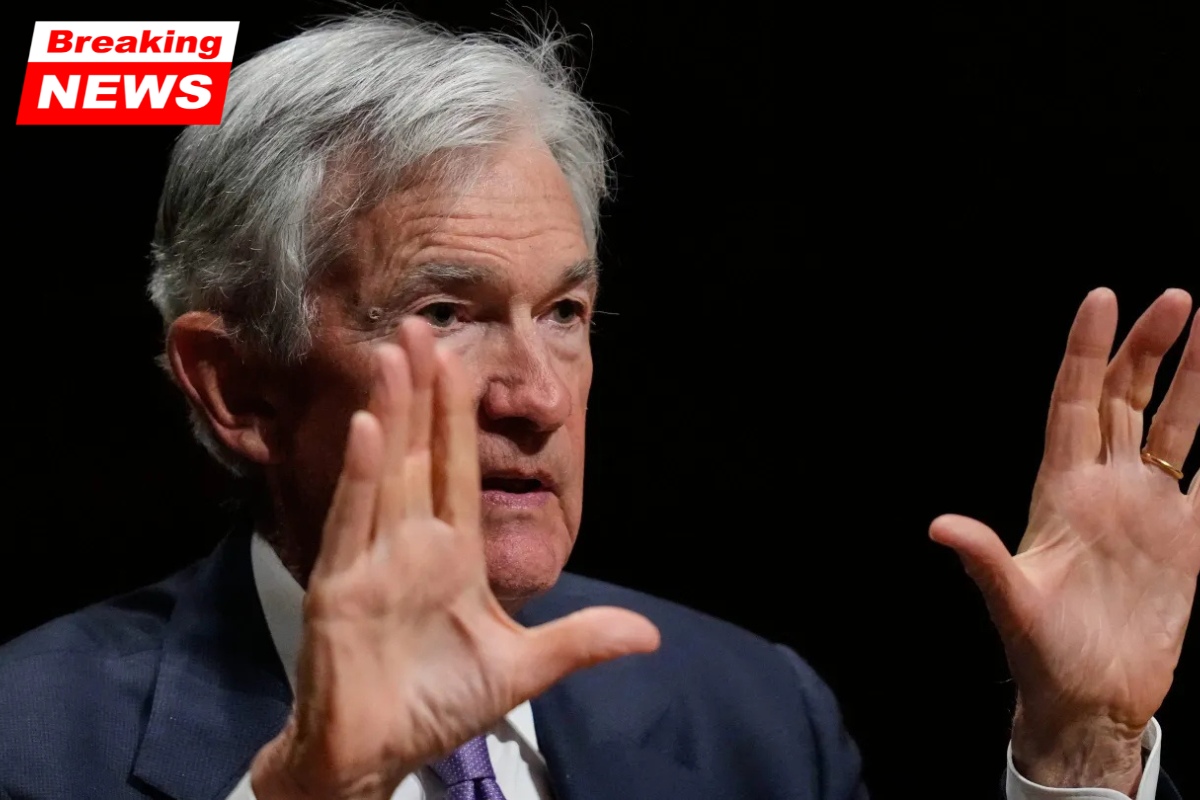
Federal Reserve Chair Jerome Powell recently shared a stark evaluation of the U.S. fiscal health during a discussion with Harvard economics students. While acknowledging that the current $39 trillion debt load is not an immediate danger, Powell warned that the country’s growing debt trajectory requires urgent action. His statement underscored the fact that the U.S. cannot continue on this path without risking significant economic consequences in the long run.
Key Points from Powell’s Assessment
- Current Debt is Manageable: Powell clarified that the U.S. debt, while large, is not unsustainable in the immediate term, owing to the country’s unique position as the world’s reserve currency issuer.
- Debt Growth Outpaces Economic Growth: Powell warned that the U.S. debt is growing faster than the economy, a pattern that is unsustainable in the long run.
- Interest Payments Soar: By 2026, net interest payments on the national debt are projected to surpass $1 trillion, a threefold increase compared to 2020.
- Projections for Debt-to-GDP Ratio: According to the Congressional Budget Office, the debt-to-GDP ratio will rise from 101% today to 120% by 2036.
Understanding the Debt Situation: Powell’s Breakdown
Debt Sustainability: A Misleading Assurance
Jerome Powell emphasized that the U.S. debt, for now, remains sustainable, largely due to the country’s role in the global financial system. However, the key issue, Powell pointed out, is the trajectory of the debt and its rapid acceleration.
Despite the manageable debt level, Powell explained that the speed at which the debt is growing is troubling. The U.S. government’s debt is increasing significantly faster than its economic output, a trend that, over time, could lead to a situation that is unsustainable.
“What’s clear is that our debt is growing much faster; the federal government debt is growing substantially faster than our economy,” Powell said. “And that ratio is going up. And in the long run, that’s kind of the definition of unsustainable.”
Surging Interest Payments: A Looming Problem
One of the most concerning aspects of the U.S. debt, Powell mentioned, is the dramatic rise in interest payments. The government’s debt servicing costs are projected to exceed $1 trillion by 2026, a stark contrast to the $345 billion in interest paid in 2020. In fact, interest payments already surpassed defense spending in the first quarter of the current fiscal year.
This sharp increase in debt servicing represents a real constraint on the federal budget, limiting flexibility in other areas such as defense, healthcare, and social programs.
Path Forward: Balancing the Budget
Despite the alarming debt trajectory, Powell did not advocate for outright debt reduction. Instead, he proposed a more pragmatic approach to fiscal policy: achieving a “primary balance.” This would require the economy to grow at a faster pace than the debt, thereby stabilizing the debt-to-GDP ratio.
“We don’t have to pay the debt down,” Powell said. “We just need to have primary balance and begin to have the economy actually growing more quickly than the debt.”
Powell’s solution, however, is not without challenges. Achieving primary balance would require either significant tax increases, cuts in politically sensitive areas like Medicare and Social Security, or more optimistic growth projections than current trends suggest.
The Broader Implications of Powell’s Remarks
Fed’s Role: Protecting Independence
While Powell acknowledged the fiscal challenges facing the nation, he was quick to remind listeners that the Federal Reserve’s mandate does not include fiscal policy. His comments underscore the importance of the Fed maintaining its independence and sticking to its core mission of ensuring maximum employment and price stability.
“There’s always a time when an administration looks and says, ‘It would be good to use that tool for something else,’” Powell remarked. “It happens all the time. And we just have to be in a situation where we’re not trying to work against any politician or any administration, but we have to be careful to stick to what we’re doing.”
This highlights the delicate balance Powell must strike in his role as Fed Chair, as any fiscal crisis could force the central bank to act beyond its traditional remit, potentially undermining its long-standing independence.
Policy Conundrum: The Fed’s Historical Role in Debt Growth
There is an ironic twist to Powell’s warnings. While he cautions about the risks of a growing debt burden, the Fed’s policies, particularly low-interest rates, have contributed to an environment where cheap borrowing was the path of least resistance for years. Some critics, such as Ray Dalio of Bridgewater Associates, suggest that this could ultimately result in an economic “heart attack,” with government investment crowded out by debt service obligations.
Content Summary Table
| Key Point | Details |
|---|---|
| Current Debt | U.S. debt is $39 trillion, manageable in the short term. |
| Debt Growth | The debt is growing faster than the economy, a pattern that is unsustainable. |
| Interest Payments | Interest payments are projected to exceed $1 trillion by 2026, tripling from 2020 levels. |
| Debt-to-GDP Ratio | The ratio is expected to rise from 101% today to 120% by 2036. |
| Powell’s Solution | Advocates achieving primary balance, with the economy growing faster than the debt. |
| Fed’s Role | Powell emphasizes the Fed’s independence and reluctance to intervene in fiscal policy. |
Immediate Action Needed on U.S. Debt
In his remarks, Powell made it clear that while the U.S. debt is survivable for now, the nation cannot afford to ignore its rising trajectory. The key takeaway from his Harvard speech is that action must be taken soon to change the course of the U.S. fiscal policy. Without a change, the country may face serious economic consequences down the road.
Powell’s assessment offers a sobering outlook: The debt level may not be an immediate threat, but the growing debt trajectory is unsustainable. As the U.S. faces fiscal constraints, lawmakers must act swiftly and carefully to ensure the country’s economic future remains secure.