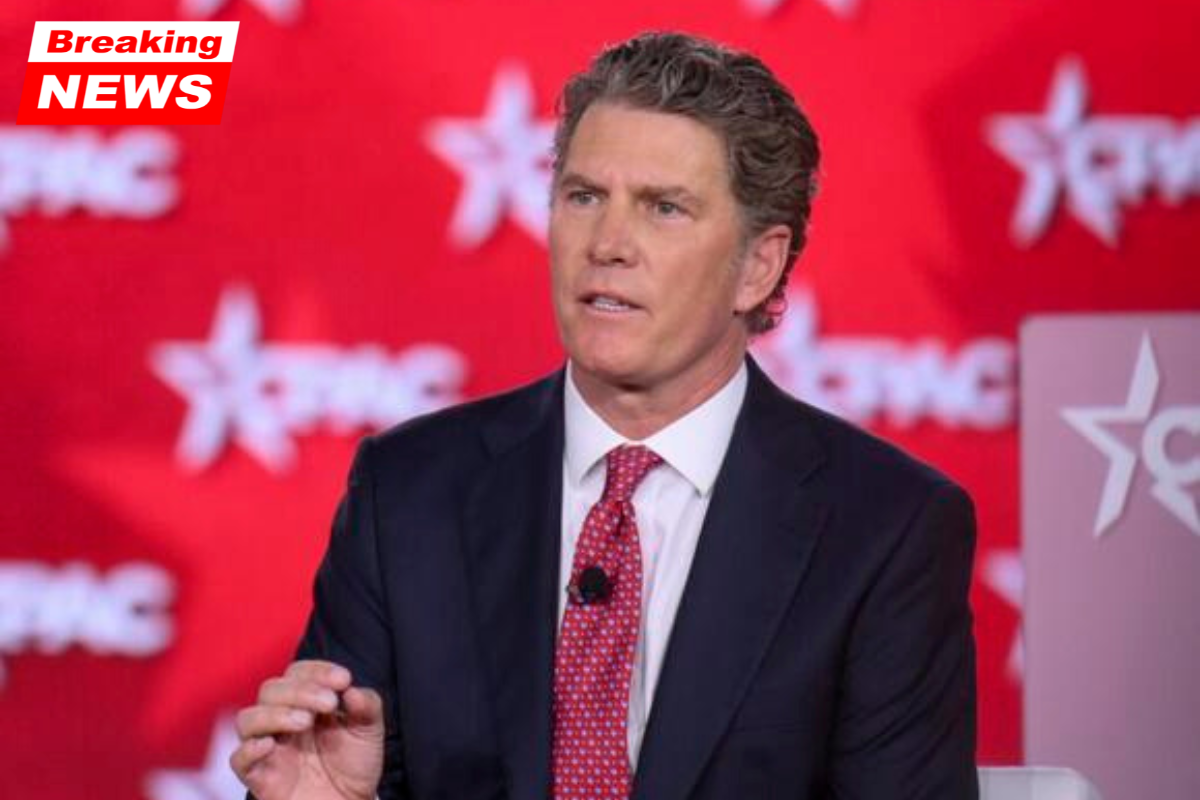
Bo French, a prominent candidate for the Texas Railroad Commission, has sparked significant controversy with his recent remarks at the Conservative Political Action Conference (CPAC), where he called for the mass deportation of 100 million people from the United States.
The statement, which is an unprecedented escalation in nationalist rhetoric, has sent shockwaves through both the political landscape and civil rights organizations.
Unprecedented Deportation Demand
French, a former chair of the Tarrant County GOP, made his bold remarks during a panel discussion titled “Don’t Sharia My Texas” at the Gaylord Texan Resort on Friday. He claimed that 100 million people in the U.S. should be deported, asserting that these individuals do not share American values and are unwilling to assimilate.
- “We have roughly 100 million people in this country who shouldn’t be here,” French declared.
- “We’re going to send them all home.”
This figure, far higher than traditional estimates of undocumented immigrants in the U.S., suggests a policy that could target legal residents and even naturalized citizens. French later boasted on social media, claiming he was the first elected official to call for such a mass deportation, positioning his stance as a shift in immigration policy that he believes could influence national debates.
Religious and Cultural Exclusion
In his speech, French not only demanded mass deportation but also explicitly targeted Islam and Muslim communities in Texas and beyond. His rhetoric went beyond the typical critiques of Sharia law, venturing into outright religious and cultural exclusion.
- Banning the Islamic call to prayer: French called for a ban on the adhan (the Islamic call to prayer), a common religious practice in Muslim communities.
- Cultural Exclusion: He argued that immigration since 1965 had brought cultures that do not align with American values, a claim that seeks to discredit immigrant communities, particularly those from Muslim-majority countries.
- Political Framing: French framed the presence of Muslim communities in Texas as an “invasion” and warned of efforts to “conquer” both the state and the nation.
These statements tap into a broader fear-mongering narrative that paints immigrant communities as a threat to national identity and values.
Political Context and Primary Runoff
French is currently campaigning for a seat on the Texas Railroad Commission, a powerful agency that regulates the state’s oil and gas industry. He is facing incumbent Jim Wright in a Republican primary runoff scheduled for May 26, 2026.
His extreme rhetoric on immigration and Islam is part of a broader right-wing political wave in Texas, which includes Governor Greg Abbott’s controversial actions and the rise of the Sharia Free Texas Caucus.
- Governor Abbott recently designated the Council on American-Islamic Relations (CAIR) as a foreign terrorist organization, a move that is currently being challenged in court by CAIR.
- The Sharia Free Texas Caucus, formed by state Republicans, is pushing for legislation to eliminate any influence of Sharia law in the state, signaling a growing intolerance toward Islam and Muslims in Texas.
History of Controversy
This is not the first time French has attracted attention for inflammatory statements. In late 2024, he was criticized within his own party for using homophobic and ableist slurs on X (formerly Twitter). Despite these controversies, French has maintained a loyal “America First” following, positioning himself as a hardline outsider challenging the Republican establishment.
His latest comments about mass deportation and anti-Muslim rhetoric have drawn sharp condemnation from civil rights advocates, including CAIR, who have called his remarks “anti-Muslim hate” fueled by misinformation and fear.
- Texas, where French is campaigning, is home to an estimated 300,000 Muslim residents, and these communities could be directly impacted by his extreme rhetoric.
Civil Rights Reactions
Civil rights organizations have vehemently opposed French’s remarks, describing them as part of a growing trend of nationalist and xenophobic rhetoric within the Republican Party. The American Civil Liberties Union (ACLU) and other groups warn that such language and policies encourage discrimination, hate, and violence against minority communities.
CAIR has specifically condemned French’s comments as contributing to a climate of fear and hatred against Muslim Americans, who have long faced discrimination and hostility. The focus on religious and cultural exclusion also raises concerns about the erosion of rights for other marginalized communities in the U.S.
The Broader Impact on the 2026 Elections
French’s comments could have far-reaching implications for both Texas and national politics. As he prepares for the Republican primary runoff, his remarks may resonate with a segment of voters who favor hardline immigration policies and see French as a staunch defender of American values.
However, these statements could also alienate moderate Republicans and independent voters, as well as spark national debate about the role of immigrants and religious freedom in American society.
French’s campaign is testing the limits of nationalist rhetoric within the Republican Party, especially as immigration remains a central issue in American politics. His extreme proposals, such as deporting 100 million people, reflect a growing divide in the party between traditional conservatives and far-right factions pushing for more drastic policies.
Bo French’s call for mass deportation and his anti-Muslim rhetoric have injected a new level of extremism into the Republican Party’s immigration discourse. His views are aligned with broader movements in Texas and the U.S. that seek to redefine American identity through cultural and religious exclusion.
As French campaigns for the Texas Railroad Commission seat, his remarks are certain to continue generating debate and concern, both in Texas and across the nation. The 2026 primary runoff will be a pivotal moment for Texas Republicans, as they grapple with the direction of their party and the future of American immigration policy.