The Trump administration’s aggressive immigration crackdown has not only had a serious human impact but could also cost the United States billions in lost tax revenue. While the policies have often targeted undocumented immigrants without criminal records, experts now warn that the economic consequences of mass deportations could be massive.
Mass Deportations Could Cost Billions in Tax Revenue
Tax professionals and researchers caution that the mass removal of undocumented immigrants from the U.S. could result in losses of up to $479 billion in federal tax revenue over the next decade. One key reason is that fear of deportation is discouraging undocumented workers from filing tax returns.
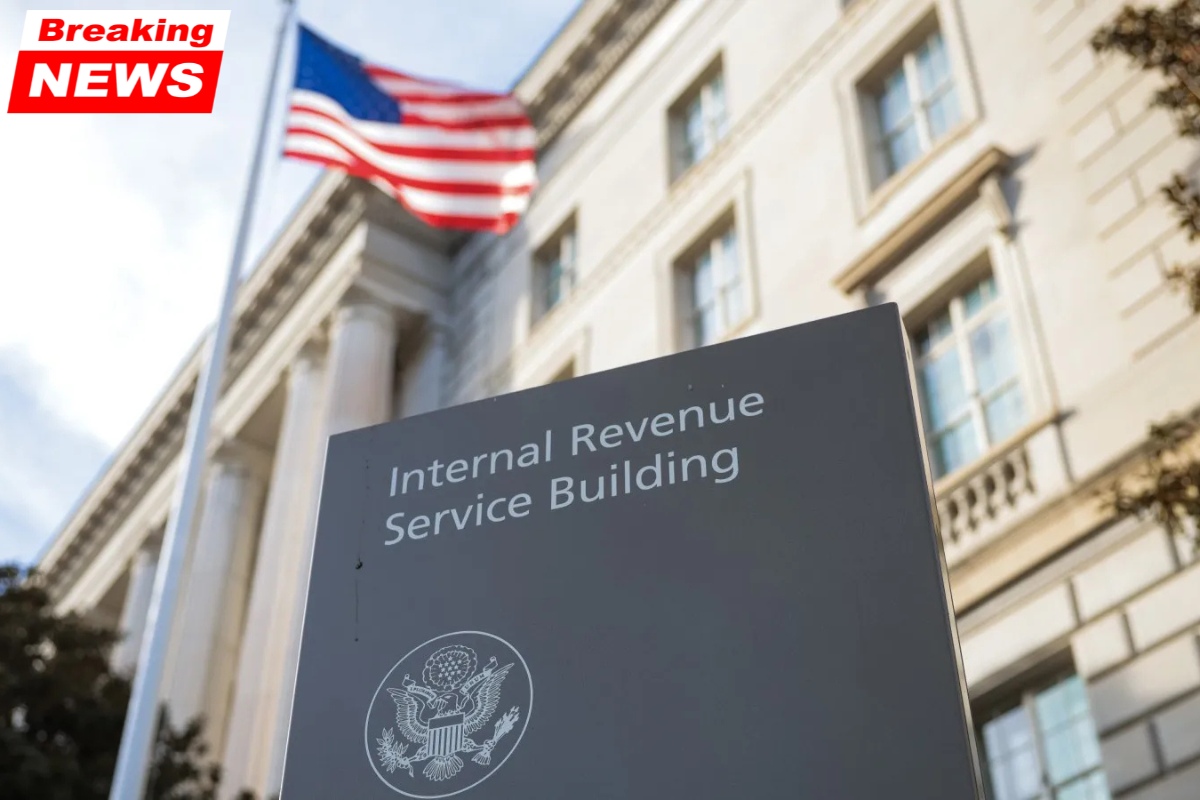
Data-sharing agreements between the Internal Revenue Service (IRS) and immigration authorities have made the act of filing taxes riskier for people without legal status. Many undocumented immigrants are now avoiding tax filings altogether, fearing that it could expose them to immigration enforcement.
Daisy Schmidt, a tax adviser, told The Guardian that she has lost up to 75% of her clients due to these fears.
“Our target is the Latino community, and many people didn’t file taxes because of fear of ICE,” Schmidt said. “They said: ‘If they can deport me, what am I filing taxes for?’”
Research Shows Huge Potential Losses
Research from Yale University’s Budget Lab, cited by The Guardian, suggests that lower tax compliance among undocumented immigrants could create substantial revenue gaps for the IRS. The estimated losses range from $147 billion to $479 billion over the next ten years.
Even a small drop in voluntary compliance could be costly. According to IRS estimates, a 1% reduction in voluntary tax filings could mean about $46 billion in lost federal revenue.
The Institute on Taxation and Economic Policy reports that around half of undocumented immigrant households currently file income tax returns. In 2022 alone, these immigrants paid an estimated $96.7 billion in taxes, despite being ineligible for most deductions and tax credits.
For context, it is estimated that for every 1 million undocumented immigrants, public services receive roughly $8.9 billion in additional tax revenue.
Impact on Families and Tax Credits
Fear of deportation and changes to tax policy have also affected eligibility for certain benefits, such as the child tax credit. Edgar Villacorta, a tax adviser serving Latino communities in Maryland and Virginia, said 30% to 40% of his clients did not file taxes this year. Some colleagues reported that as many as half of their clients skipped filing.
“They see that it isn’t giving them any benefit,” Villacorta explained, referring to the loss of the child tax credit for some parents without legal status, even when their children are U.S. citizens.
Debunking the Myth of Immigrant “Welfare Burden”
The administration has argued that immigrants strain U.S. welfare systems, justifying the reduction or removal of tax benefits for undocumented workers. However, research contradicts this claim.
A study by the Cato Institute found that immigrants paid far more in taxes than they received in government benefits from 1994 through 2023. Over this period, immigrants generated nearly $10.6 trillion more in federal, state, and local tax revenue than they received in public spending.
The study highlighted that immigrants, despite generally earning lower incomes, create a fiscal surplus because they participate in the workforce at higher rates, are more likely to be of working age, and rely less on age-related benefits than U.S.-born residents.
The financial implications of mass deportation policies extend beyond the human cost. Experts warn that discouraging undocumented immigrants from filing taxes could create a massive fiscal shortfall, potentially reducing revenue by hundreds of billions over the next decade.
At the same time, research shows that immigrants contribute more to U.S. public finances than they consume in government benefits, highlighting the economic importance of maintaining inclusive tax policies.