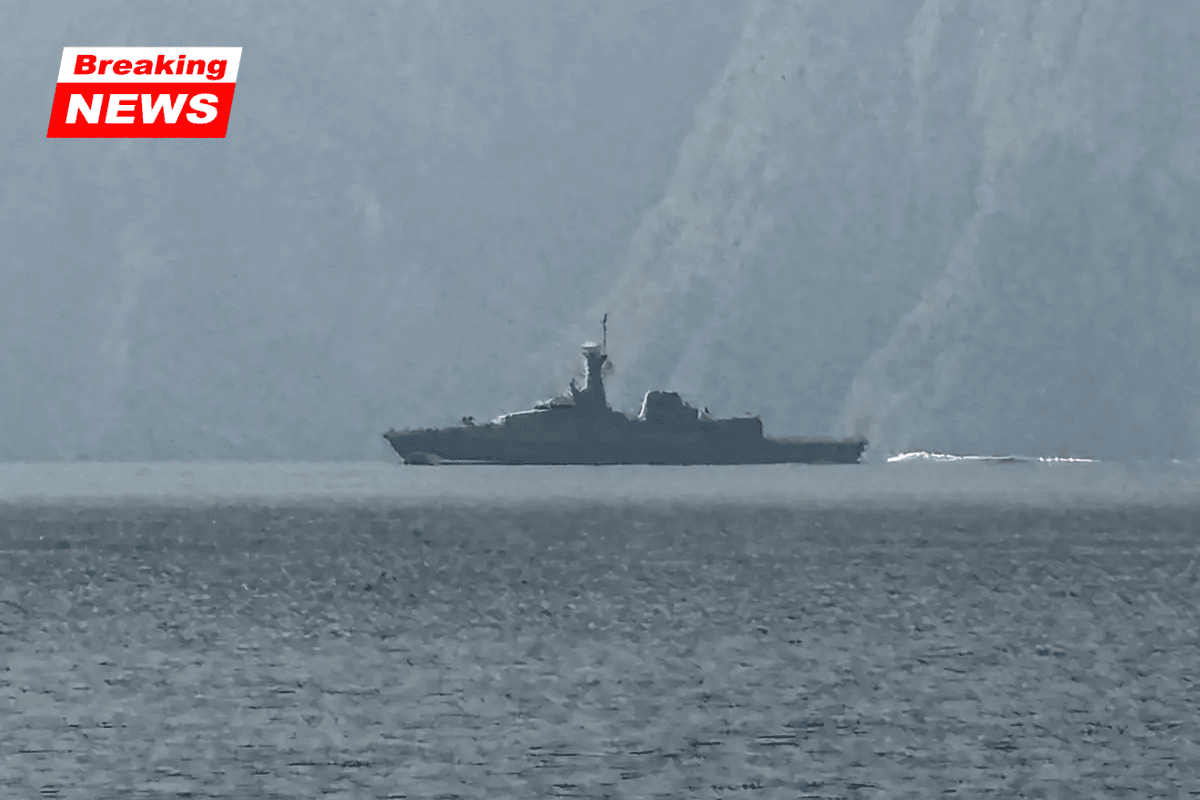
The conflict between the US, Israel and Iran has now spread beyond airstrikes and missile attacks. Shipping vessels near the Strait of Hormuz — one of the world’s most important oil routes — have come under fire, raising serious concerns about global trade and energy supply.
Several ships were reportedly attacked on Sunday, and at least one oil tanker had to be evacuated. As tensions grow, major shipping companies are starting to avoid the region.
Here is a clear breakdown of what is happening and why it matters.
Overview of the Strait of Hormuz Crisis
| Key Detail | Information |
|---|---|
| Main Area Affected | Strait of Hormuz |
| Oil Supply Through Route | Around 20% of global daily supply |
| Confirmed Tanker Targeted | Skylight (Palau-flagged) |
| Crew Status | 20 evacuated, 4 injured |
| Current Shipping Risk Level | Highly volatile |
Tanker Skylight Targeted Near Oman
The Palau-flagged oil tanker Skylight (IMO 9330020) was reportedly targeted a few miles north of Khasab port in Oman.
Oman’s Maritime Security Center confirmed that:
- The tanker was attacked
- All 20 crew members were evacuated
- At least four people were injured
An official from Operation Aspides said Omani authorities carried out the rescue operation.
The vessel had previously been sanctioned by the United States Department of the Treasury in December for allegedly transporting Iranian oil as part of a so-called “shadow fleet.”
No group has officially claimed responsibility for the attack.
Additional Attacks Reported
The United Kingdom Maritime Trade Operations (UKMTO) reported at least two more incidents off the coast of Oman.
According to UKMTO:
- Two vessels were struck by unknown projectiles
- The maritime situation remains “highly volatile”
- There is risk of military miscalculation and electronic interference
The Gulf Cooperation Council condemned what it described as “brutal Iranian attacks” near Oman’s Duqm port and surrounding waters.
Why the Strait of Hormuz Matters
The Strait of Hormuz is a narrow waterway between Iran and Oman. It connects the Persian Gulf to global shipping lanes.
Around 15 million barrels of oil — roughly 20% of the world’s daily supply — pass through this route.
Islamic Revolutionary Guard Corps (IRGC) has previously threatened to restrict access to the strait during periods of tension.
On Saturday, ships reportedly received radio warnings claiming that vessels were barred from entering the strait. However, UKMTO stated that no official closure has been formally announced through recognised maritime channels.
Shipping Companies Begin Avoiding the Route
Due to safety concerns:
- Some international shipping firms have suspended operations
- Marine traffic data shows reduced vessel movement
- Insurance costs for ships are rising
Even without an official blockade, fear alone can slow traffic significantly.
A complete closure of the strait — or even a highly dangerous environment — could:
- Disrupt oil exports from Saudi Arabia, UAE, Kuwait, Iraq and Iran
- Push global oil prices sharply higher
- Affect fuel prices worldwide
Iran’s History of Maritime Attacks
Iran has previously been linked to attacks on commercial vessels in the region. It has used Shahed drones and other tactics in past incidents.
The current attacks come as Iran responds to US and Israeli strikes targeting its military facilities.
What Happens Next?
The situation remains unpredictable.
Possible developments include:
- Further naval clashes
- Increased insurance and shipping costs
- Formal closure attempts by Iran
- Wider military escalation
Energy markets are closely watching events. Any prolonged disruption could impact oil prices and global trade routes.