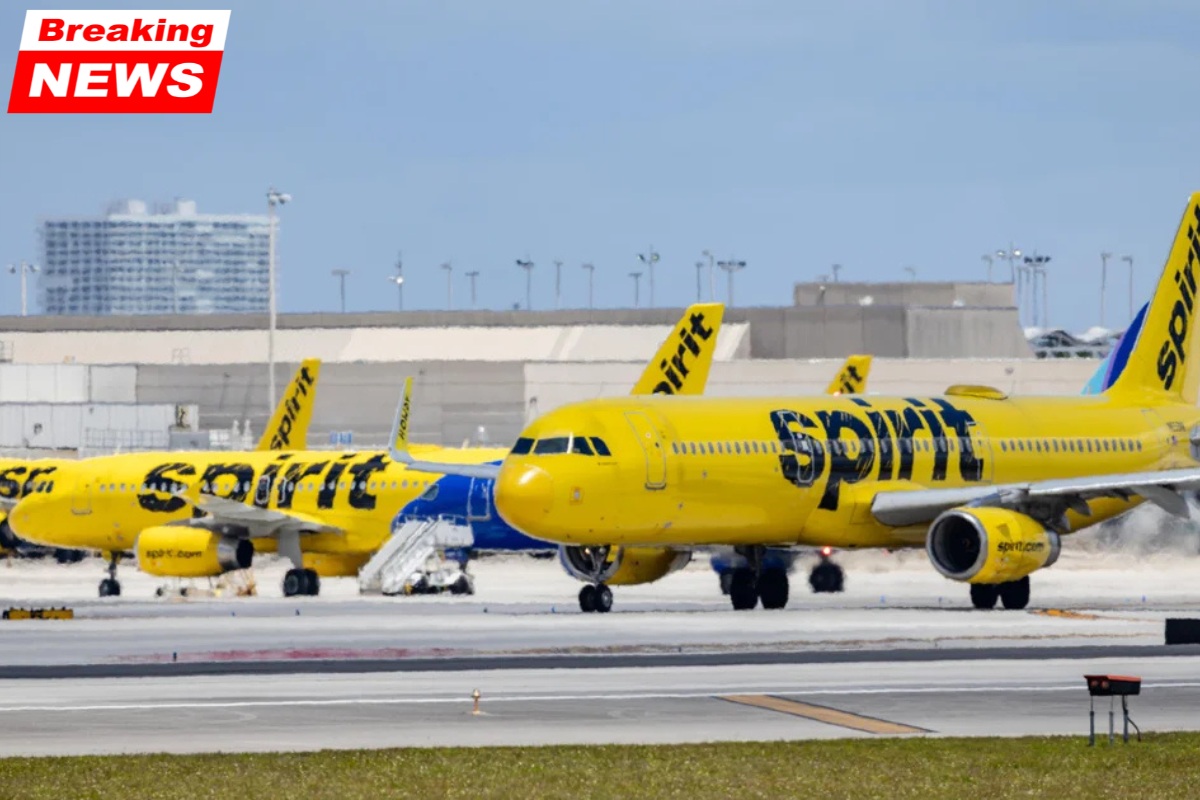
Spirit Airlines, a well-known budget carrier based in Florida, has announced it will cease operations following its inability to secure a much-needed $500 million federal bailout. The airline’s parent company, Spirit Aviation Holdings, stated in a Saturday morning release that it was beginning an orderly wind-down of operations immediately. All flights operated by Spirit Airlines have been canceled, and the airline is advising its passengers not to go to the airport.
Background on the Airline’s Collapse
This shutdown comes after Spirit Airlines failed to negotiate a federal bailout that would have helped the airline survive amidst rising fuel costs and financial difficulties. The airline had filed for bankruptcy twice in recent years, with surging fuel prices due to geopolitical tensions — particularly the Iran war — compounding its financial strain. Spirit, known for its low-cost, no-frills flying model, was left with no alternative but to initiate its wind-down after the collapse of the bailout talks.
In a statement, Spirit CEO Dave Davis explained that, despite reaching an agreement with bondholders in March 2026, the airline’s situation worsened due to the unexpected rise in fuel prices. As a result, Spirit had no choice but to begin shutting down its operations.
Impact on Passengers and Refund Process
In light of the shutdown, Spirit Airlines has announced that it will automatically process refunds for all canceled flights paid with credit or debit cards. Passengers who booked their flights through third-party agencies such as travel agents are advised to contact those agents directly. U.S. Department of Transportation Secretary Sean Duffy confirmed that the airline has sufficient funds to process these refunds for direct purchases.
Additionally, Spirit’s bondholders, including Ken Griffin’s Citadel and Ares Management Corp., had opposed the government-backed bailout deal, which would have given the U.S. government a 90% stake in the airline, according to sources familiar with the situation.
Rising Fuel Prices and Bankruptcy Struggles
Spirit Airlines had already been struggling before the Iran war, filing for bankruptcy in November 2024 after losing more than $2.5 billion since 2020. Despite efforts to cut costs, including laying off nearly 4,000 employees and reducing underperforming routes, the company faced rising operating costs, especially for jet fuel, which surged in recent months.
Deutsche Bank recently forecasted that U.S. airlines’ annual fuel bill could increase by $24 billion due to rising energy prices. While airlines are expected to offset some of these costs with higher revenues, Spirit, already operating under a significant financial strain, did not have the resources to withstand the increase in operating costs.
Spirit Airlines’ Legacy and Brand Image
Founded in 1983, Spirit Airlines initially operated under the name Charter One, spun off from a trucking company. The airline rebranded as Spirit Airlines in 1992 and eventually adopted a “no-frills” business model in 2007, offering low-cost flights and charging extra for amenities like seat selection and baggage.
Spirit Airlines became known for its bright yellow planes and rock-bottom fares, making it one of the largest budget carriers in the U.S. It flew to over 40 cities in the U.S. and had international routes to the Caribbean and parts of Central and South America.
Government’s Efforts and Lack of Bailout
Earlier discussions surrounding a potential bailout involved the Trump administration, which was reportedly working to save Spirit from bankruptcy. Despite discussions and efforts from government officials, including Commerce Secretary Howard Lutnick, the airline’s talks with the government broke down.
Spirit Airlines was reportedly given the final opportunity to secure a bailout, but the failure to reach an agreement prompted the airline to begin its liquidation process.
President Trump had initially shown interest in rescuing the airline, saying, “If we can do it, we’ll do it, but only if it’s a good deal.” However, no deal materialized, and the airline ceased operations. In a statement, Spirit CEO Dave Davis thanked the Trump administration for their efforts but acknowledged that rising fuel prices and increased financial pressures left the company with no viable option.
Industry Response and Impact on Other Airlines
The closure of Spirit Airlines has significant ripple effects across the aviation industry. To accommodate affected passengers, several major U.S. airlines have stepped in to offer reduced fares on former Spirit routes. These airlines include United Airlines, Southwest Airlines, JetBlue, and Delta Airlines, which have announced fare caps and reduced prices for Spirit customers.
American Airlines, which serves 70 of the 72 airports Spirit flew from, said it was reviewing opportunities to add additional capacity and larger aircraft on popular routes previously served by Spirit. American Airlines also plans to help Spirit employees find new roles by launching a dedicated jobs page for displaced staff, a move also being mirrored by United Airlines.
United Airlines has also launched a help page for affected Spirit customers, showing the industry’s efforts to mitigate the negative effects of Spirit’s sudden shutdown.
The End of Spirit Airlines’ Era
The closure of Spirit Airlines marks the end of a significant player in the U.S. airline industry, known for its budget-friendly travel options. The airline’s collapse, exacerbated by rising fuel prices and a failed bailout deal, underscores the challenges faced by low-cost carriers in an increasingly volatile economic environment.
While other airlines have stepped in to provide relief for affected passengers and employees, Spirit’s departure from the skies represents a significant loss for both the industry and its loyal customers.