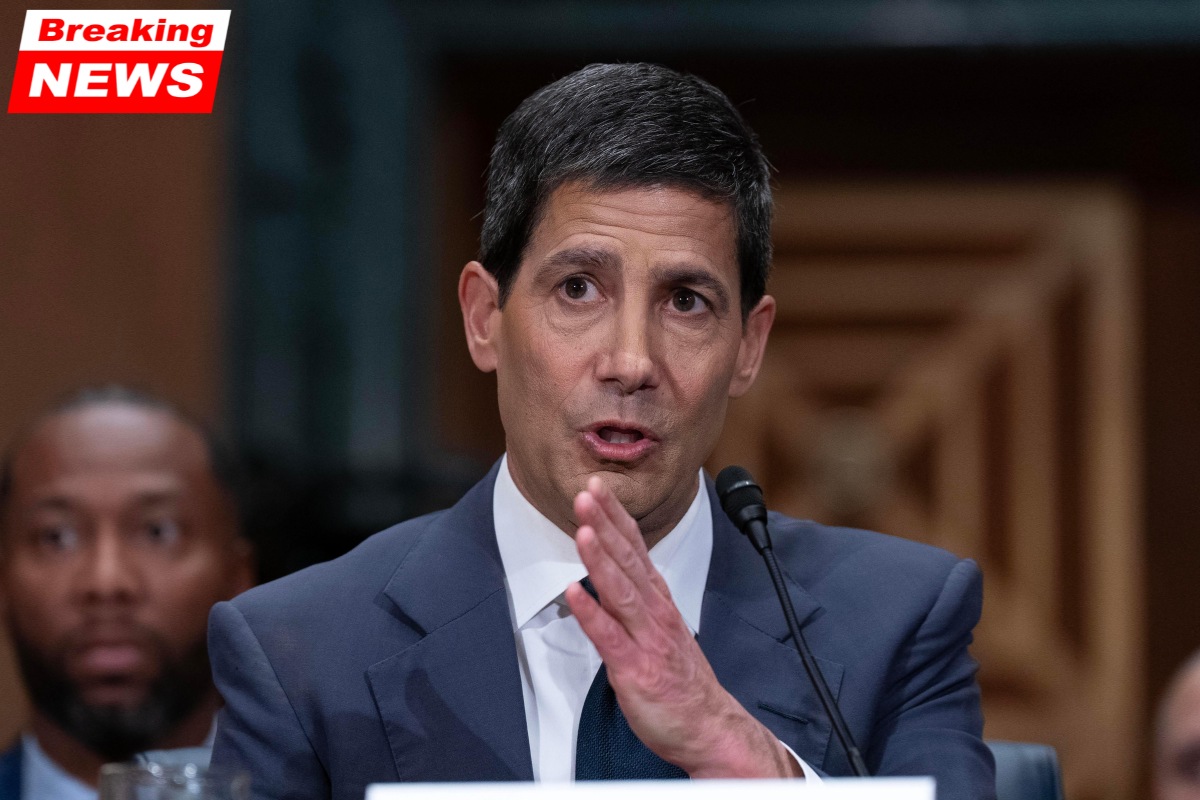
The U.S. Senate has confirmed Kevin Warsh as the new chair of the Federal Reserve, placing him at the center of American monetary policy during a period of economic uncertainty and political scrutiny.
Warsh, a former Federal Reserve governor and finance executive, was confirmed on May 13 in a 54-45 Senate vote. The confirmation gives President Donald Trump a major influence over the direction of the U.S. central bank as debates continue over interest rates, inflation, and the independence of the Federal Reserve.
The Senate also confirmed Warsh to a new 14-year term on the Federal Reserve Board of Governors one day earlier. Democratic Senator John Fetterman was the only Democrat to support Warsh’s nomination alongside Republicans.
Overview of Kevin Warsh’s Confirmation
| Key Detail | Information |
|---|---|
| New Fed Chair | Kevin Warsh |
| Senate Vote | 54-45 |
| Confirmed On | May 13 |
| Former Position | Federal Reserve Governor (2006-2011) |
| Nominated By | Donald Trump |
| Key Issues Facing Fed | Inflation, interest rates, labor market |
| Previous Fed Chair | Jerome Powell |
| Fed Funds Rate | 3.5% to 3.75% |
Who Is Kevin Warsh?
Kevin Warsh is a former Wall Street executive and policymaker who previously served on the Federal Reserve’s Board of Governors from 2006 to 2011. During his earlier time at the Fed, he played a significant role in responding to the 2008 financial crisis.
Warsh has long been viewed as a prominent voice in economic policy circles and has advocated for reforms to the Federal Reserve’s communication strategy and balance sheet management.
At 56 years old, he now returns to the central bank during a complicated economic environment shaped by persistent inflation concerns, geopolitical instability, and shifting labor market conditions.
Analysts believe Warsh may bring a different approach to monetary policy compared to outgoing Fed Chair Jerome Powell.
Concerns About Federal Reserve Independence
Warsh’s confirmation arrives amid growing concerns over the independence of the Federal Reserve from political pressure.
President Trump has repeatedly criticized Powell during his tenure, often publicly calling for lower interest rates. Those comments sparked debate over whether political leaders should attempt to influence central bank decisions.
During his Senate confirmation hearing in April, Warsh acknowledged the importance of central bank independence but stated that such independence “has to be earned.” He argued that the Fed failed to adequately protect Americans from surging inflation during and after the COVID-19 pandemic.
Inflation reached a 40-year high during that period, increasing pressure on policymakers and damaging public confidence in economic institutions.
Despite concerns about political influence, Warsh told lawmakers that Trump never asked him to promise future interest rate cuts and said he would never agree to such a request.
Market observers say public perception will be one of Warsh’s biggest challenges as chair.
Christian Floro, a market strategist at Principal Asset Management, noted that any move toward lower interest rates could increase scrutiny over whether the Fed is acting independently from the White House.
The Economic Challenges Facing the Federal Reserve
Warsh takes over leadership of the Federal Reserve at a time when the economy faces multiple competing pressures.
Federal Reserve officials are currently balancing two major goals:
- Keeping inflation under control
- Supporting strong employment levels
Recent economic conditions have complicated both objectives. Rising inflation linked to the Iran war has increased concerns about price stability, while hiring activity outside sectors such as health care has slowed.
The Federal Open Market Committee (FOMC), which sets interest rates, remains divided on the best path forward.
Some officials believe rates should remain elevated to fight inflation, while others are concerned that keeping borrowing costs too high could weaken economic growth and employment.
Warsh is expected to play a major role in building consensus among policymakers on the committee.
How Interest Rate Decisions Work
Although Kevin Warsh now serves as chair of the Federal Reserve, he does not have unilateral control over interest rate decisions.
The Federal Open Market Committee consists of 12 voting members, and each member receives one vote on monetary policy decisions.
Warsh will need to persuade a majority of the committee if he wants to shift policy toward lower or higher interest rates.
Interestingly, Jerome Powell is expected to remain on the Federal Reserve Board for some time even after stepping down as chair. His current board term does not officially expire until January 2028.
Following the Fed’s April 29 meeting, where policymakers kept interest rates unchanged at 3.5% to 3.75%, Powell publicly congratulated Warsh and emphasized that leadership transitions at the Fed are structured to preserve institutional stability.
Powell also stated he plans to maintain a low public profile after Warsh formally assumes the role.
Warsh’s Expected Policy Changes
Economists and investors expect Kevin Warsh to pursue several reforms during his four-year term as Fed chair.
One area likely to see significant change is the Federal Reserve’s communication strategy. During his confirmation hearing, Warsh criticized the Fed’s heavy reliance on “forward guidance,” where policymakers signal future rate moves to financial markets in advance.
Warsh believes the central bank should adopt a more flexible and less predictable communication style.
He has also advocated for reducing the size of the Federal Reserve’s balance sheet. Analysts say this position could mark one of the biggest philosophical differences between Warsh and Powell.
According to Christian Floro, investors under a Warsh-led Fed may see:
- Falling short-term interest rates
- Rising long-term bond yields
- A steeper yield curve
- Greater emphasis on productivity growth linked to artificial intelligence
Warsh has also suggested that the Fed may need updated tools and a revised inflation framework to adapt to modern economic conditions.
What Markets Are Watching Next
Financial markets are now closely watching how Warsh positions himself on future rate cuts and inflation policy.
Some analysts believe he may be more open to lower rates than he was during the years following the 2008 financial crisis. Others caution that political pressure from the White House could complicate perceptions of Fed decision-making.
Investors are particularly focused on whether Warsh can maintain credibility while navigating demands for lower borrowing costs and preserving the Fed’s institutional independence.
The broader concern for markets may not simply be where interest rates move next, but how the Federal Reserve operates under its new leadership.
Changes in communication strategy, balance sheet management, and policy transparency could reshape investor expectations for years to come.