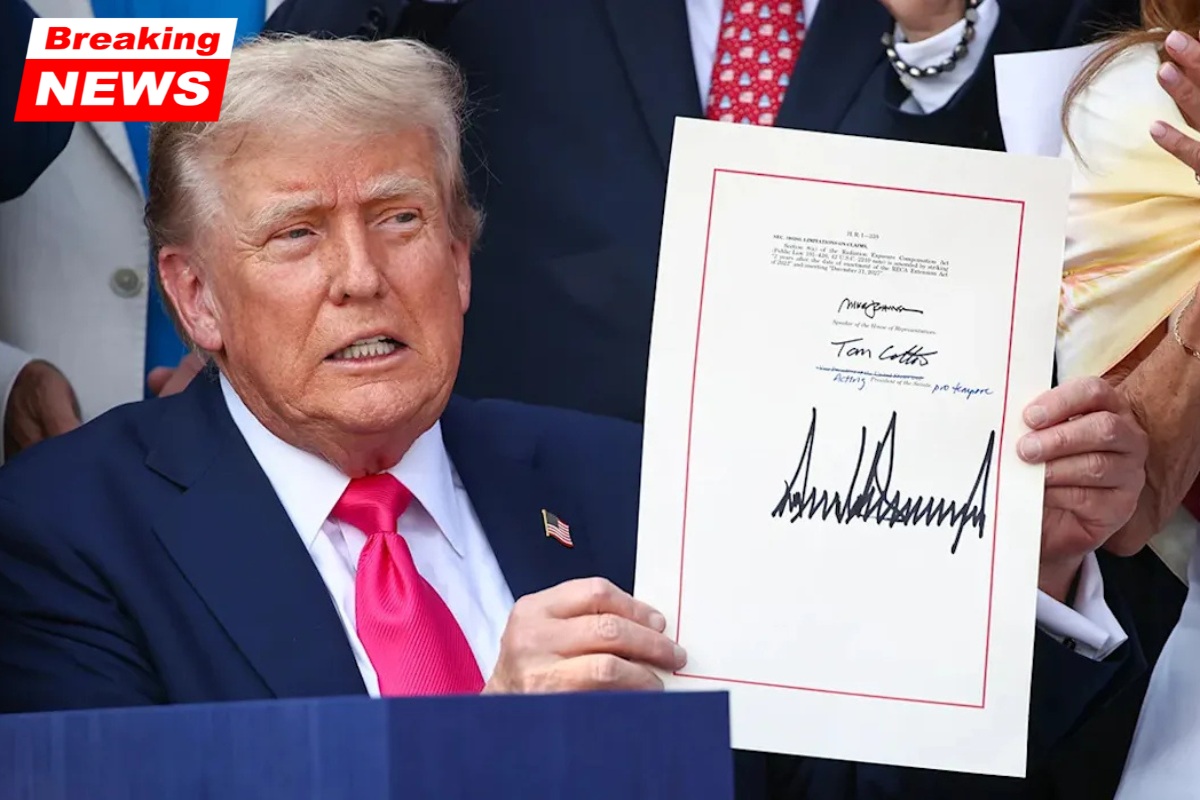
The Republican-aligned American Action Network is betting big that tax season can be political gold. AAN announced a $10 million, national ad blitz timed to run through April 15 — the tax-filing deadline — aimed at showcasing the tax cuts in the newly enacted “Working Families Tax Cuts Act” and pressuring voters to credit House Republicans and President Trump for the change.
What the campaign is and why it matters
The AAN rollout, disclosed first to Fox News Digital, packages the GOP’s signature tax changes as a pocketbook victory for ordinary Americans just as they tally refunds and liabilities. The group says the ads will run across broadcast, digital and streaming platforms and will hit 37 targeted congressional districts with tailored messaging: thank-you spots in vulnerable Republican districts and attack ads in select Democratic districts accusing House Democrats of voting to raise taxes.
Republicans view the timing as strategic. Tax season is a rare moment when many voters look directly at how much money they keep, making it easier to spotlight policy outcomes. For House Republicans, who hold narrow majorities and face a difficult midterm environment, the ad buy is intended to anchor the party’s midterm message to concrete benefits — no tax on tips and overtime pay, and extended elements of the 2017 tax law — rather than broader narratives about inflation or foreign policy.
Ad mechanics and geography
| Element | Detail |
|---|---|
| Advertiser | American Action Network (AAN) |
| Spend | $10 million |
| Duration | National run through April 15 (tax filing deadline) |
| Media mix | Broadcast, digital, streaming |
| Targeting | Ads run in 37 congressional districts — thank-you ads in GOP districts, critic ads in select Dem districts |
| Notable GOP districts targeted | Alaska (Rep. Nick Begich), Arizona (Rep. Juan Ciscomani), California (Rep. David Valadao), Florida (several seats), Texas (Monica De La Cruz), Wisconsin (Rep. Bryan Steil) |
| Notable Democratic targets | New York, Florida, Michigan, Nevada, New Jersey, Texas, Washington State districts |
AAN’s messaging strategy is twofold: first, laud Republican lawmakers for delivering “the largest tax cuts in history” (the ad text AAN uses), and second, label Democrats as the party that voted to raise taxes. The group’s president framed the campaign as a reminder that the GOP “stood up for working families,” while House leaders and Republican committee chairs amplified the message in social posts and interviews.
Political context: why Republicans are leaning in
Republicans are fighting an uphill structural battle in midterms: the party in power typically loses seats, and economic headwinds and presidential approval ratings can deepen losses. AAN and allied groups want to convert policy wins into immediate political capital, using empirical moments (your tax return) to create a tangible thread from law to personal pocketbook.
On the other side, Democrats and allied groups characterize the law as skewed toward the wealthy and well-connected and argue the broader bill — originally called the One Big Beautiful Bill Act before rebranding — included priorities that hurt working families. Democrats’ critique is both substantive (which provisions help higher-income households most) and strategic: if voters don’t see broad benefit, the ad blitz could have limited electoral lift.
What the ads actually claim — and the debate over accuracy
AAN’s creative highlights two main claims: (1) the law extends and expands tax cuts that benefit ordinary wage-earners (including elimination of taxes on tips and overtime), and (2) Democrats voted for higher taxes. Both claims are political framing tools and will be litigated in the court of public opinion.
Attention points:
- Timing: Ads run through April 15 to coincide with returns and refunds. The Internal Revenue Service’s regular calendar and filing deadline make this a predictable political moment for tax messaging (see IRS guidance at irs.gov).
- Targeted districts: By concentrating buys in swing districts, AAN hopes to influence close races where small shifts in turnout or persuasion matter.
- Messaging risk: If any claim is shown to be misleading, opponents will amplify corrections and fact-checks; partisan viewers may already interpret the same claims differently.
Who’s paying and why it matters for accountability
AAN is a major conservative policy and advocacy group often aligned with House GOP leadership. Outside spending like this is a staple of modern campaigns; however, the scale ($10 million national, concentrated in 37 districts) signals serious investment in messaging infrastructure and turnout effects.
Disclosure rules for independent expenditures govern the reporting of spending, and federal election records at congress.gov and FEC filings (fec.gov) are places to check for future transparency on the buy.
What to watch over the next weeks
- Voter reception: Are tax-season messages resonating in targeted districts, especially among mid- and lower-income households? Polling and local canvass reports will show whether the ads move numbers.
- Counterprogramming: Democrats and allied groups will almost certainly counter with ads and town-hall messaging framing the law as favoring the wealthy; watch battleground ad markets for escalating buys.
- Fact-checking and media coverage: Independent fact-checks and local reporting may pick apart specific claims and influence undecided voters.
- Flow of money: FEC reports will reveal more detail on timing and exact media buys; check the FEC for post-election and midterm filings (fec.gov).
I drafted this piece from the detailed account you provided and did not independently verify the ad buy or the full legislative text with live web research. Claims that this is the “largest tax cut in history” or that “every single Democrat voted to raise their taxes” are political assertions that depend on which provisions, baselines, and scoring methods you use; independent analysis from the Congressional Budget Office or Treasury would be necessary to validate those superlatives.
For basic official context on filing deadlines, see the IRS at irs.gov, and for legislative text and roll-call votes consult congress.gov. If you want, I can pull and summarize the actual bill text, vote tallies, or FEC expenditure filings — I’d need to fetch those documents directly.
AAN’s $10 million tax-season blitz is a classic example of timing politics to policy: use the moment when voters touch their wallets to remind them who lawmakers say delivered the benefits. Whether that message moves the needle will depend on local economic realities, the effectiveness of opposition messaging, and whether voters can reconcile immediate tax outcomes with broader concerns on inflation, healthcare and national security.