
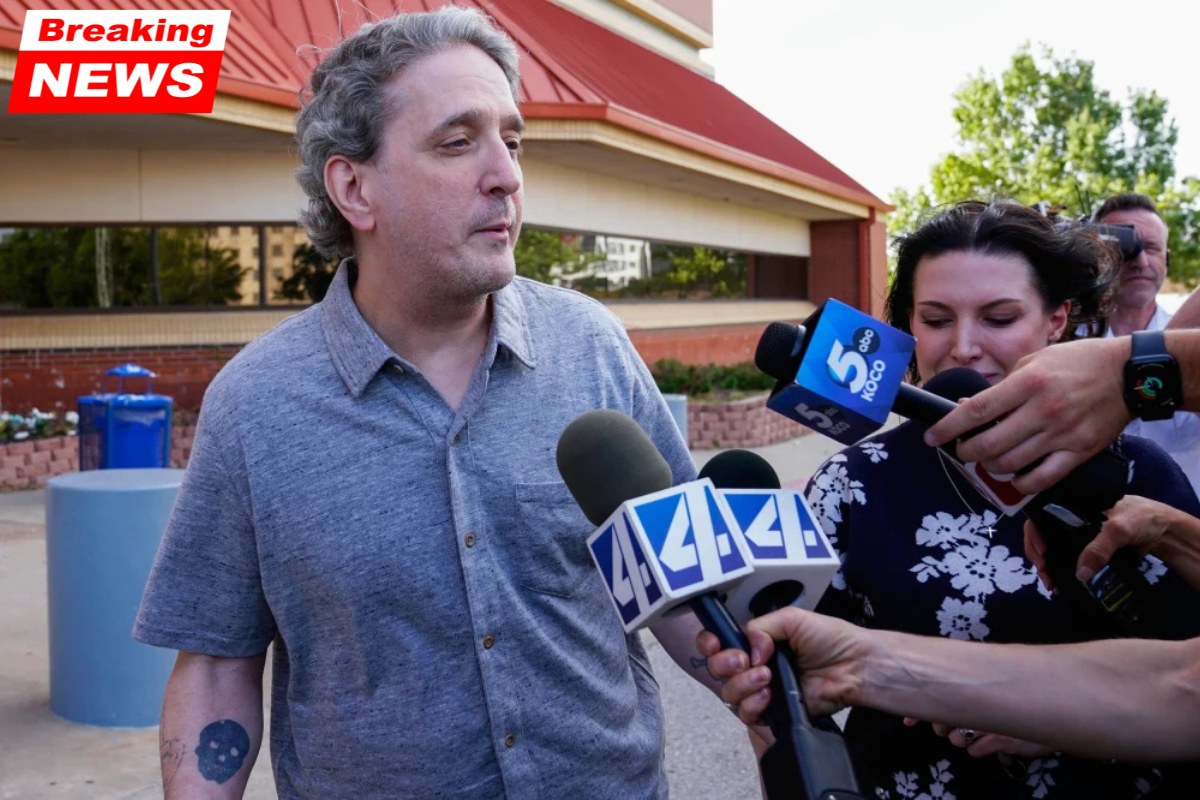
Former Oklahoma death row inmate Richard Glossip was released from incarceration Thursday for the first time in nearly three decades after posting bond while awaiting a new trial in a 1997 murder case.
Glossip, whose case became one of the most closely watched death penalty battles in the United States, walked out of jail hand-in-hand with his wife, Lea Glossip, after a judge approved his release conditions.
The release comes after the U.S. Supreme Court overturned Glossip’s conviction last year, citing serious constitutional concerns involving false testimony presented during his original trial.
| Key Detail | Information |
|---|---|
| Name | Richard Glossip |
| State | Oklahoma |
| Original Conviction | 1997 murder case |
| Time Spent Incarcerated | Nearly 30 years |
| Death Row Status | Former death row inmate |
| Bond Amount | $500,000 |
| Current Status | Released pending retrial |
Why Richard Glossip Was Released
Earlier Thursday, Judge Natalie Mai approved Glossip’s release on a $500,000 bond while he awaits retrial.
Under the release conditions:
- Glossip must wear an electronic monitoring device
- He cannot leave Oklahoma
- He may not contact witnesses connected to the case
- He is prohibited from consuming drugs or alcohol
After posting bond, Glossip described the moment as emotional and overwhelming after spending decades behind bars.
His attorney, Donald Knight, said supporters helped raise the bond money needed for his release.
A representative confirmed that Kim Kardashian paid the bond amount.
The 1997 Murder Case Explained
Glossip was originally convicted and sentenced to death for the 1997 killing of Oklahoma City motel owner Barry Van Treese.
Prosecutors alleged the killing was part of a murder-for-hire plot in which Van Treese was beaten to death with a baseball bat.
For years, Glossip maintained his innocence while his case moved repeatedly through courts and appeals.
The case became controversial because prosecutors relied heavily on testimony from a key witness whose statements later came under scrutiny.
Supreme Court Overturned the Conviction
Last year, the Supreme Court of the United States threw out Glossip’s conviction.
The court ruled that prosecutors allowed false testimony from a key witness during the trial, violating Glossip’s constitutional right to a fair trial.
The decision marked a major turning point after decades of legal battles and failed appeals.
Despite the overturned conviction, Oklahoma Attorney General Gentner Drummond announced the state would retry Glossip on murder charges.
However, prosecutors said they would no longer seek the death penalty.
Richard Glossip Came Close to Execution Multiple Times
Glossip’s case gained national attention partly because of how close he came to execution on multiple occasions.
Oklahoma courts scheduled nine separate execution dates during his years on death row.
According to reports, Glossip ate three separate “last meals” while preparing for executions that were ultimately halted.
In 2015, he was reportedly waiting near Oklahoma’s execution chamber when prison officials discovered problems with the lethal injection drugs prepared for the procedure.
The incident contributed to a nearly seven-year pause in executions within Oklahoma.
Support From Celebrities and Activists
Over the years, Glossip’s case attracted support from celebrities, activists and legal experts who questioned the fairness of his conviction.
Susan Sarandon publicly advocated for Glossip after becoming involved in death penalty reform efforts.
His story was also featured in the 2017 documentary “Killing Richard Glossip,” which examined the legal controversies surrounding the case.
Kim Kardashian also became involved in supporting Glossip’s legal efforts as part of her broader criminal justice reform advocacy.
Victim’s Family Opposed Overturning Conviction
Not everyone supported Glossip’s release or the Supreme Court’s decision.
Family members of Barry Van Treese had urged the Supreme Court to leave Glossip’s conviction and death sentence in place.
Attorneys representing the family have not publicly commented following Glossip’s release.
The retrial is expected to continue drawing attention due to the long-running debate surrounding the case.
What Happens Next
Although Glossip has been released from jail, his legal fight is not over.
He still faces retrial on murder charges connected to the 1997 case.
Judge Natalie Mai emphasized in her order that both prosecutors and defense attorneys are expected to prepare aggressively for a new trial free from the legal errors that tainted earlier proceedings.
Glossip’s legal team says they will continue fighting to fully clear his name.
For now, however, Glossip says simply being reunited with his wife and experiencing freedom again after nearly 30 years is deeply meaningful.
Richard Glossip’s release marks another dramatic chapter in one of America’s most controversial death penalty cases.
After spending nearly three decades on death row and surviving multiple scheduled executions, Glossip now awaits a retrial after the U.S. Supreme Court found serious misconduct during his original prosecution.
The case continues raising broader questions about capital punishment, prosecutorial conduct and wrongful convictions within the American justice system.






