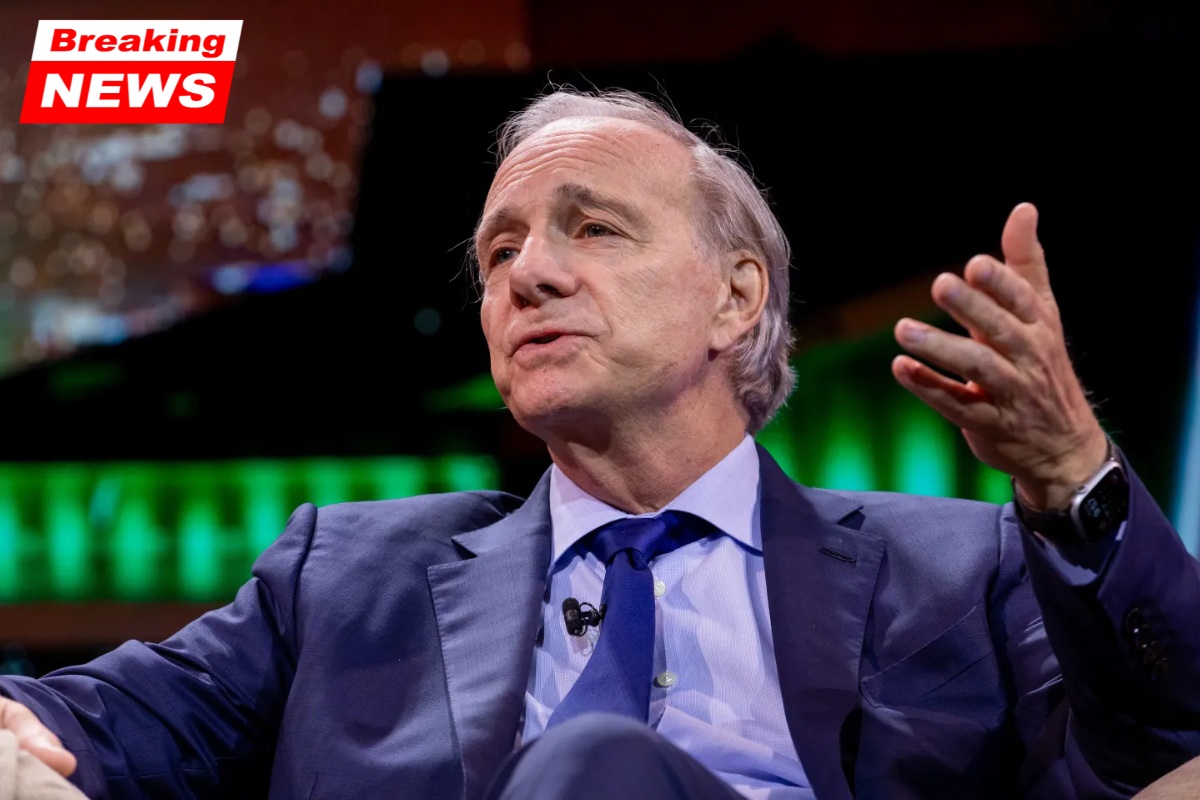
Many people feel shocked by the fast changes happening in the world — rising debt, political division, global tension, and economic uncertainty. But billionaire investor Ray Dalio says he is not surprised at all.
According to him, history moves in repeating patterns. He calls this pattern “The Big Cycle.” In his view, we are now entering a dangerous stage that looks more like the years before World War II than the relatively stable period after 1945.
What Is the ‘Big Cycle’?
Dalio explained his theory in his book, Principles for Dealing With the Changing World Order. He says monetary systems, political systems, and global power structures rise and fall in cycles that usually last around 75 years, give or take a few decades.
He divides this pattern into six stages:
- A new order begins after a major conflict
- Growth and prosperity increase
- Debt and wealth gaps expand
- Tensions start building
- Serious internal and global conflicts rise
- Full breakdown and disorder
Dalio believes we are now in Stage 5 — the phase just before major breakdown.
Why He Thinks Today Feels Like the 1930s
Dalio compares today’s situation with the period between 1929 and 1945. That era included the Great Depression and World War II. According to him, several warning signs are appearing again.
Here is a simple comparison:
| 1930s–1940s | Today |
|---|---|
| Massive government debt | Record-high national debts |
| Economic hardship | Inflation and inequality concerns |
| Rise of populism | Political polarization |
| Global power struggle | U.S.–China–Russia tensions |
He argues that today’s environment is starting to resemble that earlier unstable period more than the peaceful decades after 1945.
Rising Debt and Currency Concerns
One of Dalio’s biggest concerns is debt.
He explains that when government debt and deficits grow too large, countries must borrow more money. If there are more bonds for sale than investors want to buy, the value of the currency can weaken.
Historically, when this happens:
- Investors move money out of government bonds
- Gold prices rise
- People worry about currency devaluation
Dalio says current trends — including high U.S. debt and rising gold prices — fit this historical pattern.
Growing Political Divisions
Dalio also points to rising political and cultural divides within countries.
In the United States, he describes sharp ideological splits often labelled as “MAGA” and “WOKE.” He believes such deep disagreements weaken democratic systems.
History shows that when:
- Wealth gaps grow wider
- Political compromise becomes difficult
- Trust in institutions falls
Democracies can become unstable. During the 1930s, countries like Germany, Italy, Japan, and Spain shifted from democracy to authoritarian rule.
Dalio warns that extreme polarization can make rule-following harder and open the door for stronger, more centralized leadership.
Global Power Shifts
After World War II, the United States became the dominant global power. Institutions like NATO were created to maintain stability.
Dalio believes that order is now weakening. He sees signs of growing competition among major powers such as:
- The United States
- China
- Russia
He argues that the world is moving from a single dominant power structure toward a more divided system, similar to earlier eras marked by power struggles.
Nothing Is Guaranteed — But Risks Are Rising
Dalio makes it clear that history does not repeat in exactly the same way. He says nothing is “predestined.” Strong leadership and cooperation could prevent a full breakdown.
However, he admits he is not very optimistic. Human nature, he argues, often leads to conflict rather than cooperation when tensions rise.
Still, his main message is not panic — but preparation. He believes understanding long-term historical patterns can help individuals, investors, and leaders make smarter decisions.
Why This Perspective Matters
Dalio’s argument challenges the belief that the current global system is permanent. Many people grew up in the relatively stable post-1945 era and assume that stability is normal.
But history shows that:
- Monetary systems change
- Political systems evolve
- Global powers rise and fall
By studying past cycles, Dalio believes we can better understand what may lie ahead. Ray Dalio’s “Big Cycle” theory suggests that today’s global tensions, rising debt, political division, and shifting power balances are not random events — but part of a repeating historical pattern.
While many people feel shocked by recent developments, Dalio sees strong similarities with the period leading up to World War II. He warns that we are likely in Stage 5 of a larger cycle, where conflicts and financial stress increase before potential breakdown.
However, he also stresses that outcomes are not fixed. Wise leadership, cooperation, and responsible economic decisions could still change the direction. Whether one agrees with him or not, his long-term perspective reminds us that understanding history is essential for navigating an uncertain future.