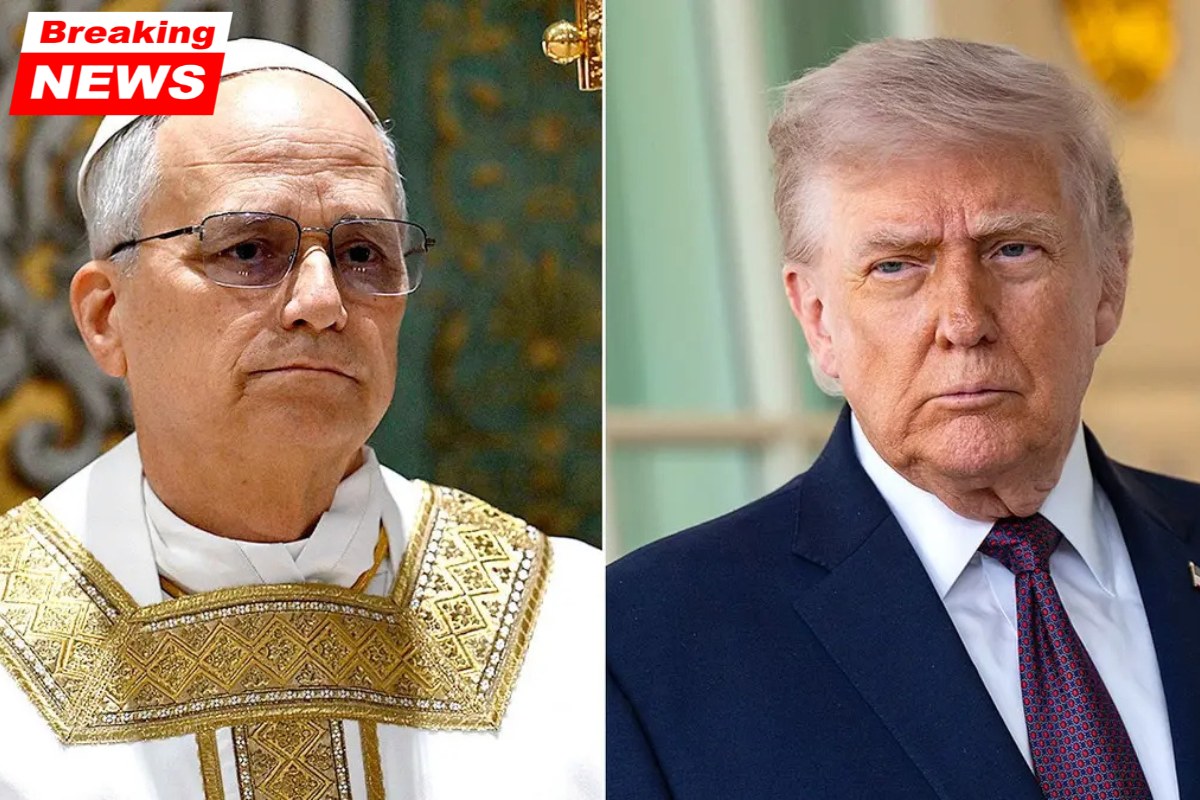
Pope Leo XIV has clarified that his recent comments about the world being “ravaged by a handful of tyrants” were not directed at Donald Trump, addressing growing speculation about tensions between the Vatican and the White House.
The clarification came during the pope’s flight to Angola as part of a 10-day tour across Africa.
What the Pope Actually Said
The controversy stems from a speech delivered earlier in Cameroon, where Pope Leo XIV warned about global instability and misuse of power.
He said:
“The world is being ravaged by a handful of tyrants… yet it is held together by a multitude of supportive brothers and sisters.”
He also criticized those who exploit religion for political or military gain, calling it a distortion of sacred values.
Clarification: “Not About Trump”
Following media reports linking the remarks to Trump, the pope pushed back, saying the interpretation was inaccurate.
According to his statement:
- The speech was prepared two weeks earlier
- It was written before any recent comments involving Trump
- He had no intention of debating the U.S. president
“It was looked at as if I was trying to debate the president, which is not in my interest at all.”
This clarification suggests the remarks were meant as a broader moral statement rather than a targeted political critique.
Background: Rising Tensions Between Trump and the Vatican
The clarification comes after a series of public disagreements between the two figures.
Previously, Trump criticized the pope’s stance on foreign policy, particularly regarding the U.S.-Israeli conflict involving Iran.
Trump stated he did not want:
“a Pope who thinks it’s OK for Iran to have a nuclear weapon.”
This exchange fueled speculation that the pope’s “tyrants” comment was aimed at Trump or his administration.
JD Vance Responds and Calls for Balance
JD Vance responded to the pope’s clarification on social media, striking a more diplomatic tone.
He acknowledged that:
- Media narratives can exaggerate conflict
- Moral guidance from religious leaders is expected
- Political leaders must apply those principles in complex realities
“The reality is often much more complicated.”
However, Vance had earlier suggested that the Vatican should focus on moral issues rather than political ones, saying:
“Let the President of the United States stick to dictating American public policy.”
Religion, Politics, and Global Messaging
At the heart of the issue is a familiar tension: the role of religious leaders in global political discussions.
Pope Leo XIV’s message in Cameroon emphasized:
- Moral responsibility
- Human solidarity
- The dangers of politicizing religion
His warning against using faith for “military, economic or political gain” reflects long-standing concerns within the Catholic Church about the misuse of religious influence.
Key Developments at a Glance
| Topic | Details |
|---|---|
| Pope’s Comment | “World ravaged by tyrants” |
| Clarification | Not directed at Donald Trump |
| Location | Remarks made in Cameroon |
| Response | JD Vance welcomed clarification |
| Background Issue | Disagreements over Iran conflict |
| Core Theme | Religion vs political power |
Pope Leo XIV’s clarification highlights how quickly global statements can be interpreted through a political lens. While his original remarks were intended as a broad moral critique, they were quickly linked to ongoing tensions with the Trump administration.
The episode shows the delicate balance between religious leadership and political discourse. Even when not directed at specific individuals, strong moral language can carry political weight — especially in a highly polarized global environment.
As both the Vatican and U.S. leadership continue to engage on global issues, moments like this underline the importance of context, timing, and careful communication.