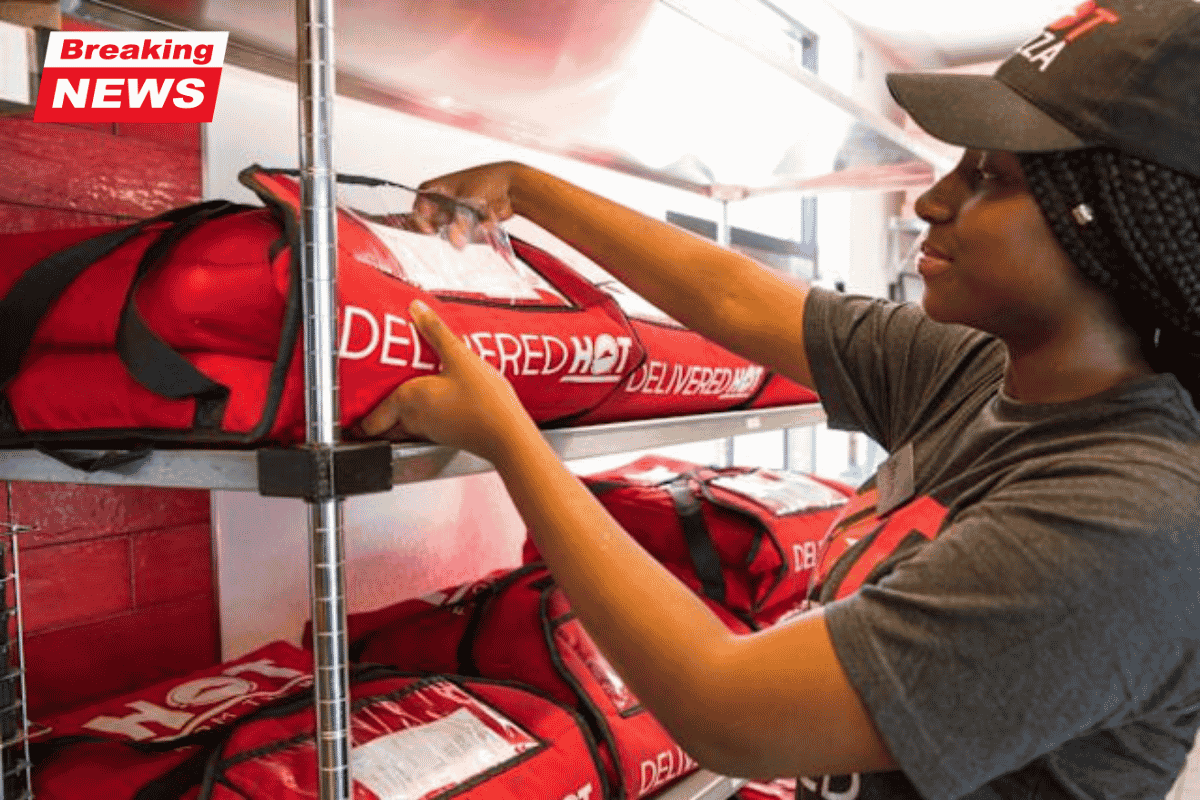
A major Pizza Hut franchise operator is suing the company over problems allegedly caused by its AI-powered delivery system, claiming the technology created serious delivery delays and damaged business performance across more than 100 stores.
The lawsuit was filed by Chaac Pizza Northeast, which operates over 110 Pizza Hut restaurants across several U.S. states, including:
| States Covered by Franchise | Locations |
|---|---|
| New York | Pizza Hut stores |
| New Jersey | Pizza Hut stores |
| Maryland | Pizza Hut stores |
| Pennsylvania | Pizza Hut stores |
| Washington, D.C. | Pizza Hut stores |
Chaac is seeking $100 million in damages, arguing that Pizza Hut’s AI platform, called Dragontail, caused “cascading operational breakdowns” that hurt delivery times, customer satisfaction, and sales.
The franchisee claims the AI system gave third-party delivery drivers too much visibility into restaurant operations, allowing gig workers to selectively choose or delay orders in ways that benefited them personally.
According to the lawsuit:
- Drivers allegedly delayed accepting orders so they could combine multiple deliveries together
- Some orders reportedly sat for long periods waiting for pickup
- Drivers could allegedly view tip amounts before accepting deliveries
- Lower-tip orders were allegedly ignored more often
- Delivery delays led to unhappy customers and declining sales
The AI system involved in the lawsuit was developed by Dragontail Systems, which was acquired by Yum! Brands in 2021.
Yum! Brands is the parent company of:
- Pizza Hut
- Taco Bell
- KFC
Dragontail was designed to improve kitchen efficiency and optimize delivery timing by helping restaurants manage orders and delivery routes more effectively.
However, Chaac claims the rollout had the opposite effect after Pizza Hut also expanded its partnership with DoorDash.
Before the AI rollout, the franchise says managers manually controlled DoorDash orders and could block low-rated drivers from taking deliveries. The lawsuit claims more than 90% of deliveries were previously completed within 30 minutes.
According to the complaint, Chaac locations once represented:
| Performance Metric | Result |
|---|---|
| Share of DoorDash Pizza Hut deliveries | 15% |
| Share of total U.S. Pizza Hut stores | Less than 2% |
The company argues this showed its stores were among Pizza Hut’s strongest performers before the system changed.
The case highlights the growing debate around AI and automation in the fast-food industry.
Many restaurant companies have invested heavily in AI due to:
- Labor shortages
- Rising employee turnover
- Pressure to reduce operating costs
- Faster delivery expectations
But experts say automation does not always produce the expected results.
Ajay Agrawal, a professor at the University of Toronto, has previously argued that businesses often underestimate how much operational redesign is needed for AI to work properly.
Several other fast-food chains have also faced challenges with AI systems:
| Company | AI Issue |
|---|---|
| Wendy’s | Faced criticism over AI menu pricing concerns |
| McDonald’s | Ended AI partnership after inaccurate drive-thru orders |
| Yum! Brands | Expanding AI ordering systems with Nvidia |
Last year, Yum! Brands partnered with Nvidia to introduce AI-powered ordering systems at hundreds of restaurant locations.
Meanwhile, Pizza Hut has struggled financially compared to some of Yum! Brands’ other chains. The company recently reported a 4% drop in same-store sales in the United States.
The lawsuit is ongoing, and Yum! Brands has said it will respond through the legal process.