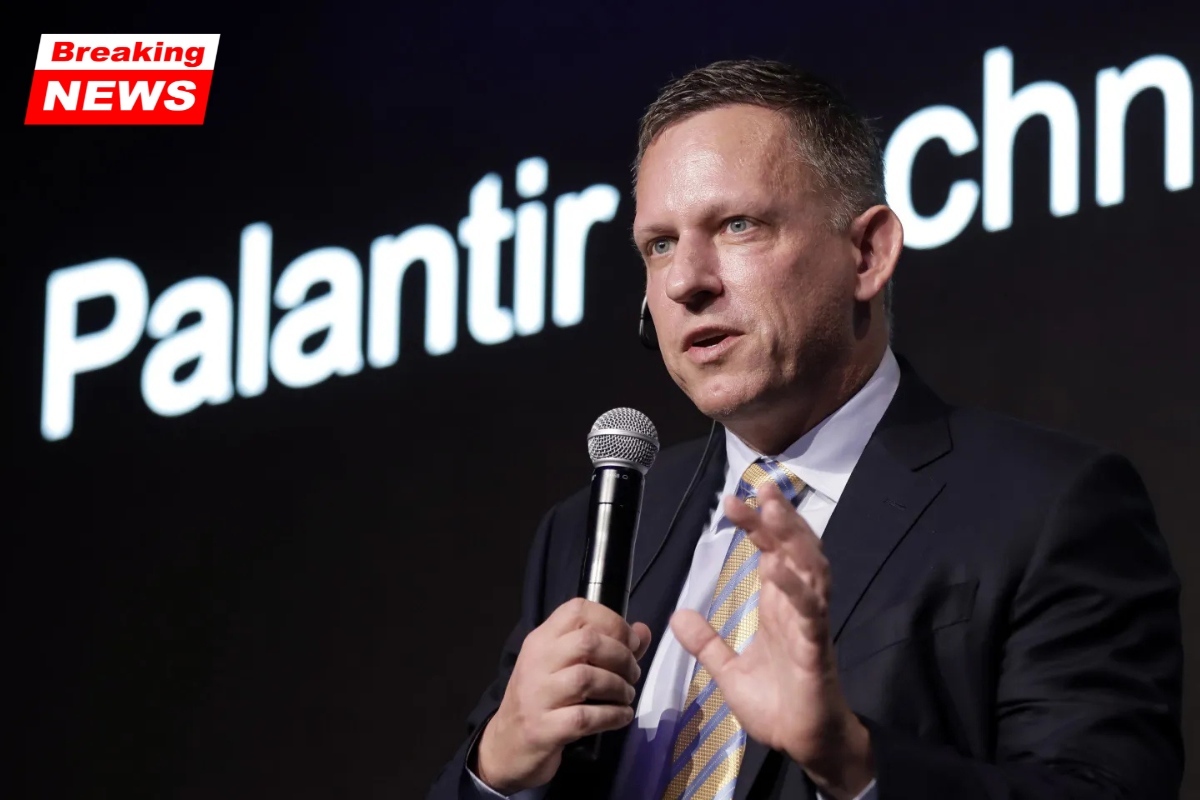
Billionaire venture capitalist Peter Thiel, best known for co-founding Palantir and PayPal, is taking his controversial lectures on the Antichrist and technological risk to Rome.
His latest four-day lecture series, which began in the Italian capital on Sunday, has already provoked criticism from both Italian government officials and the Catholic Church. Thiel’s musings, blending theology and Silicon Valley concerns about artificial intelligence and technological disruption, are stirring political and religious debate.
Thiel’s Antichrist Theory: A Comforting Administrator or Malevolent Force?
Over the past year, Thiel has shared his unique interpretation of the biblical Antichrist, framing it as a figure who poses as a protector of humanity, promising safety from the “existential risk” of runaway technological development.
According to Thiel, the Antichrist is not a traditional malevolent figure but a reassuring administrator who promises to control and regulate technology, particularly artificial intelligence (AI), to prevent it from replacing humanity.
In this narrative, Thiel criticizes AI skeptics and environmentalists, including figures like Greta Thunberg, accusing them of being unwitting agents of the Antichrist’s agenda.
Silicon Valley technologists, in Thiel’s view, are the true protectors of civilization, safeguarding humanity from the darker consequences of unchecked technological advancement.
The Theological and Political Backlash Against Thiel’s Lectures
Thiel’s theological lectures, hosted in exclusive private settings around the world, have raised eyebrows not just in Silicon Valley, but also among political and religious leaders. In Rome, ahead of his event, critics from both the Italian government and the Catholic Church voiced concerns about Thiel’s views.
Paolo Benanti, a priest who advises on technology ethics and AI, criticized Thiel for using theological arguments to support his own political and economic vision, calling it a radicalization of Western values.
An article in Avvenire, the newspaper of the Italian bishops’ conference, argued that Thiel’s philosophy promotes a “superplutocracy” that replaces democracy with an elite who would oversee humanity’s salvation.
These criticisms highlight the broader concern about Thiel’s ideas undermining democratic values and enabling the unchecked consolidation of power in the hands of the wealthy elite.
Thiel’s Event in Rome and Its Ties to the Far-Right
Thiel’s Rome event, held in partnership with the Cluny Institute and the Vincenzo Gioberti Cultural Association, also attracted attention due to the association’s far-right connections. In a press release, the group praised Thiel for his courage in discussing the supposed existential threats to Western civilization posed by technology.
However, the themes discussed at the event, including the concept of the Antichrist, sparked further skepticism and opposition among Italian lawmakers, who labeled Thiel’s ideas as dangerously extreme.
The political response in Italy reflects the broader controversy surrounding the intersection of political ideology, religion, and technological advancements. Thiel’s vision of the Antichrist and his views on technological regulation have become a flashpoint for political debate in the country.
The Catholic Church’s Growing Focus on Technology and AI
The Catholic Church has increasingly addressed the ethical implications of technology, particularly AI. The late Pope Francis regularly discussed the moral regulation of AI, and his successor, Pope Leo XIV, has also emphasized the need to guide technological progress for the common good.
Thiel’s controversial theories on the Antichrist, which involve a theological reading of AI and technological risk, challenge the Church’s efforts to provide moral guidance on these issues.
Thiel’s Position Amid Political Polarization in Italy
As Thiel’s lectures on the Antichrist continue to stir debate in Italy, his supporters frame his warnings as a defense of Western spiritual identity against mounting technological disruption. However, in the highly polarized political climate of Italy, his views have become as much a political flashpoint as a philosophical one.
For many, Thiel’s lectures raise significant concerns about the role of tech moguls in shaping not only technological development but also political and social structures. His vision of Silicon Valley as the ultimate protector of civilization, while comforting to some, challenges broader notions of democracy, ethics, and human rights.