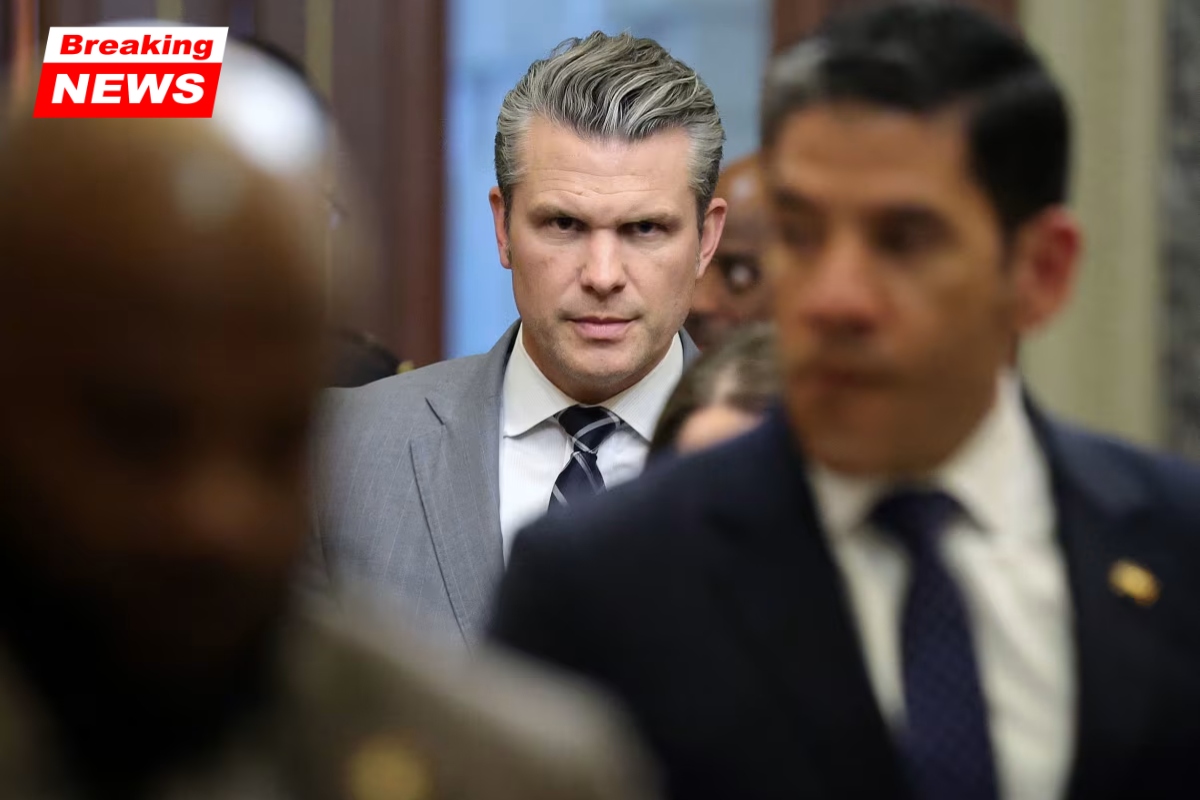
The ongoing conflict between the United States and Iran has taken on a new dimension after strong religious remarks from US Defense Secretary Pete Hegseth. In recent interviews and public speeches, Hegseth has openly spoken about faith, Christianity, and what he sees as a spiritual battle alongside a military one. His statements have sparked debate across the political and religious spectrum in America.
What Did Pete Hegseth Say?
Pete Hegseth recently told CBS News that the United States is stronger not only because of its military power but also because “the providence of our almighty God” protects American troops.
He said:
- US capabilities and troops are superior
- God is protecting American forces
- The mission has both military and moral importance
In another moment, he quoted Psalm 144 at a Pentagon press conference: “Blessed be the Lord, my rock, who trains my hands for war and my fingers for battle.”
When asked whether he views the conflict in religious terms, Hegseth replied that the US is fighting “religious fanatics” seeking nuclear weapons for what he described as a kind of religious Armageddon.
His View That America Is a Christian Nation
Hegseth has repeatedly argued that the United States was founded as a Christian nation and remains one “in its DNA.”
At a National Prayer Breakfast, he said:
- America’s identity is deeply Christian
- Faith should not be removed from public life
- The military should embrace religious conviction
He has also tried to bring more religious language back into the Pentagon. For example, he launched efforts to reshape the military chaplain handbook to include stronger references to God and faith.
Military chaplains traditionally serve personnel of all religions, including those with no religious beliefs. Critics say any change must respect religious freedom for everyone.
Faith and Symbols: Tattoos and “American Crusade”
Hegseth has publicly discussed his religious tattoos, including the Jerusalem Cross and the phrase “Deus Vult,” which means “God wills it.” Both symbols are linked to the medieval Crusades, when European Christian armies fought to control Jerusalem.
In his 2020 book, American Crusade, he described the US as facing a “crusade moment.” He argued that Americans must stand firmly against Islamist extremism, politically and militarily.
His critics say such language risks framing modern conflicts as religious wars.
Christian Zionism and Support for Israel
During his Senate confirmation hearing, Hegseth was asked whether he considered himself a Christian Zionist.
Christian Zionism is the belief that the modern state of Israel fulfills biblical prophecy and has a special role in Christian theology. Hegseth responded that he strongly supports Israel and its right to defend itself.
This view connects to a larger belief among some evangelical Christians that events in the Middle East have spiritual meaning beyond politics.
Concerns From Critics
Several organisations and lawmakers have raised concerns about mixing religion with military policy.
The Military Religious Freedom Foundation says it has received complaints from service members who feel uncomfortable with strong religious messaging during the war. According to its founder, some fear speaking out due to possible career consequences.
Critics argue that:
- The US military represents people of all religions
- Official language should remain neutral
- Religious framing may create global tensions
Some experts say that strong religious language could be used by extremist groups as propaganda, portraying the conflict as a new “crusade.”
Supporters See It Differently
Supporters argue that:
- Many soldiers rely on faith during wartime
- America has long had religious influences in leadership
- Belief in God does not automatically mean religious extremism
They say leaders have the right to express personal faith, especially during difficult times.
Why This Debate Matters
| Issue | Why It Matters |
|---|---|
| Religion in Government | US Constitution supports religious freedom |
| Military Neutrality | Armed forces serve diverse beliefs |
| Global Perception | Religious framing may affect diplomacy |
| Domestic Politics | Debate over Christian nationalism |
The US Constitution protects freedom of religion, but it also prevents the government from establishing a specific religion. Balancing these two principles is often complicated. Pete Hegseth’s religious remarks during the conflict with Iran have opened a serious discussion about faith, politics, and military leadership in America.
While many soldiers find comfort in prayer and belief during wartime, critics worry that framing a modern geopolitical conflict in religious terms could deepen divisions both at home and abroad. The debate is not just about one speech or one official. It touches on larger questions about whether America is primarily a secular democracy or a nation guided openly by Christian values.
As tensions continue in the Middle East, how leaders speak about the conflict may shape not only military strategy but also how the world understands America’s role. In the end, the challenge lies in respecting personal faith while ensuring that national policy represents people of all beliefs equally.