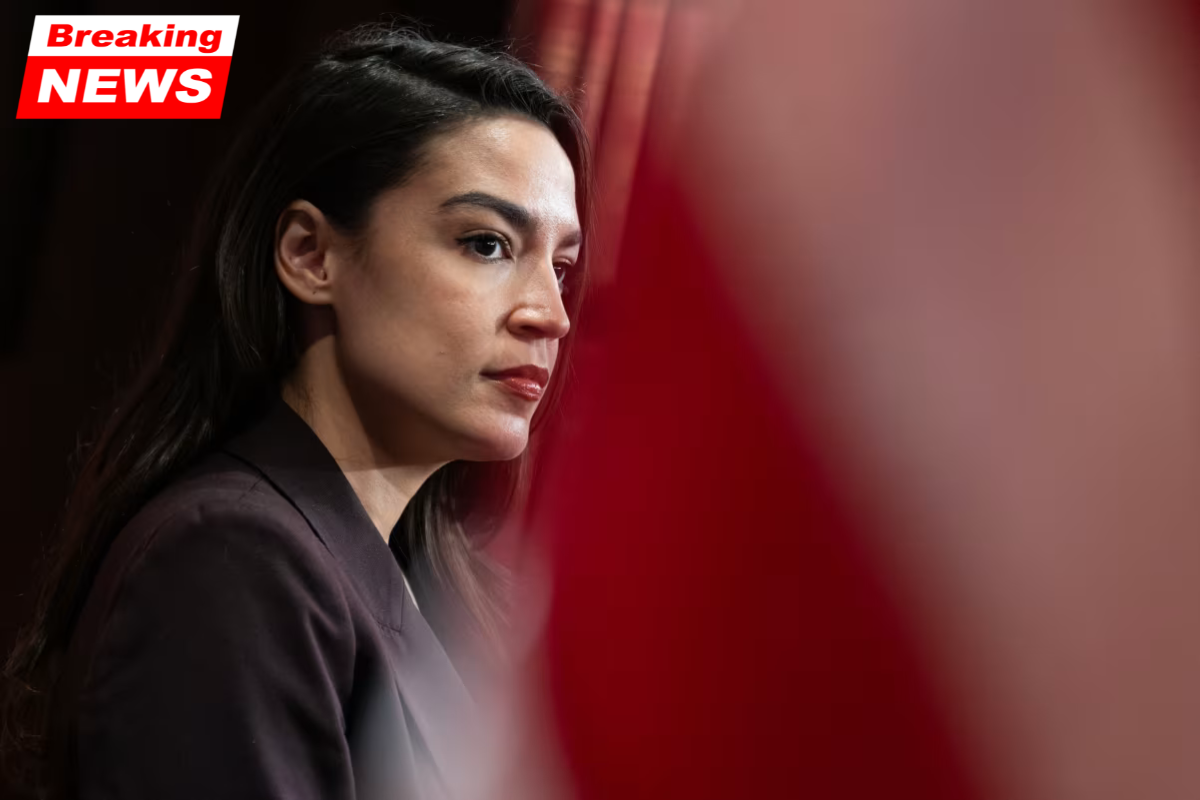
U.S. Representative Alexandria Ocasio-Cortez recently stated that she would vote against all military aid to Israel, including defensive systems. This marks a notable shift in her political stance, especially given her earlier, more nuanced position on defensive support.
Her remarks were made during a private meeting with members of the Democratic Socialists of America in New York City, as the group evaluated whether to endorse her re-election campaign.
This development reflects broader debates within the Democratic Party regarding U.S. foreign policy and military assistance to Israel.
Key Details at a Glance
| Aspect | Details |
|---|---|
| Politician | Alexandria Ocasio-Cortez |
| Position | Opposes all U.S. military aid to Israel |
| Context | Private forum with Democratic Socialists of America |
| Previous stance | Supported defensive aid like Iron Dome (with reservations) |
| Current reasoning | Concerns over human rights and legal compliance |
| Broader trend | Growing Democratic criticism of Israeli policies |
What Exactly Did Ocasio-Cortez Say?
Ocasio-Cortez committed to voting “no” on any future military aid to Israel, according to her spokesperson. This includes both offensive and defensive assistance, a departure from her earlier position where she differentiated between the two.
In a follow-up statement, she emphasized that U.S. military aid should align with the Leahy Law, which restricts assistance to foreign security units accused of human rights violations. She argued that Israel has the financial capacity to fund its own defense systems, including Iron Dome.
She stated that she would not support sending taxpayer dollars to a government that, in her view, does not consistently follow international or U.S. law.
How Her Position Has Changed Over Time
Ocasio-Cortez’s stance on Israel has evolved over several years.
- In 2021, she voted “present” on funding for Iron Dome, signaling discomfort while not fully opposing the measure.
- In 2024, she joined progressive lawmakers supporting defensive aid only, such as missile defense systems, while opposing offensive weapons.
- In 2026, she now opposes all military aid, including defensive systems.
This shift highlights a growing divide within Democratic leadership on how to approach U.S.-Israel relations.
Broader Democratic Party Context
Ocasio-Cortez’s position reflects a wider trend in the Democratic Party, where some members are becoming increasingly critical of Israeli government policies.
For example, Gavin Newsom recently faced backlash after describing Israel as “sort of an apartheid state,” later clarifying his remarks. This illustrates how even prominent Democrats are navigating sensitive political terrain when addressing Israel.
Additionally, pro-Israel lobbying groups have reportedly spent millions opposing candidates who advocate for conditioning or limiting aid to Israel, adding another layer of political complexity.
Human Rights Concerns and Legal Framework
A central argument in Ocasio-Cortez’s position is the application of the Leahy Law, a U.S. policy that prohibits military assistance to foreign units implicated in human rights abuses.
Human rights organizations have raised concerns about Israel’s actions in Gaza following the October 7 Hamas attacks. Israel has strongly denied allegations of genocide and maintains that its military operations are defensive.
This legal and ethical debate is at the core of the ongoing policy discussion in Washington.
Why This Matters Politically
Ocasio-Cortez is often mentioned as a potential 2028 presidential contender, making her policy positions especially significant.
Her shift could influence progressive voters and activists, shape future Democratic Party platforms, intensify internal debates over foreign policy, and affect U.S.-Israel relations in the long term.
At the same time, it may also expose divisions within the party, as more moderate Democrats continue to support some level of aid to Israel.
Alexandria Ocasio-Cortez’s decision to oppose all military aid to Israel marks a clear turning point in her political stance. What was once a nuanced position separating offensive and defensive support has evolved into a broader rejection of military assistance altogether.
This shift reflects larger changes within the Democratic Party, where debates over human rights, foreign policy, and international law are becoming more pronounced. As discussions continue, her position is likely to play a key role in shaping both party dynamics and future U.S. policy.