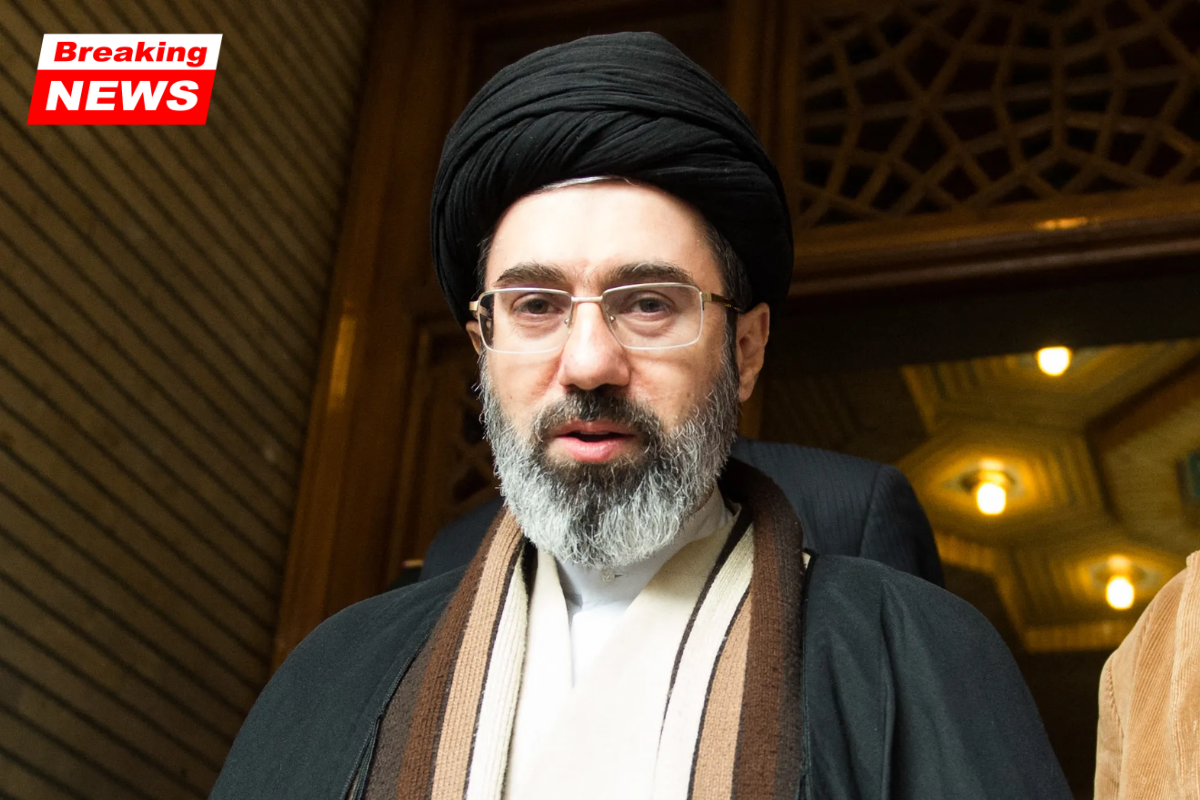
Iran recently entered a new political phase after Mojtaba Khamenei was reportedly named the country’s new supreme leader following the death of his father, Ayatollah Ali Khamenei. While the leadership transition has drawn global attention due to its political impact, another aspect has also sparked discussion — the younger Khamenei’s reported global wealth and property holdings.
Reports suggest that he quietly built a network of international assets before taking power, drawing comparisons to other global figures known for large real estate portfolios.
Mojtaba Khamenei Named Iran’s New Supreme Leader
Mojtaba Khamenei, the son of the late Ayatollah Ali Khamenei, has reportedly taken over as Iran’s supreme leader.
The leadership change marks the first hereditary succession in the history of the Islamic Republic of Iran.
Observers say his rise reflects the growing influence of hard-line factions within the country, particularly those connected to the Islamic Revolutionary Guard Corps (IRGC).
Mojtaba Khamenei is believed to have strong ties with the IRGC, one of the most powerful political and military institutions in Iran.
Analysts believe his leadership could signal a more rigid approach to foreign policy and negotiations related to ongoing conflicts.
Global Real Estate Assets Linked to Khamenei
Before becoming Iran’s supreme leader, Mojtaba Khamenei reportedly maintained a relatively low public profile while accumulating wealth overseas.
A Bloomberg investigation earlier this year reported that Khamenei’s assets may total more than $138 million.
According to the report, many of these investments were not registered directly in his name.
The reported assets include:
- Swiss bank accounts
- Luxury properties in London
- High-end European hotels
- A villa in Dubai
One of the London properties is located in an area often referred to as “Billionaires’ Row,” known for its extremely expensive real estate.
Sources cited in the investigation said the Dubai property is located in an upscale district sometimes described as the “Beverly Hills of Dubai.”
Khamenei did not respond to requests for comment regarding these allegations. An intermediary who reportedly handled property deals also denied having financial ties to him.
Comparison With Donald Trump’s Real Estate Empire
Mojtaba Khamenei’s reported wealth has drawn comparisons to business figures such as former U.S. President Donald Trump.
According to estimates from Forbes, Trump’s net worth was about $7.3 billion last year.
Trump’s wealth comes from several sources, including:
- Golf clubs and luxury resorts valued at about $1.3 billion
- Real estate investments such as hotels, office towers, and residential developments worth about $1.2 billion
- Liquid assets and cryptocurrency holdings valued at approximately $2.4 billion
Trump Media and Technology Group, the parent company of the social media platform Truth Social, was valued at about $2 billion.
Recent market fluctuations tied to geopolitical tensions have reportedly affected some of those holdings.
Compared to Trump’s fortune, Khamenei’s reported overseas assets are significantly smaller, but his new political position gives him control over far larger state resources.
Control Over Major Economic Institutions in Iran
As supreme leader, Mojtaba Khamenei now holds significant authority over Iran’s political and economic systems.
One of the most powerful institutions under the supreme leader’s control is the Execution of Imam Khomeini’s Order.
This organization was created after Iran’s Islamic Revolution and manages assets seized from thousands of properties.
The organization oversees billions of dollars in holdings and operates across many sectors of the economy.
These sectors include:
- Commercial real estate
- Industrial companies
- Charitable foundations
- Financial investments
Because the organization is state-controlled, it operates with limited public oversight.
Islamic Revolutionary Guard Corps Business Empire
Another key pillar of economic influence in Iran is the Islamic Revolutionary Guard Corps (IRGC).
Originally formed as a paramilitary organization to protect the revolutionary government, the IRGC eventually expanded into a massive business network.
Today, the IRGC operates in several industries, including:
- Oil and energy production
- Transportation infrastructure
- Banking and finance
- Telecommunications
- Agriculture and medicine
One of the IRGC’s most prominent business entities is the Khatam al-Anbiya engineering firm.
This company has worked on major national infrastructure projects, such as:
- Oil refineries
- Railway construction
- Natural gas pipelines
- Dams and transportation networks
The firm is also reported to control Tehran’s international airport.
Foundations That Support the Regime’s Economic Power
The IRGC also operates through a network of foundations that were originally created to support religious and social causes.
Over time, these organizations have grown into large economic conglomerates.
Research organizations say these foundations now function like semi-private monopolies that operate with limited oversight.
According to analysis from the Clingendael think tank, these institutions have evolved from social welfare organizations into powerful economic structures tied closely to the ruling elite.
Experts say these networks play a key role in maintaining political influence, economic control, and long-term regime stability.