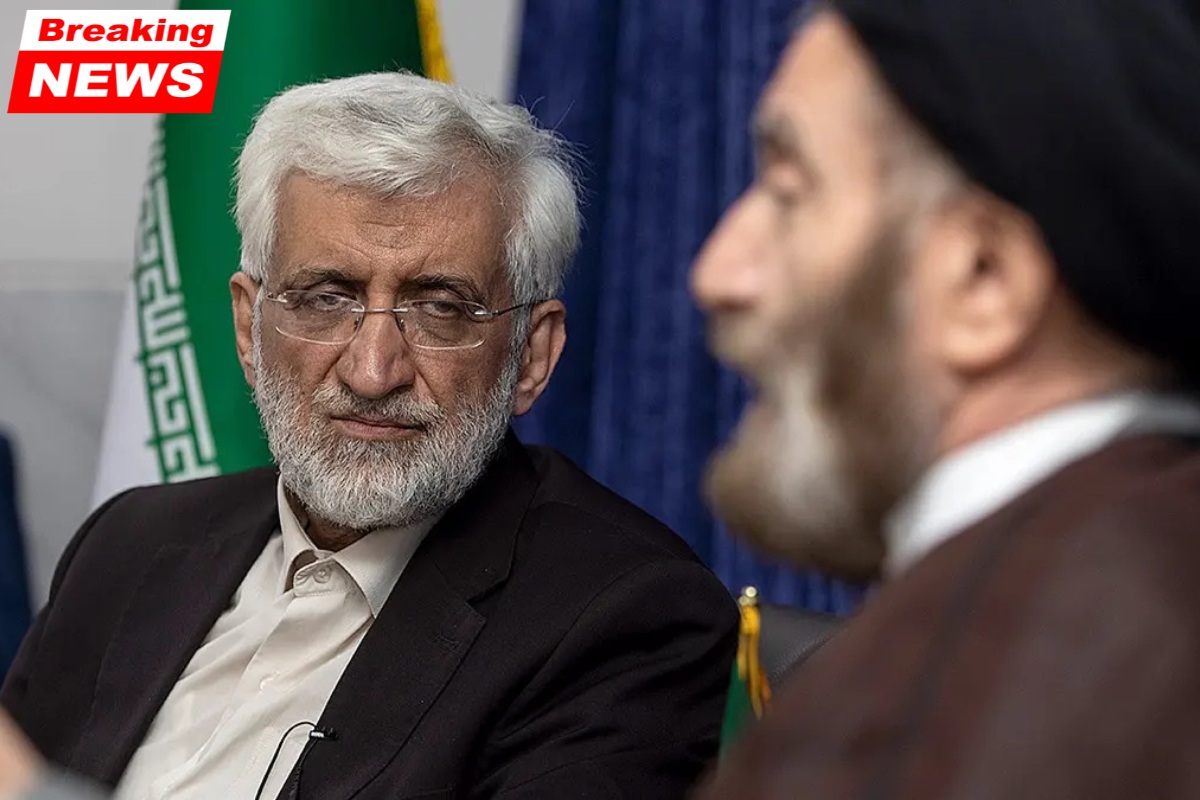
Reports indicate emerging turmoil within Iran’s negotiating team, as hardliner Mohammad Bagher Ghalibaf seems set to be replaced by Saeed Jalili, a veteran conservative known for his staunch rejection of nuclear concessions. This shift signals a hardening stance within the regime’s approach to international negotiations.
Jalili Expected to Replace Ghalibaf Amid Political Divisions
On April 24, 2026, Iran International reported that Saeed Jalili, 60, is poised to take over from Ghalibaf, following the latter’s departure amid internal disputes within Iran’s political and military factions. Jalili, who is currently seen as the leader of Iran’s ultra-hardline Stability Front (Paydari), has been a prominent figure in Iranian politics for years.
Jalili’s potential appointment signals a further entrenchment of ultraconservatism in Iran’s diplomatic strategy. His faction, known for advocating resistance over compromise, has long been opposed to nuclear concessions and engagement with the West, particularly the 2015 nuclear deal.
According to Ali Safavi, a member of the National Council of Resistance of Iran (NCRI), Jalili has evolved from a nuclear negotiator to an influential figure within the regime, deeply involved in shaping Iran’s policies.
Ghalibaf’s Sudden Exit and the Growing Rivalry with Jalili
Ghalibaf’s departure follows a period of rivalry between him and Jalili, which has intensified over the years, particularly during the 2024 elections. Ghalibaf’s attempt to bring the nuclear issue back into discussions with the U.S. reportedly led to backlash within the Iranian establishment, eventually forcing his exit from his position.
During the 2024 elections, Jalili’s refusal to step aside allowed for the victory of President Masoud Pezeshkian, further fueling tensions between the two political figures. The competition between them reflects broader divisions within the Iranian regime, which have been exacerbated by economic crises, nationwide uprisings, and pressures from ongoing conflicts.
Jalili’s Hardline Ideology and Role in Iran’s Nuclear Negotiations
Saeed Jalili served as Iran’s chief nuclear negotiator from 2007 to 2013 under President Mahmoud Ahmadinejad. During this time, he played a central role in opposing nuclear concessions and engaging in tough negotiations with the West.
His hardline stance against nuclear diplomacy aligns with the views of the Paydari Front, a faction of the Iranian regime that has opposed engagement with the West and rejected the 2015 nuclear deal.
Jalili’s political influence extended beyond diplomacy; he served as the Secretary of the Supreme National Security Council and has run for president three times. Additionally, Jalili’s “shadow government” sought to counter the policies of former President Hassan Rouhani, especially in relation to the nuclear agreement.
The Regime’s Growing Fractures and the Call for Resistance
While Jalili’s rise signals a harder line in Iran’s diplomacy, the internal fractures within the regime are becoming more pronounced. Olivia Dotson, an official with the Kentucky Cabinet for Health and Family Services, described the divisions within Iran as being part of a larger pattern of erosion in the regime’s power.
Ali Safavi emphasized that the growing internal feuding, driven by increasing economic crises and social unrest, is leaving the regime ever weaker and more vulnerable.
Jalili’s ideology, rooted in active resistance, contrasts with more moderate factions in the government and underscores the deepening divide over how to deal with the West and pursue nuclear ambitions. Safavi cautioned that all factions in Iran ultimately aim for the preservation of power, but their methods differ significantly.
Jalili’s Role and Statements on Iran’s Future
Jalili, a former member of the Islamic Revolutionary Guard Corps (IRGC), has long promoted “active resistance” against external pressures, particularly from the United States. He was severely injured during the Iran-Iraq War, which led to his status as a “Living Martyr”.
His statements on social media reflect his defiant stance against Western influence, as seen in his posts on X, where he claimed that the “infrastructure of domination” imposed by the U.S. was on the verge of collapse, suggesting that a new world order would emerge afterward.
Diplomatic Challenges and Divisions Within Iran
In addition to Jalili’s rise, Iranian Foreign Minister Abbas Araghchi is also seeking to maintain a leading role in negotiations. Araghchi, currently in Pakistan after a diplomatic visit to Oman, has reportedly been involved in high-level talks concerning ongoing conflicts. His efforts highlight the competing centers of influence over Iran’s diplomatic strategy.
Despite these competing factions, Safavi cautioned that all factions within Iran share the same ultimate goals, including repression, export of terrorism, and the pursuit of nuclear weapons, making their differences primarily about methodology rather than objectives.
Summary Table of Key Information
| Aspect | Detail |
|---|---|
| Potential New Head of Negotiating Team | Saeed Jalili, 60 |
| Background | Former nuclear negotiator, heads the Stability Front (Paydari) |
| Ideology | Hardline opposition to the 2015 nuclear deal, advocates for active resistance |
| Current Role | Leader of Iran’s ultraconservative faction and influential within the regime |
| Previous Roles | Served as Secretary of the Supreme National Security Council, and nuclear negotiator |
| Rivalry with Ghalibaf | Tensions escalated during 2024 elections and internal political disputes |
| Regime Divisions | Increasing internal feuding due to economic crises, uprisings, and pressures of war |
| Foreign Minister’s Role | Abbas Araghchi seeks a continued role in Iran’s diplomatic negotiations |
| Objective of Regime Factions | Preservation of power, repression, nuclear ambitions, and export of terrorism |
The appointment of Saeed Jalili to lead Iran’s U.S. negotiating team marks a shift towards a harder stance in diplomatic talks, signaling a resurgence of ultraconservatism within the regime. Jalili’s rise, coupled with ongoing internal political fractures, highlights the deepening divisions in Iran’s leadership as it grapples with economic challenges, internal unrest, and its nuclear aspirations.
While factions within Iran may differ in their methods, they share a common objective: the preservation of power and continued pursuit of nuclear capabilities.
As Saeed Jalili consolidates his position, the future of Iran’s diplomatic negotiations appears increasingly focused on resistance rather than compromise, with significant implications for U.S.-Iran relations and the broader geopolitical landscape.