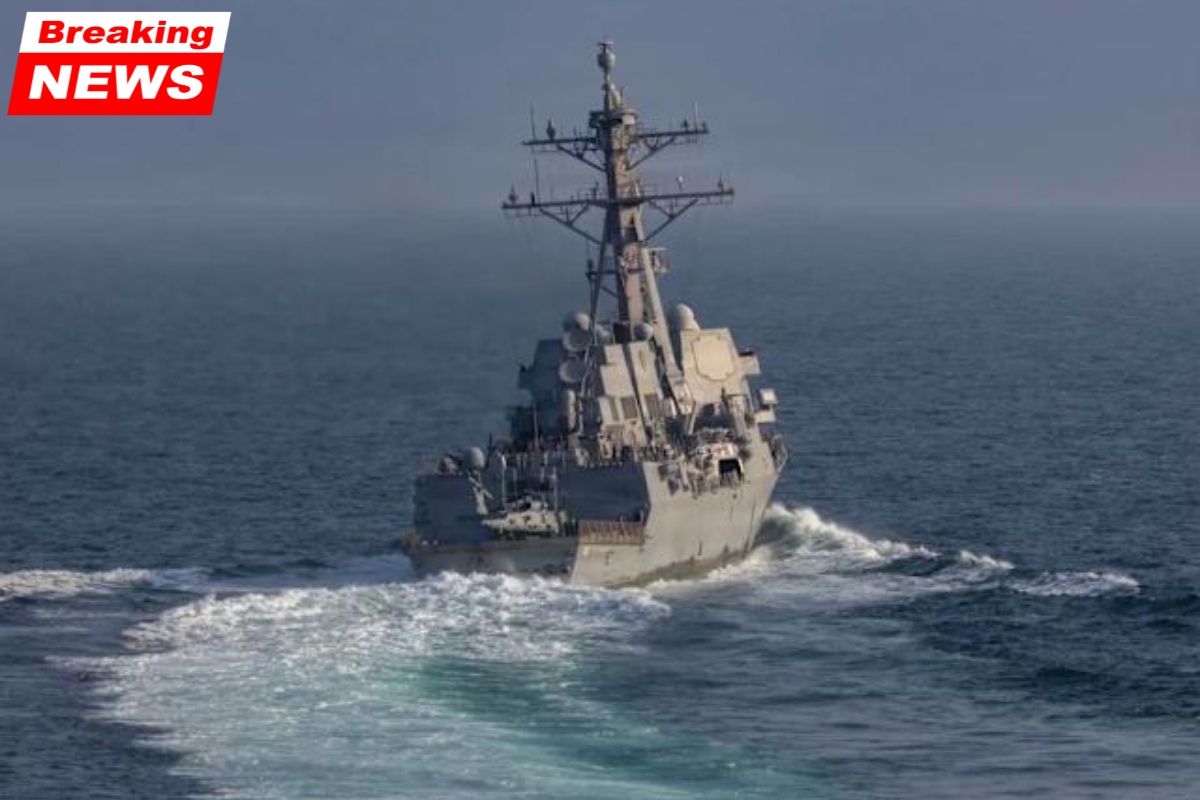
Tensions between Iran and the United States have escalated again after an Iranian military adviser warned that American ships could be targeted in the Strait of Hormuz.
The warning comes at a time when both countries are already dealing with rising pressure linked to naval activity and economic restrictions in the region. It highlights how quickly the situation can move from political messaging to something more serious.
Because of the Strait’s importance to global trade, even statements like this tend to draw immediate attention from governments and financial markets.
What Was Said and Why It Matters
The remarks came from a figure connected to Iran’s leadership, which gives them more weight than routine political commentary.
He suggested that if the United States increases its presence or tries to control movement in the Strait, Iranian forces could respond directly by targeting American vessels.
Another notable part of the statement was the claim that a U.S. ground invasion would be “great” for Iran. This is widely seen as a show of confidence in Iran’s defensive strategy rather than a literal desire for war. Still, it reflects how aggressive the tone has become.
These kinds of statements are often meant to send a signal, but in a sensitive area like this, they can also raise the risk of real-world consequences.
The Bigger Conflict Behind the Threats
The warning is part of a broader standoff between the two countries involving sanctions, military positioning, and control over key trade routes.
The United States continues to apply economic pressure through sanctions while maintaining a naval presence aimed at protecting international shipping.
Iran, on the other hand, uses its geographic position near the Strait of Hormuz as leverage. Because so much of the world’s oil passes through this narrow route, even the possibility of disruption carries global consequences.
This makes the situation different from many other regional disputes. The stakes extend far beyond the two countries directly involved.
Rising Tension in the Region
Recent developments show how fragile the situation has become. Reports of ship seizures, warnings issued at sea, and increased military activity have all contributed to rising uncertainty.
Even when there is no direct conflict, these actions increase the risk of something going wrong. Military forces from both sides are operating in close proximity, which raises the chances of a miscalculation.
Diplomatic efforts have not completely broken down, but they have become more difficult. Both sides continue to accuse each other of escalating tensions, making it harder to build trust or move toward de-escalation.
Why the Strait of Hormuz Matters So Much
The Strait of Hormuz is one of the most critical chokepoints in the global economy.
A large share of the world’s oil supply passes through this narrow stretch of water every day. That makes it one of the most strategically important locations in the world.
Because of this:
- Any threat to shipping can impact global oil prices
- Disruptions can affect supply chains worldwide
- Markets react quickly to even small developments
This is why statements alone, even without action, can influence global economic stability.
What Happens Next
| Factor | Current Situation |
|---|---|
| Military Activity | Increased naval presence from both sides |
| Political Messaging | Strong and escalating statements |
| Economic Pressure | Ongoing U.S. sanctions on Iran |
| Risk Level | Elevated due to proximity and tension |
| Outlook | Uncertain, depends on next actions |
Right now, the situation remains tense but unclear. Strong statements increase pressure, but they do not always lead directly to action. In many cases, they are part of a strategy to signal strength or deter the other side.
The main concern is the risk of miscalculation. With forces operating close to each other, even a small incident could escalate quickly.
The latest warning from Iran shows how quickly tensions with the United States can intensify, especially in a region as important as the Strait of Hormuz.
While the statement may be intended as a signal rather than a direct threat, it still raises the stakes. The combination of military presence, economic pressure, and aggressive rhetoric creates a situation where the margin for error is very small.
For now, the focus remains on whether tensions ease or continue to build. The outcome will depend not just on official decisions, but also on whether both sides avoid actions that could trigger a larger conflict.