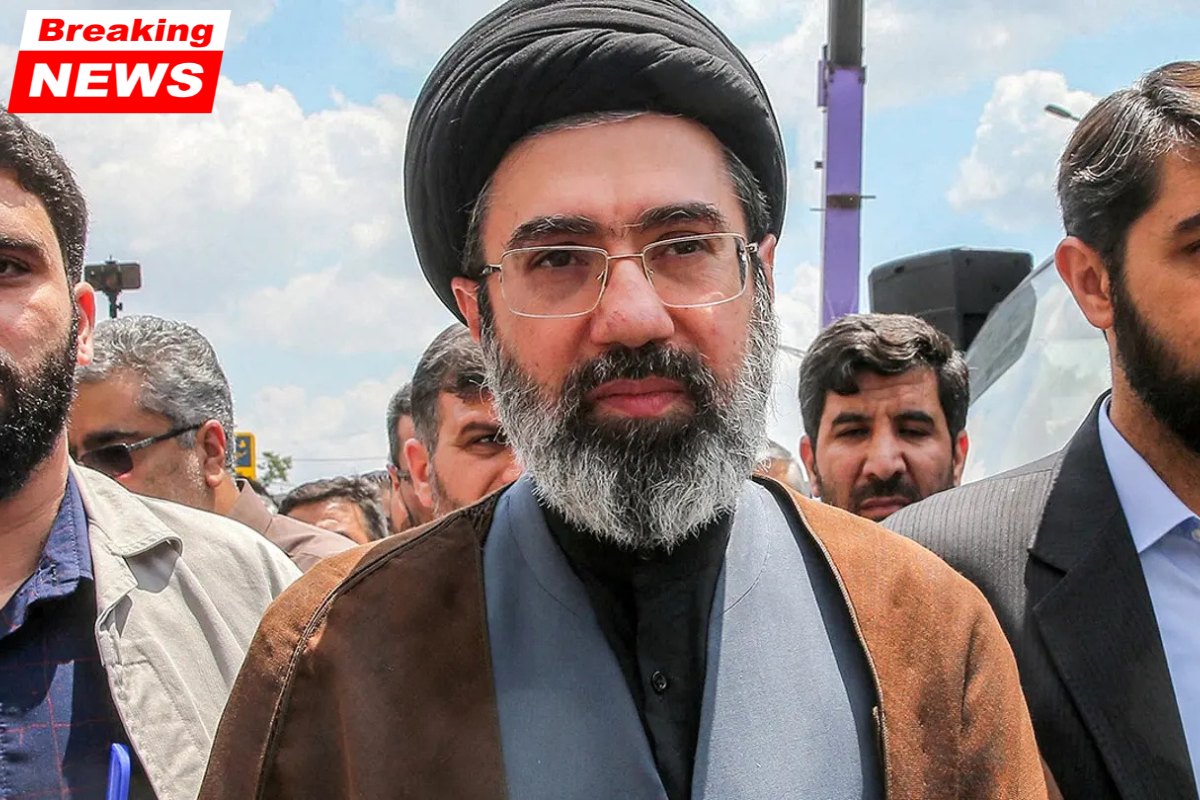
Fresh claims from counterterrorism experts have added a dramatic twist to ongoing tensions between the United States and Iran.
According to analysts, any potential agreement between Washington and Tehran would require approval from Mojtaba Khamenei — who is allegedly in hiding and communicating through secret courier networks.
These claims come as diplomatic talks between the U.S. and Iran continue amid delays and uncertainty.
Who Is Mojtaba Khamenei?
Mojtaba Khamenei is widely reported to be the son and possible successor of Iran’s Supreme Leader. In this context, some experts claim he is currently operating in secrecy due to escalating tensions with the United States.
According to Dr. Omar Mohammed of George Washington University, any final agreement would have to be approved through indirect communication channels rather than direct, public negotiations.
He described the system as dependent on couriers rather than standard diplomatic communication.
Why Negotiations Are Facing Delays
U.S. Secretary of State Marco Rubio recently addressed delays in the negotiation process during remarks made in India.
Rubio explained that responses from Iran can take time, saying it sometimes takes longer for messages to come back.
Experts claim this delay may be connected to the leadership’s alleged hidden status and reliance on non-traditional communication methods.
Here is a simplified overview of the issue:
| Issue | Explanation |
|---|---|
| Communication method | Reportedly through couriers |
| Leadership status | Allegedly in hiding |
| Negotiation challenge | Delayed responses |
| Key concern | Enforcement of any agreement |
Military and Security Context
According to reports cited by analysts, Mojtaba Khamenei reportedly went into hiding after a strike in February that killed his father. U.S. Defense Secretary Pete Hegseth reportedly described him as wounded during the operation.
These developments have created an unusual diplomatic situation. Experts argue that negotiating with a leader who cannot appear publicly or communicate openly raises concerns about accountability and enforcement.
What the U.S. Wants
A senior U.S. official reportedly stated that the United States is prepared to ease sanctions if Iran makes significant concessions regarding uranium enrichment.
The focus of discussions includes:
- Limits on uranium enrichment
- Frozen Iranian assets
- Regional stability, including Lebanon
- Broader conflict resolution
Iran’s Foreign Ministry spokesman Esmaeil Baghaei has said that no final agreement is imminent, although talks are progressing toward a possible framework.
Concerns About Enforcement
One of the biggest questions raised by analysts is how any agreement would be enforced if the Iranian leadership remains out of public view.
Dr. Omar Mohammed suggested that signing a memorandum under such conditions would be highly unusual. He questioned how compliance could be monitored if approval comes through indirect communication channels.
Traditionally, arms control agreements rely on:
- Publicly acknowledged leaders
- Transparent diplomatic processes
- Direct lines of communication
- Verification mechanisms
If communication remains slow or secretive, critics argue it could complicate monitoring and compliance.
A High-Stakes Diplomatic Moment
The talks come at a time of high tension in the Middle East. Energy routes such as the Strait of Hormuz remain strategically important, and any instability could impact global markets.
Rubio has stated that any agreement must be a “good deal,” or it will not move forward. Meanwhile, Iranian officials have emphasised that talks are ongoing but not finalised.
What Happens Next?
Negotiations between the United States and Iran remain fluid. If a framework agreement is reached, it would likely involve careful design to account for communication delays and security concerns.
The situation highlights the complexity of modern diplomacy, especially when national security, military action and secretive leadership structures intersect. Any deal would need strong verification systems to ensure compliance, regardless of how messages are delivered.
For now, both sides appear to be cautiously moving forward, even as analysts question how practical and stable such an arrangement could be.
The outcome of these negotiations could significantly affect regional stability, sanctions policy and the broader balance of power in the Middle East.