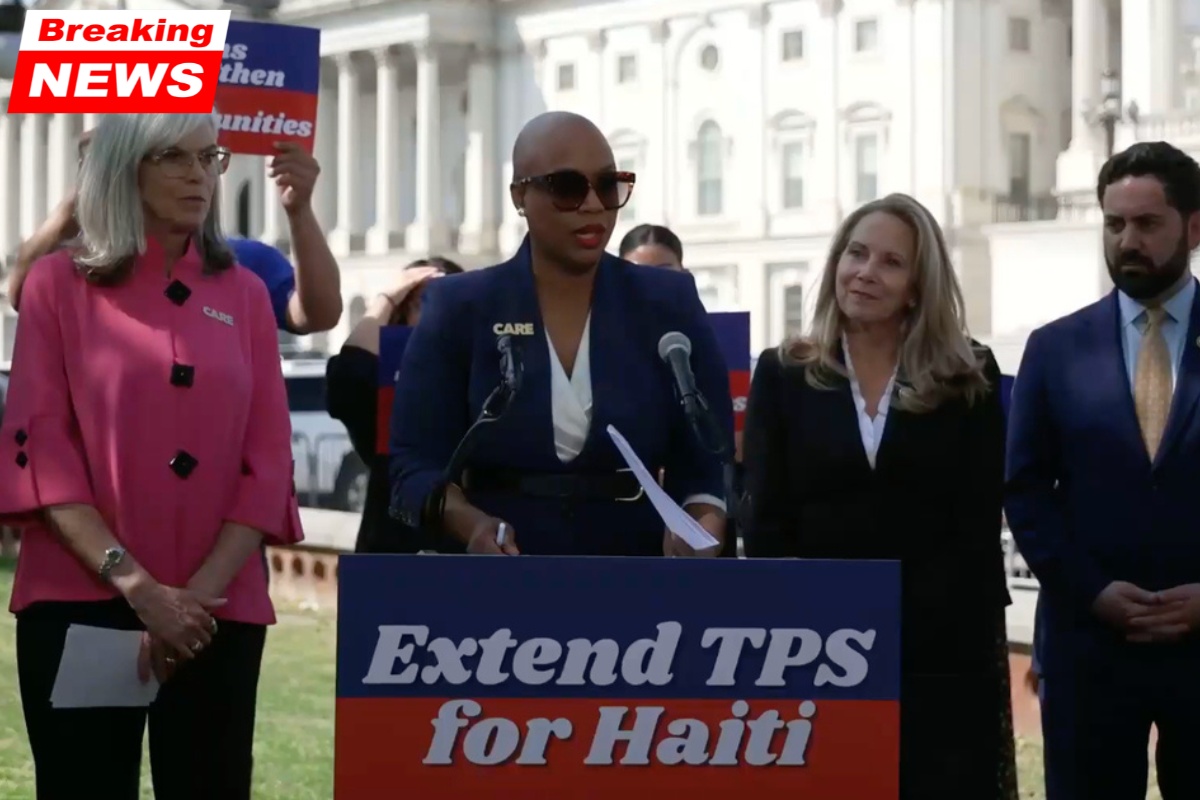
A rare moment of bipartisan action unfolded in the United States as lawmakers pushed back against immigration changes linked to Donald Trump. The House of Representatives passed a bill aimed at protecting Haitian immigrants from deportation, highlighting growing concerns about safety, humanitarian issues, and economic impact.
What Happened in the House Vote
The US House passed a bill with a 224–204 vote to stop the administration from ending temporary deportation protections for Haitian nationals. The move is seen as unusual because it involved members from both parties coming together on a sensitive issue.
The effort was led by Ayanna Pressley, who used a special process called a discharge petition to bring the bill forward. This method allowed lawmakers to bypass party leadership and force a vote once enough support was gathered.
What the Bill Proposes
The bill, introduced by Laura Gillen, would require the government to extend Temporary Protected Status (TPS) for Haitian immigrants until 2029.
TPS is a programme created in 1990 that allows people from countries facing serious crises to live and work in the US without fear of deportation. These crises can include war, natural disasters, or extreme instability.
Haiti has been under TPS protection since 2010, after a devastating earthquake caused massive loss of life and damage. Since then, conditions in the country have remained difficult due to political instability, economic struggles, and security concerns.
Support from Both Parties
While Democrats strongly supported the bill, it also received backing from several Republicans. Lawmakers like Mike Lawler, Maria Elvira Salazar, and Brian Fitzpatrick argued that forcing Haitians to return to unsafe conditions would be unfair and harmful.
Some representatives pointed out that Haitian immigrants are already contributing to the US economy. Many are working in essential sectors such as healthcare, where their absence could create serious workforce shortages.
Why the Issue Is Important
More than 3.3 lakh Haitian nationals currently benefit from TPS in the United States. If protections are removed, many could face deportation despite living and working legally.
Lawmakers opposing the rollback argue that sending people back to Haiti could put their lives at risk. The country is currently facing serious challenges, including violence, political unrest, and economic hardship.
Legal Battle and Court Involvement
The issue is also being fought in the courts. A federal judge recently blocked the administration from ending protections for Haitians, and an appeals court supported that decision.
Now, the case may reach the US Supreme Court, which will decide whether the administration can move forward with ending TPS for certain countries, including Haiti and Syria.
Political and Economic Impact
Supporters of the bill have also highlighted the economic consequences of deporting such a large group of workers. Sectors like healthcare, especially nursing homes, rely heavily on immigrant workers.
Lawmakers like Nicole Malliotakis have said that removing these workers could create serious gaps in care services. This shows that the issue is not just about immigration policy but also about maintaining essential services.
What Happens Next
Even though the bill has passed the House, it still faces major challenges. It must be approved by the Senate before becoming law. There is also a strong possibility that Donald Trump could veto it.
To override a presidential veto, Congress would need a two-thirds majority in both the House and Senate, which is difficult to achieve. This means the future of the bill remains uncertain.
The House vote on Haitian deportation protections shows that immigration policy continues to be a deeply debated issue in the United States.
While this bill reflects a rare moment of unity across party lines, it also highlights the complex balance between law, humanitarian concerns, and economic needs. With thousands of lives potentially affected, the final decision will have long-lasting consequences not just for immigrants, but for the broader American society as well.