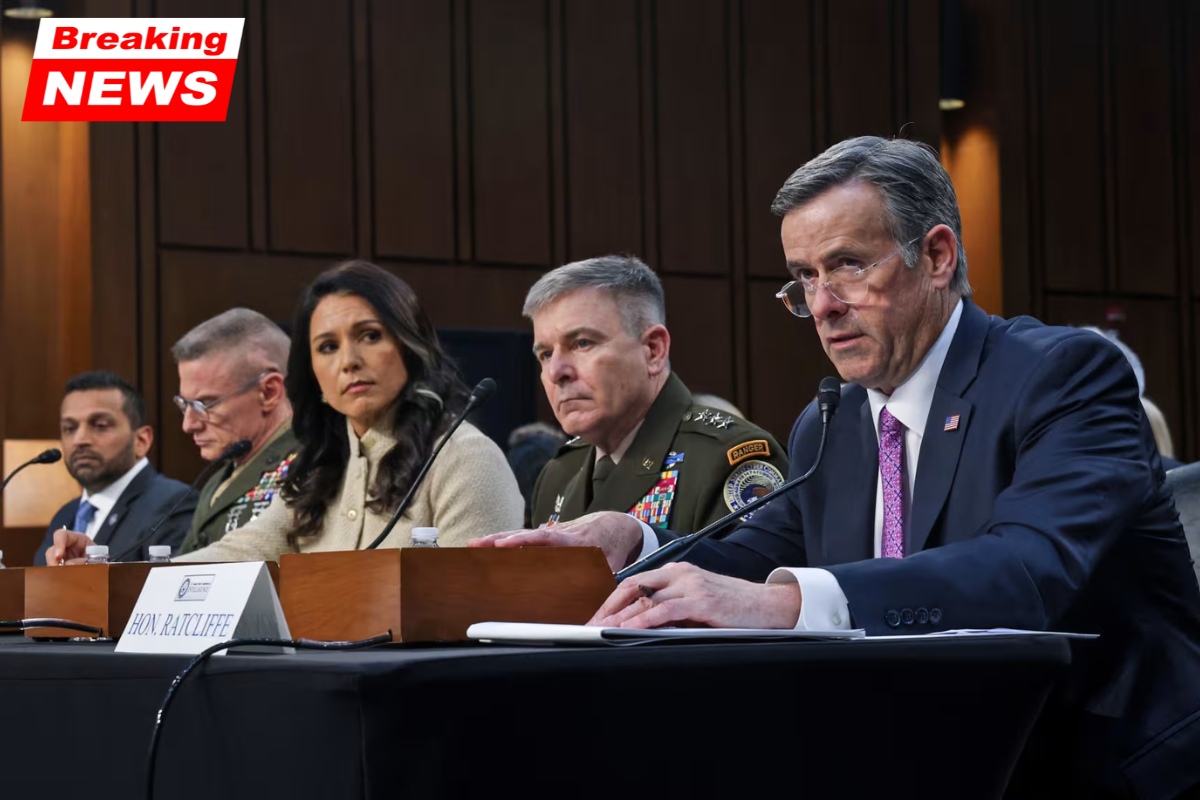
WASHINGTON, March 19 — Director of National Intelligence Tulsi Gabbard refrained from commenting directly on whether Iran’s nuclear program posed an “imminent threat” during her testimony before the Senate Intelligence Committee on Wednesday.
Her reluctance to fully endorse the White House’s rationale for launching the U.S.-Israeli air campaign against Iran came amid rising tension over the war and internal disagreements within the intelligence community.
Gabbard’s Neutral Testimony
During the annual worldwide threats hearing, Gabbard deflected questions about whether U.S. intelligence aligned with the White House’s statements on the justification for war, particularly regarding Iran’s nuclear ambitions.
She did not fully support the president’s assertion that Iran was actively rebuilding its uranium enrichment capabilities, which President Donald Trump had previously claimed.
While Gabbard’s prepared remarks stated that Iran’s nuclear enrichment had been “obliterated” by U.S. airstrikes in June, and there were no signs of rebuilding, she omitted this language from her oral testimony. Sen. Mark Warner (D-Va.) pressed her on why she had skipped that part of her statement, to which Gabbard explained she had “skipped through some portions” due to time constraints.
Gabbard’s neutral stance on the war and her hesitation to fully support the military actions raised questions about her position within the Trump administration, especially since other Cabinet members have been more vocal in backing the decision to attack.
Internal Disagreements Over the War
Gabbard’s reluctance to endorse the war echoed the resignation of her deputy, Joe Kent, who left his position over disagreements with the justification for the Iran conflict. Kent argued that Iran did not pose an imminent threat and that the U.S.-Israeli airstrike campaign was unnecessary. This split within the administration reflects ongoing concerns over the escalating conflict and its ramifications.
When pressed by Sen. Jon Ossoff (D-Ga.) about the Iran nuclear threat, Gabbard responded that only the commander-in-chief could determine what constitutes an urgent threat. This drew criticism from Ossoff, who accused her of evading the question in a way that seemed to contradict the White House’s stance.
CIA Director’s Contrasting Views
CIA Director John Ratcliffe, however, disagreed with Kent’s perspective. He described Iran as a “constant threat” to the United States and supported the view that Iran posed an immediate threat. His statement highlighted the stark divide in the U.S. intelligence community over the gravity of the Iran situation and the justification for military intervention.
Intelligence on Iran’s Response
Both Gabbard and Ratcliffe provided insight into the intelligence assessments that informed the U.S.-Israeli strikes. They confirmed that U.S. intelligence had predicted Iran’s likely retaliation, including strikes on energy sites and the closure of the Strait of Hormuz, a vital passageway for global oil shipments.
Gabbard stated that Iran’s strategic position had been severely “degraded” after more than two weeks of airstrikes, with its conventional military capabilities largely destroyed. Despite this, she noted that Iran’s regime remained intact but “largely degraded”, leaving it with limited options to retaliate.
She also highlighted the potential for increased internal tensions within Iran as its economy worsens, which could further complicate the region’s stability.
Broader Implications for U.S. Politics
The ongoing Iran war and its implications for U.S. politics are becoming a point of contention ahead of the 2024 midterm elections. The surge in gas prices and escalating costs due to the war are creating political challenges for President Trump at home. The lack of clarity on the war’s rationale and growing public skepticism have added to the pressure on the administration.
Despite the internal debates, the Iran conflict continues to unfold with no clear resolution in sight, raising questions about its long-term impact on U.S. foreign policy, its relationship with Iran, and the broader Middle East.
Key Points from Gabbard’s Testimony:
| Issue | Details |
|---|---|
| Gabbard’s Stance | Neutral on the justification for the Iran war |
| Iran’s Nuclear Threat | Gabbard did not confirm an “imminent threat” from Iran’s nuclear program |
| Joe Kent’s Resignation | Resigned over disagreements on the Iran war |
| CIA Director’s Position | Ratcliffe disagrees with Kent, saying Iran is a constant threat |
| Iran’s Likely Retaliation | Strikes on energy sites and potential closure of the Strait of Hormuz |
| Impact on U.S. Politics | War causing domestic issues, including rising gas prices and political challenges for Trump |
The Iran war continues to divide opinions within the U.S. intelligence community and the Trump administration. Director of National Intelligence Tulsi Gabbard has notably distanced herself from fully endorsing the military actions in Iran, reflecting broader concerns over the conflict’s legitimacy and its implications for both U.S. foreign policy and domestic politics.
As U.S. elections approach and the war’s effects on gas prices and national security grow more prominent, the debate within the government and the public will likely intensify.