A major court case in Texas has ended with eight people being found guilty on terrorism-related charges after a shooting outside an immigration detention centre. The case has drawn national attention because prosecutors linked the group to antifa, a loose far-left movement often criticised by the Trump administration. Supporters of the accused say this case could change how protest activity is treated in the United States.
What Happened Outside Prairieland Detention Center?
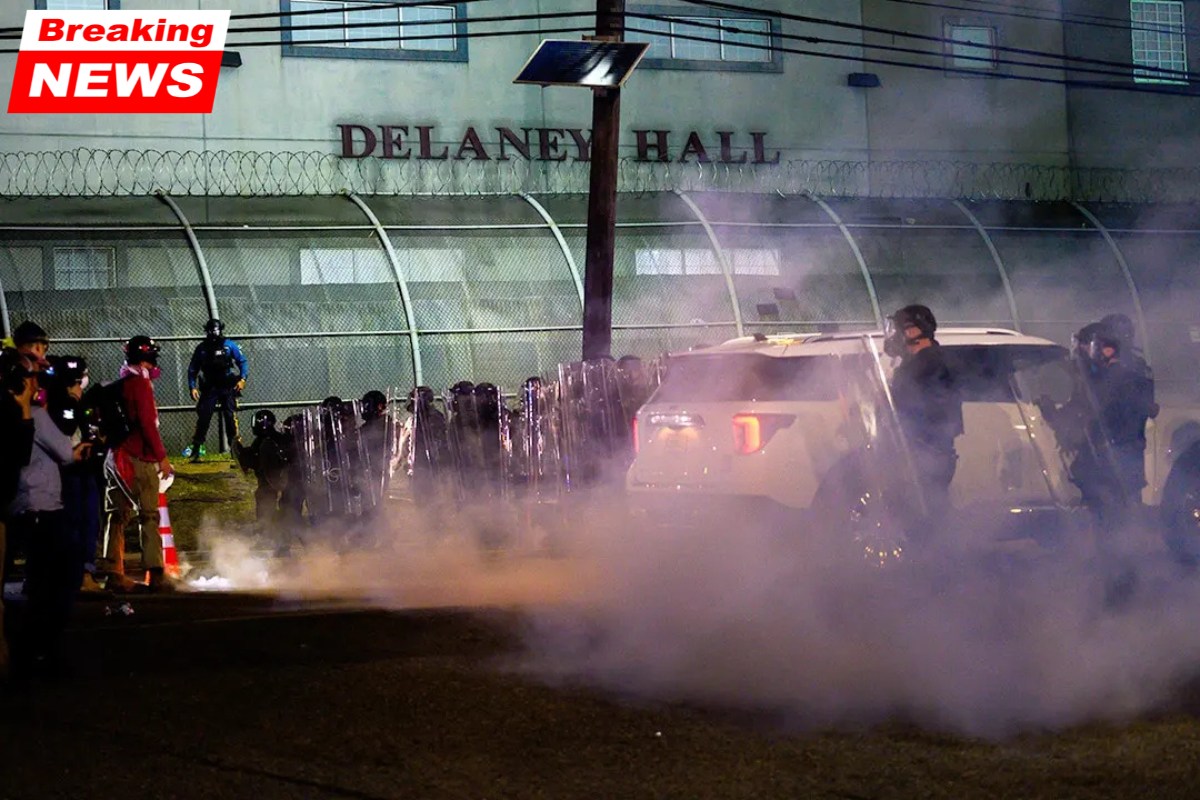
The incident took place on July 4 last year outside the Prairieland Detention Center, located near Dallas.
According to prosecutors:
- A group gathered outside the facility
- Some members were carrying firearms
- One defendant allegedly opened fire
- A police officer was shot in the neck
The injured officer was later identified as Thomas Gross. He survived the shooting.
Federal prosecutors charged nine people in total. Eight of them were convicted on terrorism-related charges. Sentencing is scheduled for June.
Why Is This Case So Important?
This case is being described as a first-of-its-kind legal test. FBI Director Kash Patel said it was the first time “material support to terrorism” charges were used against people accused of having links to antifa.
Antifa — short for “anti-fascists” — is not a single organisation. It is a broad term used for far-left activist groups that oppose neo-Nazis and white supremacists at protests.
There is no official domestic terror list in the U.S. like the one used for foreign groups. That is because organisations operating inside the country are protected by the First Amendment, which guarantees free speech and the right to protest.
This is why many legal experts say the case could affect future protest movements.
What Did the Prosecution Argue?
Prosecutor Shawn Smith told jurors that this was not a peaceful protest. He described it as a “direct action.”
According to the prosecution:
- Some defendants brought firearms
- They carried first-aid kits
- They wore body armour
- They followed what prosecutors called “antifa tactics”
One defendant, Benjamin Song, was accused of shouting “get to the rifles” before opening fire. Prosecutors said that even if others did not fire shots, the group’s planning made violence foreseeable.
Because of this, several defendants were also convicted of attempted murder of a law enforcement officer.
What Did the Defence Say?
Defence lawyers strongly disagreed with the terrorism claims.
They argued that:
- The group had organised a “noise demonstration”
- There was no plan to attack anyone
- Firearms were carried for self-defence
- Their clients were not members of antifa
Song’s lawyer claimed that the gunfire was “suppressive fire” and suggested the bullet that hit the officer may have ricocheted.
One defence lawyer said the government was trying to label protesters as terrorists to discourage public demonstrations.
Legal and Free Speech Concerns
Critics believe this case may set a strong example for how protest-related activities are handled in future.
Suzanne Adely, interim president of the National Lawyers Guild, said the case may test how far the government can go in criminalising protest activity.
The concern is that if protest planning — such as bringing protective gear — is treated as terrorism, it may discourage people from exercising their right to protest peacefully.
Case Summary
| Key Detail | Information |
|---|---|
| Location | Prairieland Detention Center, Texas |
| Date of Incident | July 4 |
| Total Defendants | 9 |
| Convicted | 8 |
| Major Charges | Material support to terrorism, Attempted murder |
| Injured Officer | Lt. Thomas Gross |
| Sentencing | Scheduled for June |
The Texas detention centre shooting case has become more than just a criminal trial — it has turned into a national debate about protest rights, public safety, and how terrorism laws should be used. While prosecutors argue that the group’s actions crossed the line into organised violence, defence attorneys insist that their clients were participating in a protest that went wrong, not planning a terror attack.
The verdict sends a strong message that bringing weapons and tactical gear to demonstrations can lead to severe legal consequences. At the same time, critics worry about the possible impact on First Amendment rights and whether protest activity could increasingly be treated as terrorism. As sentencing approaches in June, this case will likely continue to shape conversations about law enforcement, activism, and civil liberties in the United States.